



Cleaved PARP-1 (Asp214) Rabbit pAb
-YC0101





主要信息
Target
PARP
Host Species
Rabbit
Reactivity
Human, Mouse
Applications
WB, IHC, IF, ELISA
MW
24kD (Observed)
Conjugate/Modification
Unmodified
货号: YC0101
规格
价格
货期
数量
200μL
¥3,780.00
现货
0
100μL
¥2,300.00
现货
0
40μL
¥960.00
现货
0
加入购物车


已收藏
收藏
详细信息
推荐稀释比
WB 1:500-2000; IF 1:50-300; IHC 1:50-300; ELISA 1:5000-20000
Note: For IHC, we suggest antigen retrieval with TE buffer pH 9.0 (Cat#YS0004)
Note: For IHC, we suggest antigen retrieval with TE buffer pH 9.0 (Cat#YS0004)
组成
Liquid in PBS containing 50% glycerol, 0.5% BSA and 0.02% sodium azide.
特异性
Cleaved-PARP-1 (D214) Polyclonal Antibody detects endogenous levels of fragment of activated PARP-1 protein resulting from cleavage adjacent to D214.
纯化工艺
The antibody was affinity-purified from rabbit antiserum by affinity-chromatography using epitope-specific immunogen.
储存
-15°C to -25°C/1 year (Do not lower than -25°C)
浓度
1 mg/ml
实测条带
24kD
修饰
Unmodified
克隆性
Polyclonal
同种型
IgG
相关产品
Secondary Antibodies
Goat Anti Mouse IgG(H+L) (HRP)
RS0001
预览→
Secondary Antibodies
Goat Anti Rabbit IgG(H+L) (HRP)
RS0002
预览→
Primary Antibodies
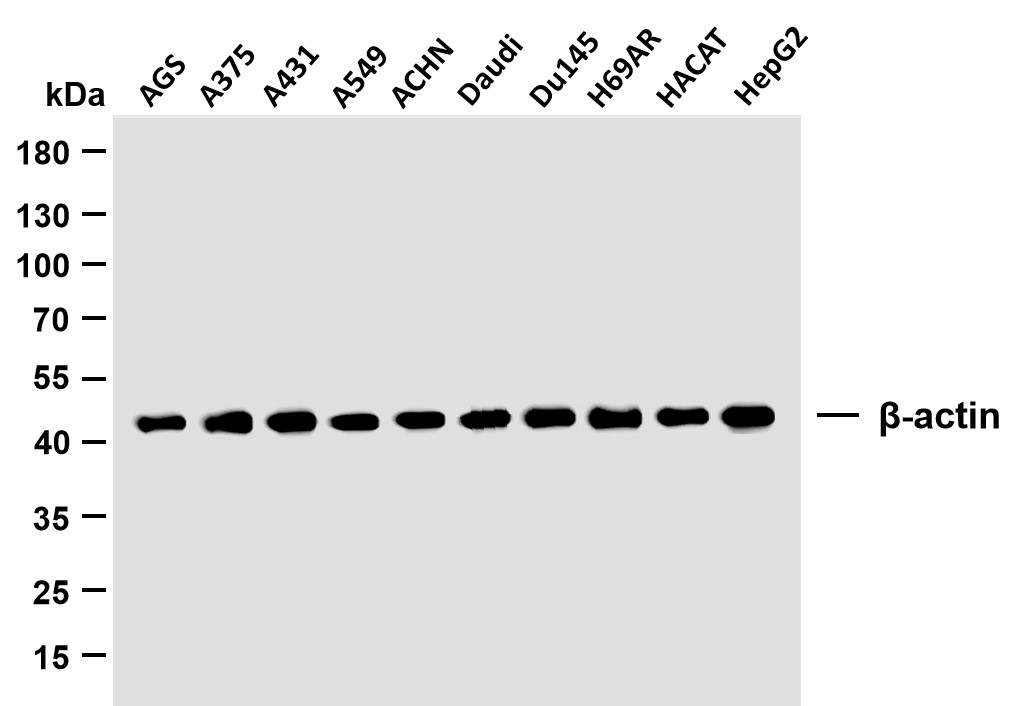
β-actin (PTR2364) Mouse mAb
YM3028
预览→
Primary Antibodies
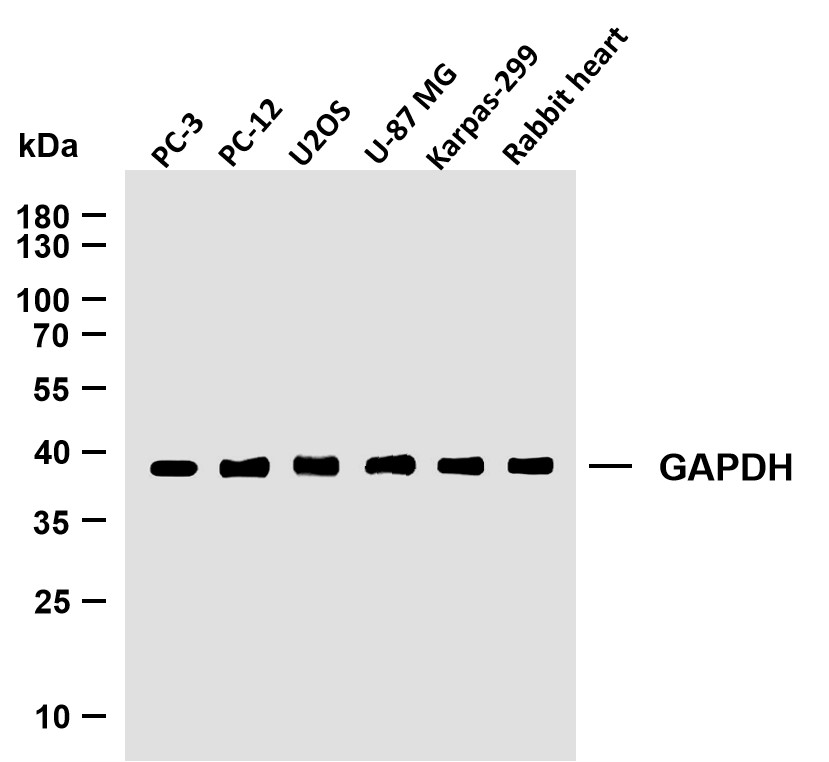
GAPDH (PTR2304) Mouse mAb
YM3029
预览→
抗原&靶点信息
免疫原:
The antiserum was produced against synthesized peptide derived from human PARP. AA range:165-214
展开内容
特异性:
Cleaved-PARP-1 (D214) Polyclonal Antibody detects endogenous levels of fragment of activated PARP-1 protein resulting from cleavage adjacent to D214.
展开内容
基因名称:
PARP1
展开内容
蛋白名称:
Poly [ADP-ribose] polymerase 1
展开内容
别名:
PARP1 ;
ADPRT ;
PPOL ;
Poly [ADP-ribose] polymerase 1 ;
PARP-1 ;
ADP-ribosyltransferase diphtheria toxin-like 1 ;
ARTD1 ;
NAD ;
+ ;
ADP-ribosyltransferase 1 ;
ADPRT 1 ;
Poly[ADP-ribose] synthase 1
ADPRT ;
PPOL ;
Poly [ADP-ribose] polymerase 1 ;
PARP-1 ;
ADP-ribosyltransferase diphtheria toxin-like 1 ;
ARTD1 ;
NAD ;
+ ;
ADP-ribosyltransferase 1 ;
ADPRT 1 ;
Poly[ADP-ribose] synthase 1
展开内容
背景:
This gene encodes a chromatin-associated enzyme , poly (ADP-ribosyl) transferase , which modifies various nuclear proteins by poly (ADP-ribosyl) ation. The modification is dependent on DNA and is involved in the regulation of various important cellular processes such as differentiation , proliferation , and tumor transformation and also in the regulation of the molecular events involved in the recovery of cell from DNA damage. In addition , this enzyme may be the site of mutation in Fanconi anemia , and may participate in the pathophysiology of type I diabetes. [provided by RefSeq , Jul 2008] ,
展开内容
功能:
Catalytic activity:NAD (+) + (ADP-D-ribosyl) (n) -acceptor = nicotinamide + (ADP-D-ribosyl) (n+1) -acceptor. ,Function:Involved in the base excision repair (BER) pathway , by catalyzing the poly (ADP-ribosyl) ation of a limited number of acceptor proteins involved in chromatin architecture and in DNA metabolism. This modification follows DNA damages and appears as an obligatory step in a detection/signaling pathway leading to the reparation of DNA strand breaks. ,miscellaneous:The ADP-D-ribosyl group of NAD (+) is transferred to an acceptor carboxyl group on a histone or the enzyme itself , and further ADP-ribosyl groups are transferred to the 2'-position of the terminal adenosine moiety , building up a polymer with an average chain length of 20-30 units. ,PTM:Phosphorylated by PRKDC. Phosphorylated upon DNA damage , probably by ATM or ATR. ,PTM:Poly-ADP-ribosylated by PARP2. ,similarity:Contains 1 BRCT domain. ,similarity:Contains 1 PARP alpha-helical domain. ,similarity:Contains 1 PARP catalytic domain. ,similarity:Contains 2 PARP-type zinc fingers. ,subunit:Component of a base excision repair (BER) complex , containing at least XRCC1 , PARP2 , POLB and LIG3. Homo- and heterodimer with PARP2. Interacts with PARP3 , APTX and SRY. The SWAP complex consists of NPM1 , NCL , PARP1 and SWAP70. Interacts with TIAM2 and ZNF423. ,
展开内容
细胞定位:
Nucleus . Nucleus , nucleolus . Chromosome . Localizes to sites of DNA damage. .
展开内容
研究领域:
>>Base excision repair ;
>>NF-kappa B signaling pathway ;
>>Apoptosis ;
>>Necroptosis ;
>>Diabetic cardiomyopathy
>>NF-kappa B signaling pathway ;
>>Apoptosis ;
>>Necroptosis ;
>>Diabetic cardiomyopathy
展开内容
信号通路
文献引用({{totalcount}})
货号: YC0101
规格
价格
货期
数量
200μL
¥3,780.00
现货
0
100μL
¥2,300.00
现货
0
40μL
¥960.00
现货
0
加入购物车
已收藏
收藏
Recently Viewed Products
Clear all


×

Toggle night Mode
{{pinfoXq.title || ''}}
Catalog: {{pinfoXq.catalog || ''}}
Filter:
All
{{item.name}}
{{pinfo.title}}
-{{pinfo.catalog}}
主要信息
Target
{{pinfo.target}}
Reactivity
{{pinfo.react}}
Applications
{{pinfo.applicat}}
Conjugate/Modification
{{pinfo.coupling}}/{{pinfo.modific}}
MW (kDa)
{{pinfo.mwcalc}}
Host Species
{{pinfo.hostspec}}
Isotype
{{pinfo.isotype}}
产品 {{index}}/{{pcount}}
上一个产品
下一个产品
{{pvTitle}}
滚轮缩放图片
{{pvDescr}}