


RASF5 Rabbit pAb
-YT6737




主要信息
Target
RASF5
Host Species
Rabbit
Reactivity
Human, Mouse, Rat
Applications
WB, IF, ELISA, IHC
MW
46kD (Calculated)
Conjugate/Modification
Unmodified
货号: YT6737
规格
价格
货期
数量
200μL
¥3,780.00
现货
0
100μL
¥2,300.00
现货
0
40μL
¥960.00
现货
0
加入购物车


已收藏
收藏
详细信息
推荐稀释比
WB 1:500-2000; IF/ICC1:50-200; ELISA 1:2000-20000; IHC 1:50-200
Note: For IHC, we suggest antigen retrieval with TE buffer pH 9.0 (Cat#YS0004)
Note: For IHC, we suggest antigen retrieval with TE buffer pH 9.0 (Cat#YS0004)
组成
Liquid in PBS containing 50% glycerol, 0.5% BSA and 0.02% sodium azide.
特异性
This antibody detects endogenous levels of RASF5 at Human/Mouse/Rat
纯化工艺
The antibody was affinity-purified from rabbit antiserum by affinity-chromatography using epitope-specific immunogen.
储存
-15°C to -25°C/1 year(Do not lower than -25°C)
浓度
1 mg/ml
理论分子量
46kD
修饰
Unmodified
克隆性
Polyclonal
同种型
IgG
相关产品
Secondary Antibodies
Goat Anti Mouse IgG(H+L) (HRP)
RS0001
预览→
Secondary Antibodies
Goat Anti Rabbit IgG(H+L) (HRP)
RS0002
预览→
Primary Antibodies
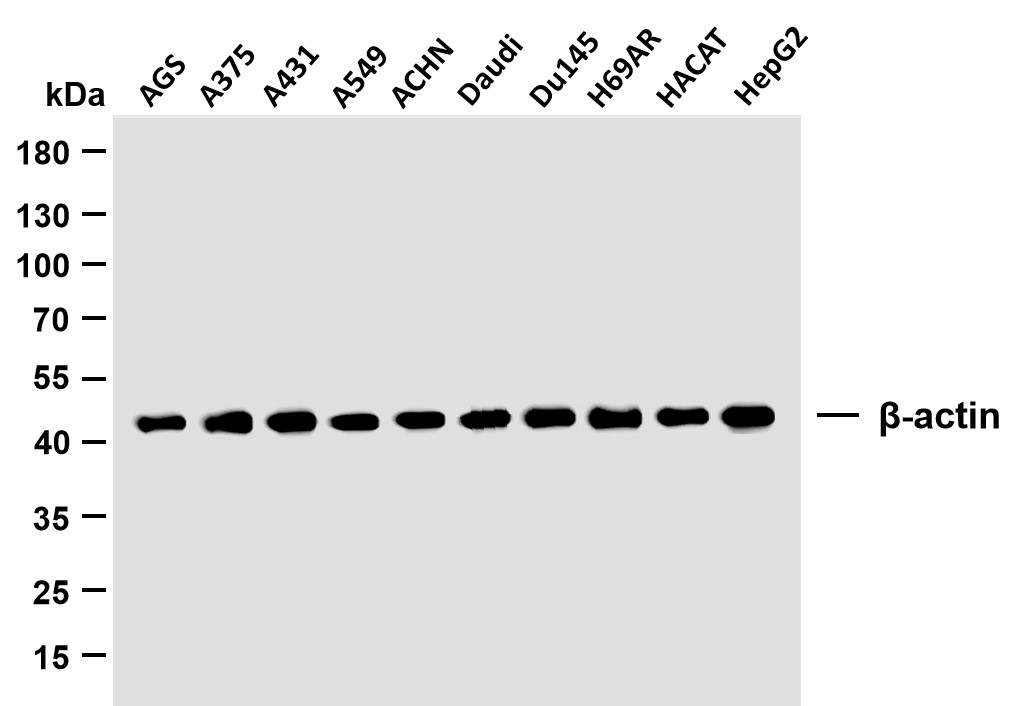
β-actin (PTR2364) Mouse mAb
YM3028
预览→
Primary Antibodies
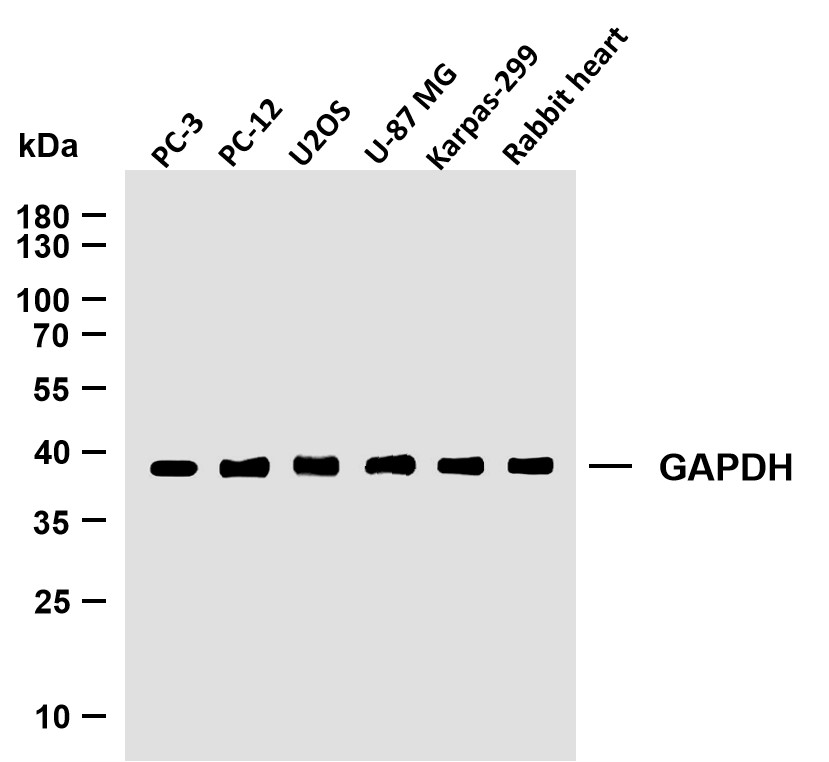
GAPDH (PTR2304) Mouse mAb
YM3029
预览→
抗原&靶点信息
免疫原:
Synthesized peptide derived from human RASF5 AA range: 234-284
展开内容
特异性:
This antibody detects endogenous levels of RASF5 at Human/Mouse/Rat
展开内容
基因名称:
RASSF5 NORE1 RAPL
展开内容
蛋白名称:
RASF5
展开内容
背景:
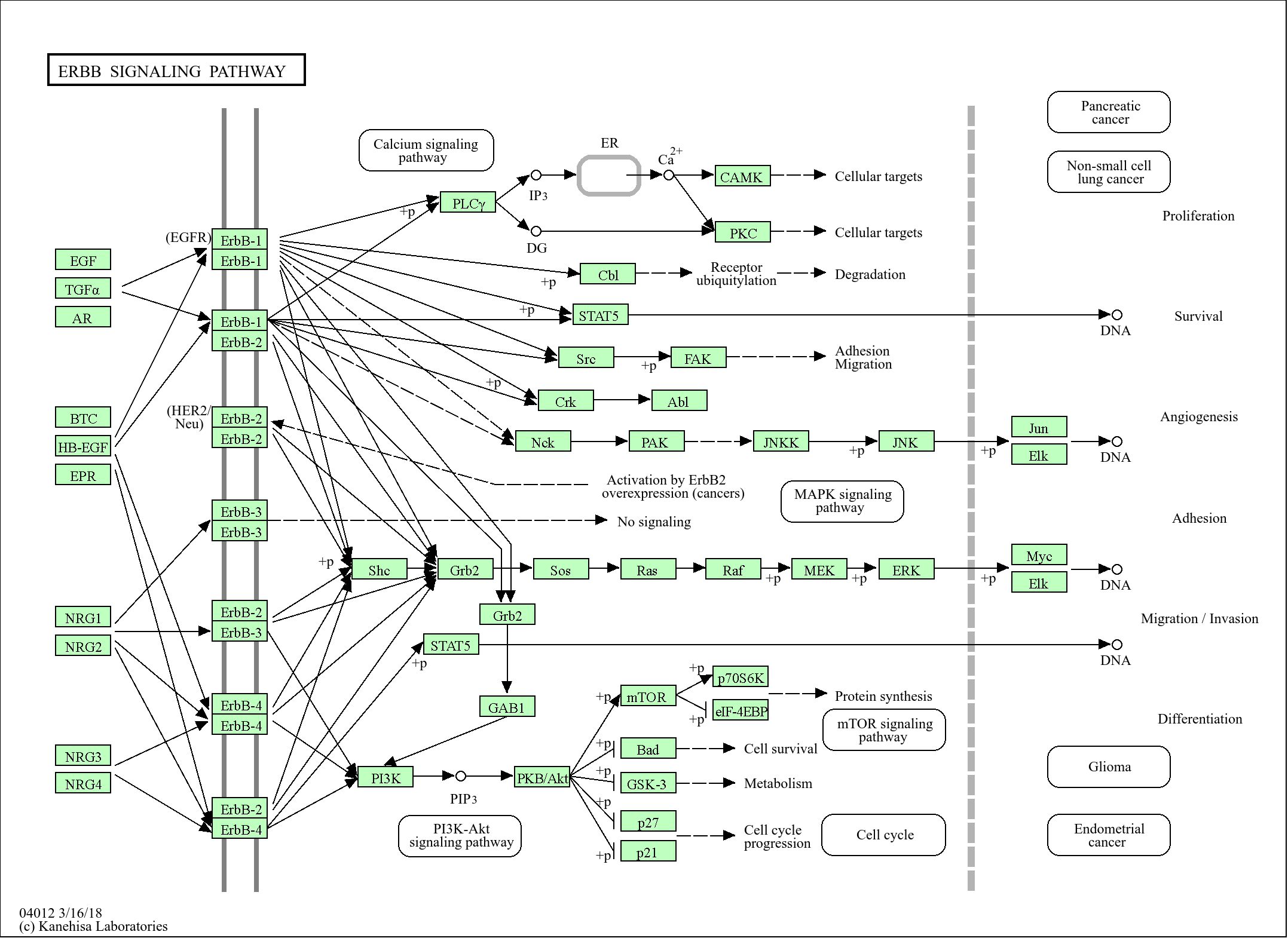
This gene is a member of the Ras association domain family. It functions as a tumor suppressor, and is inactivated in a variety of cancers. The encoded protein localizes to centrosomes and microtubules, and associates with the GTP-activated forms of Ras, Rap1, and several other Ras-like small GTPases. The protein regulates lymphocyte adhesion and suppresses cell growth in response to activated Rap1 or Ras. Multiple transcript variants encoding different isoforms have been found for this gene. [provided by RefSeq, Jul 2008],
展开内容
功能:
Caution:Has been termed RASSF3 by Ref.3.,Function:Potential tumor suppressor. Seems to be involved in lymphocyte adhesion by linking RAP1A activation upon T cell receptor or chemokine stimulation to integrin activation. Isoform 2 stimulates lymphocyte polarization and the patch-like distribution of ITGAL/LFA-1, resulting in an enhanced adhesion to ICAM1. Together with RAP1A may participate in regulation of microtubule growth. The association of isoform 2 with activated RAP1A is required for directional movement of endothelial cells during wound healing. May be involved in regulation of Ras apoptotic function. The RASSF5-STK4 complex may mediate HRAS1 and KRAS induced apoptosis.,similarity:Contains 1 phorbol-ester/DAG-type zinc finger.,similarity:Contains 1 Ras-associating domain.,similarity:Contains 1 SARAH domain.,subcellular location:Isoform 2 is mainly located in the perinuclear region of unstimulated primary T cells. Upon stimulation translocates to the leading edge and colocalizes with ITGAL/LFA-1 in the peripheral zone of the immunological synapse. Isoform 2 is localized to growing microtubules in vascular endothelial cells and is dissociated from microtubules by activated RAP1A.,subunit:Interacts directly with activated HRAS1; a RASSF5-STK4 complex probably associates with activated HRAS1. Interacts with KRAS. Probably interacts with Ras-like GTPases RRAS, RRAS2, MRAS, RAP1B, RAP2A and RALA. Can self-associate. Interacts with RSSF1 isoform A. The RSSF1 isoform A-RSSF5 heterodimer probably mediates the association of RSSF1 with HRAS1 (By similarity). Isoform 2 interacts with activated RAP1A and ITGAL/LFA-1. Binds STK4/MST1, inhibiting STK4 autoactivation.,tissue specificity:Widely expressed. Frequently down-regulated in lung tumor cell lines and primary lung tumors.,
展开内容
细胞定位:
Cytoplasm. Cytoplasm, cytoskeleton. Isoform 2 is mainly located in the perinuclear region of unstimulated primary T-cells. Upon stimulation translocates to the leading edge and colocalizes with ITGAL/LFA-1 in the peripheral zone of the immunological synapse. Isoform 2 is localized to growing microtubules in vascular endothelial cells and is dissociated from microtubules by activated RAP1A.
展开内容
组织表达:
研究领域:
>>Ras signaling pathway ;
>>Rap1 signaling pathway ;
>>Cellular senescence ;
>>Leukocyte transendothelial migration ;
>>Pathways in cancer ;
>>Non-small cell lung cancer
>>Rap1 signaling pathway ;
>>Cellular senescence ;
>>Leukocyte transendothelial migration ;
>>Pathways in cancer ;
>>Non-small cell lung cancer
展开内容
信号通路
Cellular Processes >> Cell growth and death >> Cellular senescence
Organismal Systems >> Immune system >> Leukocyte transendothelial migration
Human Diseases >> Cancer: overview >> Pathways in cancer
Human Diseases >> Cancer: specific types >> Non-small cell lung cancer
Environmental Information Processing >> Signal transduction >> Ras signaling pathway
Environmental Information Processing >> Signal transduction >> Rap1 signaling pathway
文献引用({{totalcount}})
货号: YT6737
规格
价格
货期
数量
200μL
¥3,780.00
现货
0
100μL
¥2,300.00
现货
0
40μL
¥960.00
现货
0
加入购物车
已收藏
收藏
Recently Viewed Products
Clear all


×

Toggle night Mode
{{pinfoXq.title || ''}}
Catalog: {{pinfoXq.catalog || ''}}
Filter:
All
{{item.name}}
{{pinfo.title}}
-{{pinfo.catalog}}
主要信息
Target
{{pinfo.target}}
Reactivity
{{pinfo.react}}
Applications
{{pinfo.applicat}}
Conjugate/Modification
{{pinfo.coupling}}/{{pinfo.modific}}
MW (kDa)
{{pinfo.mwcalc}}
Host Species
{{pinfo.hostspec}}
Isotype
{{pinfo.isotype}}
产品 {{index}}/{{pcount}}
上一个产品
下一个产品
{{pvTitle}}
滚轮缩放图片
{{pvDescr}}