


Group VI iPLA2 Rabbit pAb
-YT2073




主要信息
Target
Group VI iPLA2
Host Species
Rabbit
Reactivity
Human, Mouse, Rat
Applications
WB, ELISA
MW
90kD (Observed)
Conjugate/Modification
Unmodified

货号: YT2073
规格
价格
货期
数量
200μL
¥3,780.00
现货
0
100μL
¥2,300.00
现货
0
40μL
¥960.00
现货
0
加入购物车


已收藏
收藏
详细信息
推荐稀释比
WB 1:500-1:2000; ELISA 1:5000; Not yet tested in other applications.
组成
Liquid in PBS containing 50% glycerol, 0.5% BSA and 0.02% sodium azide.
特异性
Group VI iPLA2 Polyclonal Antibody detects endogenous levels of Group VI iPLA2 protein.
纯化工艺
The antibody was affinity-purified from rabbit antiserum by affinity-chromatography using epitope-specific immunogen.
储存
-15°C to -25°C/1 year(Do not lower than -25°C)
浓度
1 mg/ml
实测条带
90kD
修饰
Unmodified
克隆性
Polyclonal
同种型
IgG
相关产品
Secondary Antibodies
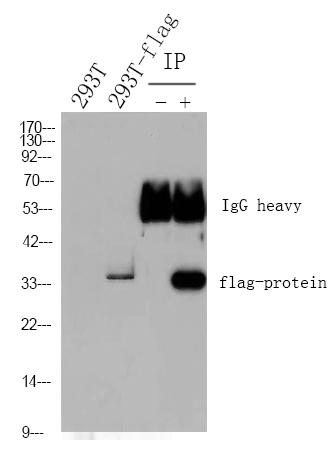
Goat Anti Mouse IgG(H+L) (HRP)
RS0001
预览→
Secondary Antibodies
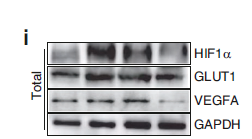
Goat Anti Rabbit IgG(H+L) (HRP)
RS0002
预览→
Primary Antibodies
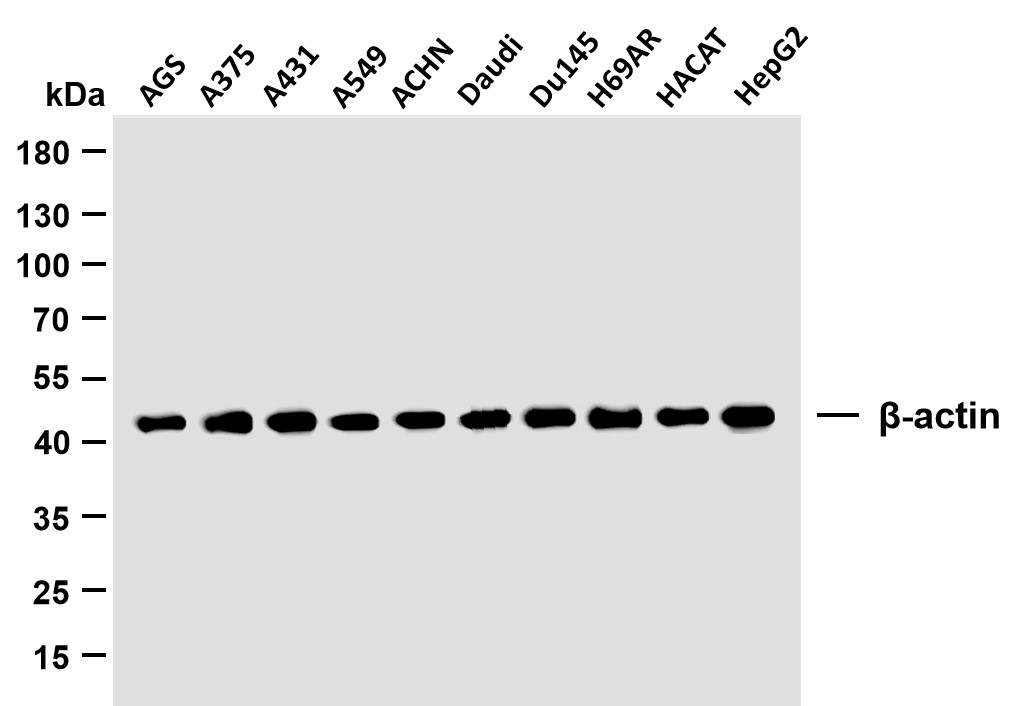
β-actin (PTR2364) Mouse mAb
YM3028
预览→
Primary Antibodies
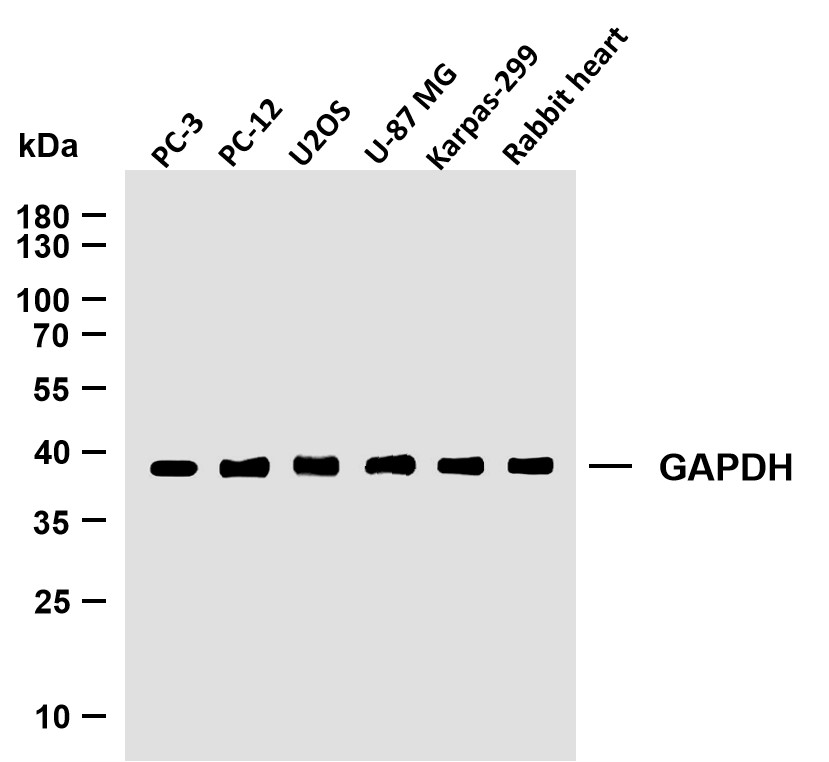
GAPDH (PTR2304) Mouse mAb
YM3029
预览→
抗原&靶点信息
免疫原:
Synthesized peptide derived from the Internal region of human Group VI iPLA2.. AA range:514-584
展开内容
特异性:
Group VI iPLA2 Polyclonal Antibody detects endogenous levels of Group VI iPLA2 protein.
展开内容
基因名称:
PLA2G6
展开内容
蛋白名称:
85/88 kDa calcium-independent phospholipase A2
展开内容
别名:
PLA2G6 ;
PLPLA9 ;
85/88 kDa calcium-independent phospholipase A2 ;
CaI-PLA2 ;
Group VI phospholipase A2 ;
GVI PLA2 ;
Intracellular membrane-associated calcium-independent phospholipase A2 beta ;
iPLA2-beta ;
Patatin-like phospholipase domain-contai
PLPLA9 ;
85/88 kDa calcium-independent phospholipase A2 ;
CaI-PLA2 ;
Group VI phospholipase A2 ;
GVI PLA2 ;
Intracellular membrane-associated calcium-independent phospholipase A2 beta ;
iPLA2-beta ;
Patatin-like phospholipase domain-contai
展开内容
背景:
The protein encoded by this gene is an A2 phospholipase, a class of enzyme that catalyzes the release of fatty acids from phospholipids. The encoded protein may play a role in phospholipid remodelling, arachidonic acid release, leukotriene and prostaglandin synthesis, fas-mediated apoptosis, and transmembrane ion flux in glucose-stimulated B-cells. Several transcript variants encoding multiple isoforms have been described, but the full-length nature of only three of them have been determined to date. [provided by RefSeq, Dec 2010],
展开内容
功能:
Catalytic activity:Phosphatidylcholine + H(2)O = 1-acylglycerophosphocholine + a carboxylate.,Disease:Defects in PLA2G6 are a cause of neurodegeneration with brain iron accumulation (NBIA) [MIM:610217]. NBIA comprises a clinically and genetically heterogeneous group of disorders with high basal ganglia iron.,Disease:Defects in PLA2G6 are the cause of infantile neuroaxonal dystrophy 1 (INAD1) [MIM:256600]; also known as Seitelberger disease. Infantile neuroaxonal dystrophy (INAD) is a neurodegenerative disease characterized by pathologic axonal swelling and spheroid bodies in the central nervous system. Onset is within the first 2 years of life with death by age 10 years.,Disease:Defects in PLA2G6 are the cause of Karak syndrome [MIM:608395]. Karak syndrome is a neurologic disease characterized by early-onset progressive cerebellar ataxia, dystonia, spasticity, intellectual and features compatible with iron deposition in the putamen and substantia nigra.,Function:Catalyzes the release of fatty acids from phospholipids. It has been implicated in normal phospholipid remodeling, nitric oxide-induced or vasopressin-induced arachidonic acid release and in leukotriene and prostaglandin production. May participate in fas mediated apoptosis and in regulating transmembrane ion flux in glucose-stimulated B-cells.,Function:Isoform ankyrin-iPLA2-1 and isoform ankyrin-iPLA2-2, which lack the catalytic domain, are probably involved in the negative regulation of iPLA2 activity.,similarity:Contains 7 ANK repeats.,subunit:Forms large oligomeric 270-350 kDa structures.,tissue specificity:Four different transcripts were found to be expressed in a distinct tissue distribution.,
展开内容
细胞定位:
Cytoplasm . Cell membrane . Mitochondrion . Cell projection, pseudopodium . Recruited to the membrane-enriched pseudopods upon MCP1/CCL2 stimulation in monocytes. .
展开内容
研究领域:
>>Glycerophospholipid metabolism ;
>>Ether lipid metabolism ;
>>Arachidonic acid metabolism ;
>>Linoleic acid metabolism ;
>>alpha-Linolenic acid metabolism ;
>>Metabolic pathways ;
>>Ras signaling pathway ;
>>Vascular smooth muscle contraction ;
>>Fc gamma R-mediated phagocytosis ;
>>Inflammatory mediator regulation of TRP channels
>>Ether lipid metabolism ;
>>Arachidonic acid metabolism ;
>>Linoleic acid metabolism ;
>>alpha-Linolenic acid metabolism ;
>>Metabolic pathways ;
>>Ras signaling pathway ;
>>Vascular smooth muscle contraction ;
>>Fc gamma R-mediated phagocytosis ;
>>Inflammatory mediator regulation of TRP channels
展开内容
信号通路
Organismal Systems >> Immune system >> Fc gamma R-mediated phagocytosis
Organismal Systems >> Circulatory system >> Vascular smooth muscle contraction
Organismal Systems >> Sensory system >> Inflammatory mediator regulation of TRP channels
Environmental Information Processing >> Signal transduction >> Ras signaling pathway
文献引用({{totalcount}})
货号: YT2073
规格
价格
货期
数量
200μL
¥3,780.00
现货
0
100μL
¥2,300.00
现货
0
40μL
¥960.00
现货
0
加入购物车
已收藏
收藏
Recently Viewed Products
Clear all


×

Toggle night Mode
{{pinfoXq.title || ''}}
Catalog: {{pinfoXq.catalog || ''}}
Filter:
All
{{item.name}}
{{pinfo.title}}
-{{pinfo.catalog}}
主要信息
Target
{{pinfo.target}}
Reactivity
{{pinfo.react}}
Applications
{{pinfo.applicat}}
Conjugate/Modification
{{pinfo.coupling}}/{{pinfo.modific}}
MW (kDa)
{{pinfo.mwcalc}}
Host Species
{{pinfo.hostspec}}
Isotype
{{pinfo.isotype}}
产品 {{index}}/{{pcount}}
上一个产品
下一个产品
{{pvTitle}}
滚轮缩放图片
{{pvDescr}}