


Cytokeratin 16 (ABT059) Mouse mAb (Ready to Use)
-YM6861R




主要信息
Target
Cytokeratin 16
Host Species
Mouse
Reactivity
Human
Applications
IHC
Conjugate/Modification
Unmodified


详细信息
推荐稀释比
Ready to use for IHC
组成
The prediluted ready-to-use antibody is diluted in phosphate buffer saline containing stabilizing protein and 0.05% Proclin 300
特异性
The antibody can specifically recognize human CK16 protein, and shows no cross reaction with CK1, 5, 6, 7, 8, 10, 13, 14, 15, 19, 20.
纯化工艺
The antibody was affinity-purified from ascites by affinity-chromatography using specific immunogen.
储存
2°C to 8°C/1 year,Ship by ice bag
修饰
Unmodified
克隆性
Monoclonal
克隆号
ABT059
同种型
Mouse IgG2b/Kappa
相关产品
Secondary Antibodies
Goat Anti Mouse IgG(H+L) (HRP)
RS0001
预览→
Secondary Antibodies
Goat Anti Rabbit IgG(H+L) (HRP)
RS0002
预览→
Primary Antibodies
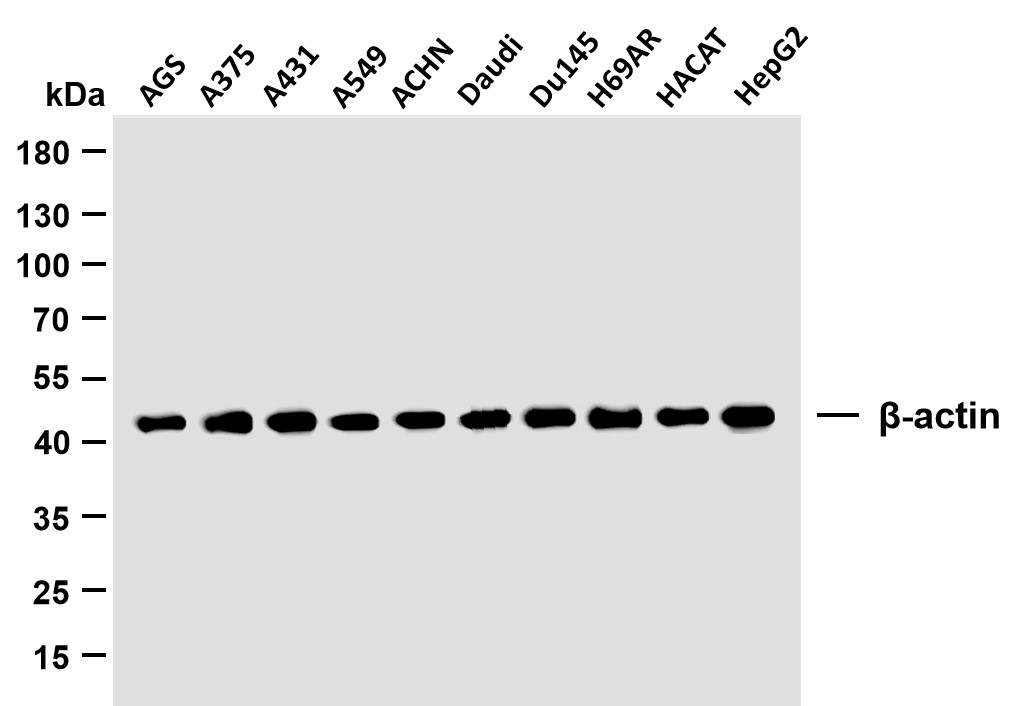
β-actin (PTR2364) Mouse mAb
YM3028
预览→
Primary Antibodies
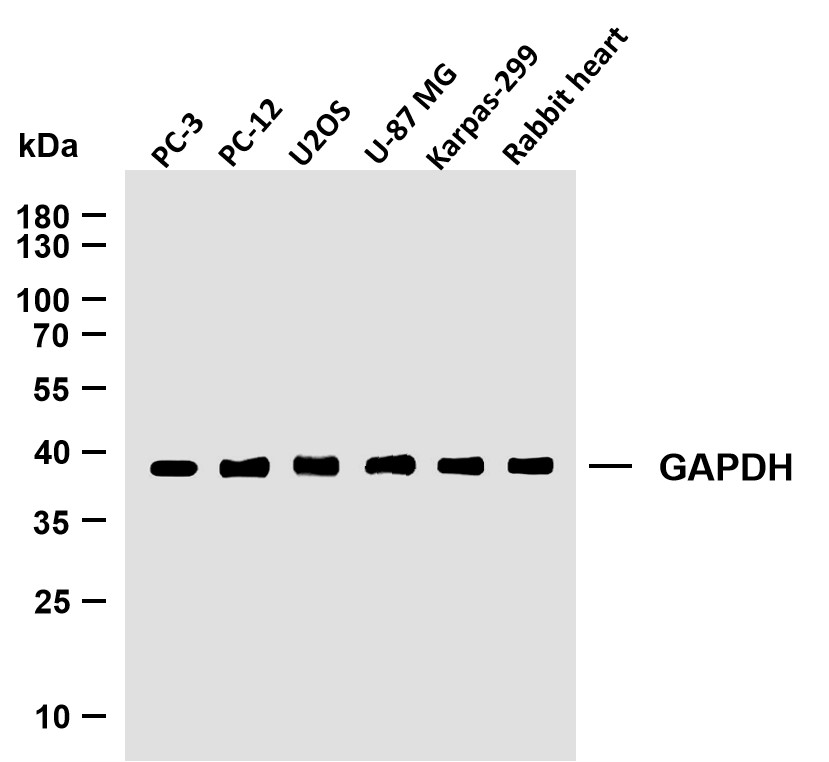
GAPDH (PTR2304) Mouse mAb
YM3029
预览→
抗原&靶点信息
免疫原:
Synthesized peptide derived from human CK16 AA range: 400-473
展开内容
特异性:
The antibody can specifically recognize human CK16 protein, and shows no cross reaction with CK1, 5, 6, 7, 8, 10, 13, 14, 15, 19, 20.
展开内容
基因名称:
KRT16 KRT16A
展开内容
蛋白名称:
Cytokeratin-16
展开内容
别名:
Keratin,type I cytoskeletal 16 ;
Cytokeratin-16 ;
CK-16 ;
Keratin-16 ;
K16 ;
Cytokeratin-16 ;
CK-16 ;
Keratin-16 ;
K16 ;
展开内容
背景:
The protein encoded by this gene is a member of the keratin gene family. The keratins are intermediate filament proteins responsible for the structural integrity of epithelial cells and are subdivided into cytokeratins and hair keratins. Most of the type I cytokeratins consist of acidic proteins which are arranged in pairs of heterotypic keratin chains and are clustered in a region of chromosome 17q12-q21. This keratin has been coexpressed with keratin 14 in a number of epithelial tissues , including esophagus , tongue , and hair follicles. Mutations in this gene are associated with type 1 pachyonychia congenita , non-epidermolytic palmoplantar keratoderma and unilateral palmoplantar verrucous nevus. [provided by RefSeq , Jul 2008] ,
展开内容
功能:
Disease:Defects in KRT16 are a cause of pachyonychia congenita type 1 (PC1) [MIM:167200]; also known as Jadassohn-Lewandowsky syndrome. PC1 is an autosomal dominant ectodermal dysplasia characterized by hypertrophic nail dystrophy resulting in onchyogryposis (thickening and increase in curvature of the nail) , palmoplantar keratoderma , follicular hyperkeratosis , and oral leukokeratosis. Hyperhidrosis of the hands and feet is usually present. ,Disease:Defects in KRT16 are a cause of unilateral palmoplantar verrucous nevus (UPVN) [MIM:144200]. UPVN is characterized by a localized thickening of the skin in parts of the right palm and the right sole. ,Disease:Defects in KRT16 are the cause of palmoplantar keratoderma non-epidermolytic (NEPPK) [MIM:600962]. NEPKK is a dermatological disorder characterized by focal palmoplantar keratoderma with oral , genital , and follicular lesions. ,Disease:KRT16 and KRT17 are coexpressed only in pathological situations such as metaplasias and carcinomas of the uterine cervix and in psoriasis vulgaris. ,mass spectrometry: PubMed:11840567 ,miscellaneous:There are two types of cytoskeletal and microfibrillar keratin , I (acidic) and II (neutral to basic) (40-55 and 56-70 kDa , respectively) . ,similarity:Belongs to the intermediate filament family. ,subunit:Heterodimer of a type I and a type II keratin. KRT16 associates with KRT6 isomers. Interacts with TCHP. Interacts with TRADD. ,tissue specificity:Expressed in the hair follicle , nail bed and in mucosal stratified squamous epithelia and , suprabasally , in oral epithelium and palmoplantar epidermis. Also found in luminal cells of sweat and mammary gland ducts. ,
展开内容
细胞定位:
Cytoplasmic , Membranous
展开内容
研究领域:
>>Estrogen signaling pathway ;
>>Staphylococcus aureus infection
>>Staphylococcus aureus infection
展开内容
文献引用({{totalcount}})
Recently Viewed Products
Clear all


×

Toggle night Mode
{{pinfoXq.title || ''}}
Catalog: {{pinfoXq.catalog || ''}}
Filter:
All
{{item.name}}
{{pinfo.title}}
-{{pinfo.catalog}}
主要信息
Target
{{pinfo.target}}
Reactivity
{{pinfo.react}}
Applications
{{pinfo.applicat}}
Conjugate/Modification
{{pinfo.coupling}}/{{pinfo.modific}}
MW (kDa)
{{pinfo.mwcalc}}
Host Species
{{pinfo.hostspec}}
Isotype
{{pinfo.isotype}}
产品 {{index}}/{{pcount}}
上一个产品
下一个产品
{{pvTitle}}
滚轮缩放图片
{{pvDescr}}