



Actin, Muscle Specific (ABT-MSA) Mouse mAb (Ready to Use)
-YM6142R




主要信息
Target
Actin_Muscle Specific
Host Species
Mouse
Reactivity
Human, Mouse, Rat, Monkey, Bovine, Pig, Chicken
Applications
IHC
Conjugate/Modification
Unmodified


详细信息
推荐稀释比
Ready to use for IHC
组成
The prediluted ready-to-use antibody is diluted in phosphate buffer saline containing stabilizing protein and 0.05% Proclin 300
特异性
The antibody can specifically recognize proteins from smooth muscle, myocardium and skeletal muscle α actin and smooth muscle derived γ actin, and β actin or non smooth muscle derived γ actin does not respond.
纯化工艺
The antibody was affinity-purified from ascites by affinity-chromatography using specific immunogen.
储存
2°C to 8°C/1 year,Ship by ice bag
修饰
Unmodified
克隆性
Monoclonal
克隆号
ABT-MSA
同种型
Mouse IgG1/Kappa
相关产品
Secondary Antibodies
Goat Anti Mouse IgG(H+L) (HRP)
RS0001
预览→
Secondary Antibodies
Goat Anti Rabbit IgG(H+L) (HRP)
RS0002
预览→
Primary Antibodies
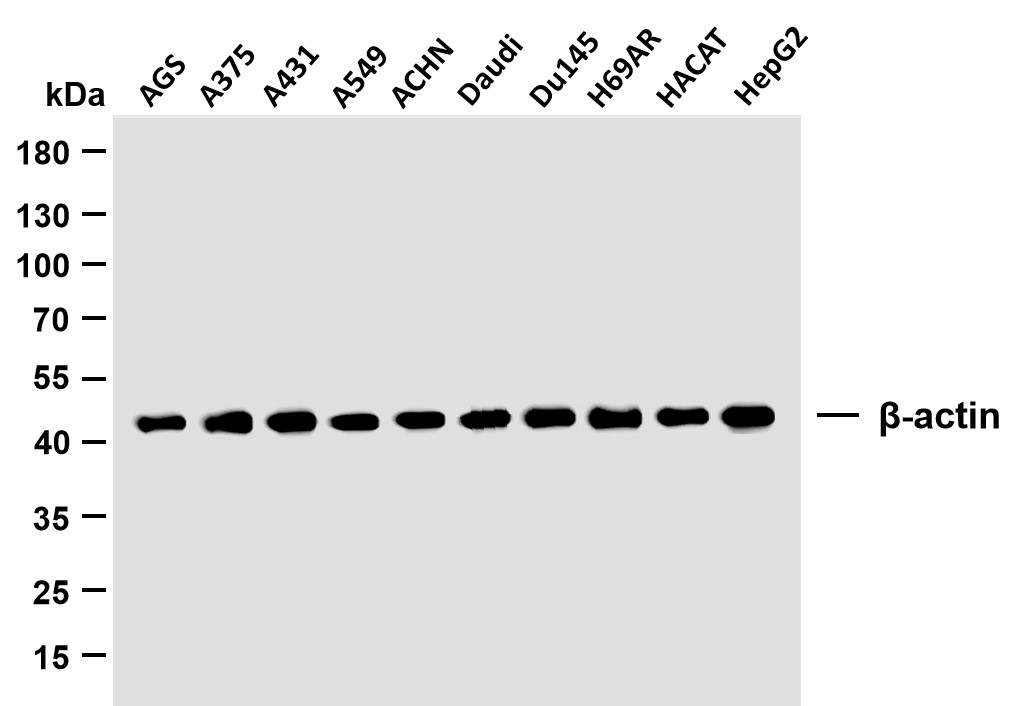
β-actin (PTR2364) Mouse mAb
YM3028
预览→
Primary Antibodies
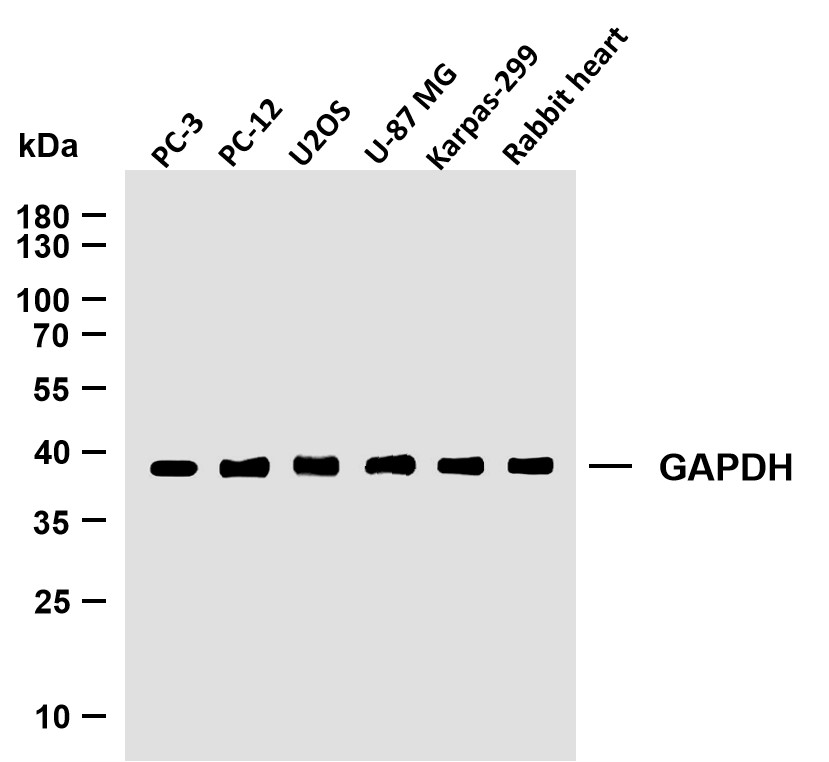
GAPDH (PTR2304) Mouse mAb
YM3029
预览→
抗原&靶点信息
免疫原:
Synthesized peptide derived from human Actin, Muscle Specific AA range: 2-50
展开内容
特异性:
The antibody can specifically recognize proteins from smooth muscle, myocardium and skeletal muscle α actin and smooth muscle derived γ actin, and β actin or non smooth muscle derived γ actin does not respond.
展开内容
基因名称:
ACTA1;ACTA2;ACTC1;ACTG2
展开内容
蛋白名称:
α-Skeletal Muscle Actin (α-SA) ;α-Cardiac Muscle Actin (α-CA) ;α-Smooth Muscle Actin (α-SMA) ;γ-Smooth Muscle Actin (γ-SMA) ;
展开内容
背景:
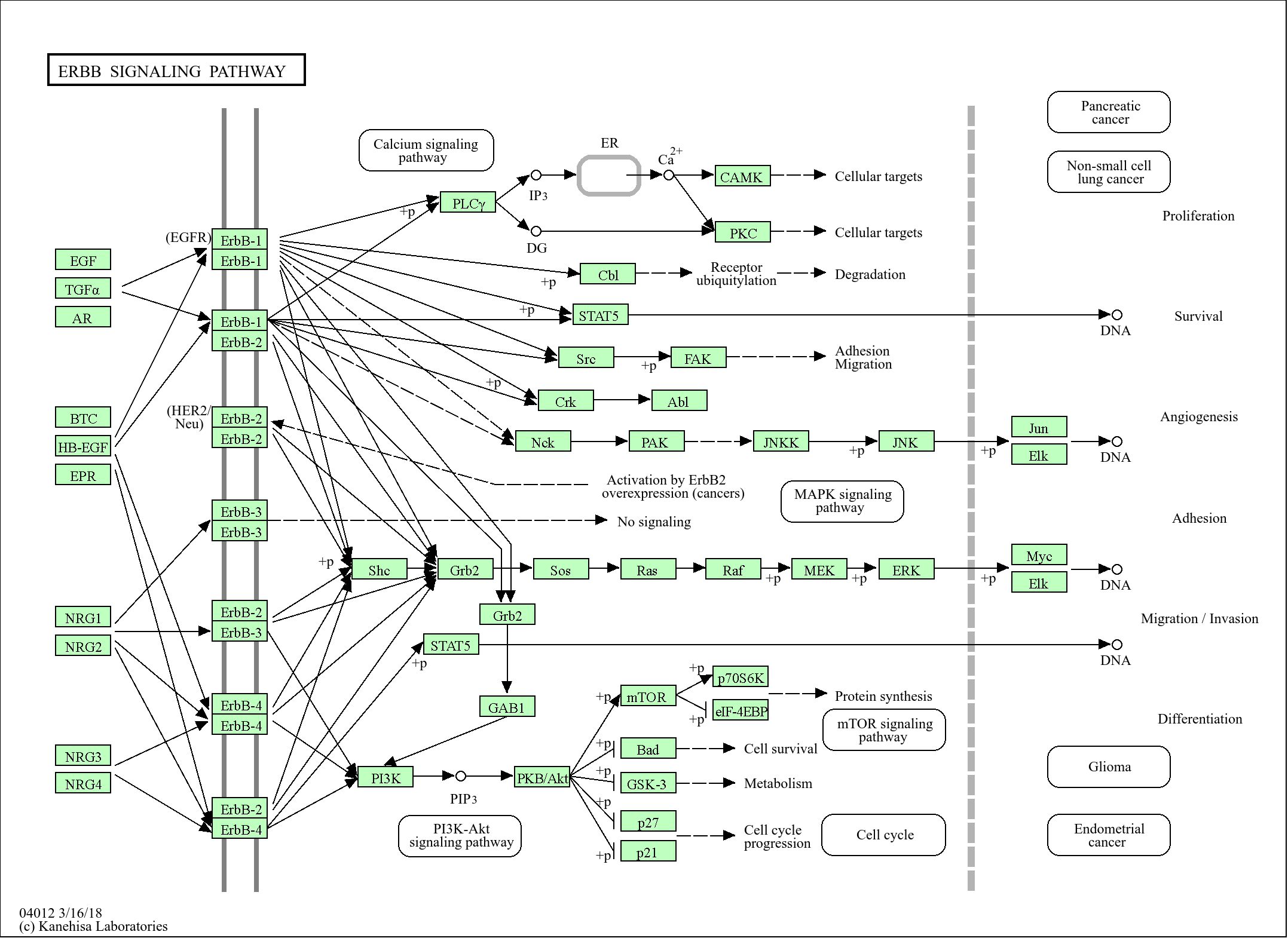
Actins are highly conserved proteins that are involved in various types of cell motility. Polymerization of globular actin (G-actin) leads to a structural filament (F-actin) in the form of a two-stranded helix. Each actin can bind to four others. The protein encoded by this gene belongs to the actin family which is comprised of three main groups of actin isoforms , alpha , beta , and gamma. The alpha actins are found in muscle tissues and are a major constituent of the contractile apparatus. Defects in this gene have been associated with idiopathic dilated cardiomyopathy (IDC) and familial hypertrophic cardiomyopathy (FHC) . [provided by RefSeq , Jul 2008] ,
展开内容
功能:
Disease:Defects in ACTC1 are the cause of cardiomyopathy dilated type 1R (CMD1R) [MIM:102540]. Dilated cardiomyopathy is a disorder characterized by ventricular dilation and impaired systolic function , resulting in congestive heart failure and arrhythmia. Patients are at risk of premature death. ,Disease:Defects in ACTC1 are the cause of cardiomyopathy familial hypertrophic type 11 (CMH11) [MIM:612098]. Familial hypertrophic cardiomyopathy is a hereditary heart disorder characterized by ventricular hypertrophy , which is usually asymmetric and often involves the interventricular septum. The symptoms include dyspnea , syncope , collapse , palpitations , and chest pain. They can be readily provoked by exercise. The disorder has inter- and intrafamilial variability ranging from benign to malignant forms with high risk of cardiac failure and sudden cardiac death. ,Function:Actins are highly conserved proteins that are involved in various types of cell motility and are ubiquitously expressed in all eukaryotic cells. ,miscellaneous:In vertebrates 3 main groups of actin isoforms , alpha , beta and gamma have been identified. The alpha actins are found in muscle tissues and are a major constituent of the contractile apparatus. The beta and gamma actins coexist in most cell types as components of the cytoskeleton and as mediators of internal cell motility. ,similarity:Belongs to the actin family. ,subunit:Polymerization of globular actin (G-actin) leads to a structural filament (F-actin) in the form of a two-stranded helix. Each actin can bind to 4 others. ,
展开内容
细胞定位:
Cytoplasmic
展开内容
组织表达:
展开内容
研究领域:
>>Cardiac muscle contraction ;
>>Adrenergic signaling in cardiomyocytes ;
>>Hypertrophic cardiomyopathy ;
>>Dilated cardiomyopathy
>>Adrenergic signaling in cardiomyocytes ;
>>Hypertrophic cardiomyopathy ;
>>Dilated cardiomyopathy
展开内容
信号通路
Organismal Systems >> Endocrine system >> Relaxin signaling pathway
Organismal Systems >> Circulatory system >> Cardiac muscle contraction
Organismal Systems >> Circulatory system >> Adrenergic signaling in cardiomyocytes
Organismal Systems >> Circulatory system >> Vascular smooth muscle contraction
Environmental Information Processing >> Signal transduction >> Apelin signaling pathway
文献引用({{totalcount}})
Recently Viewed Products
Clear all


×

Toggle night Mode
{{pinfoXq.title || ''}}
Catalog: {{pinfoXq.catalog || ''}}
Filter:
All
{{item.name}}
{{pinfo.title}}
-{{pinfo.catalog}}
主要信息
Target
{{pinfo.target}}
Reactivity
{{pinfo.react}}
Applications
{{pinfo.applicat}}
Conjugate/Modification
{{pinfo.coupling}}/{{pinfo.modific}}
MW (kDa)
{{pinfo.mwcalc}}
Host Species
{{pinfo.hostspec}}
Isotype
{{pinfo.isotype}}
产品 {{index}}/{{pcount}}
上一个产品
下一个产品
{{pvTitle}}
滚轮缩放图片
{{pvDescr}}