


E-Cadherin (ABT181) Mouse mAb
-YM6130




主要信息
Target
E-cadherin
Host Species
Mouse
Reactivity
Human, Mouse, Rat
Applications
IHC, ELISA
MW
97kD (Calculated)
120kD (Observed)
Conjugate/Modification
Unmodified
货号: YM6130
规格
价格
货期
数量
200μL
¥3,780.00
现货
0
100μL
¥2,300.00
现货
0
40μL
¥960.00
现货
0
加入购物车


已收藏
收藏
详细信息
推荐稀释比
IHC 1:200-400; ELISA 1:500-5000
组成
PBS, 50% glycerol, 0.05% Proclin 300, 0.05%BSA
特异性
The antibody can specifically recognize E-cadherin protein.
纯化工艺
The antibody was affinity-purified from ascites by affinity-chromatography using specific immunogen.
储存
-15°C to -25°C/1 year (Do not lower than -25°C)
理论分子量
97kD
实测条带
120kD
修饰
Unmodified
克隆性
Monoclonal
克隆号
ABT181
同种型
Mouse IgG2b/Kappa
相关产品
Secondary Antibodies
Goat Anti Mouse IgG(H+L) (HRP)
RS0001
预览→
Secondary Antibodies
Goat Anti Rabbit IgG(H+L) (HRP)
RS0002
预览→
Primary Antibodies
β-actin (PTR2364) Mouse mAb
YM3028
预览→
Primary Antibodies
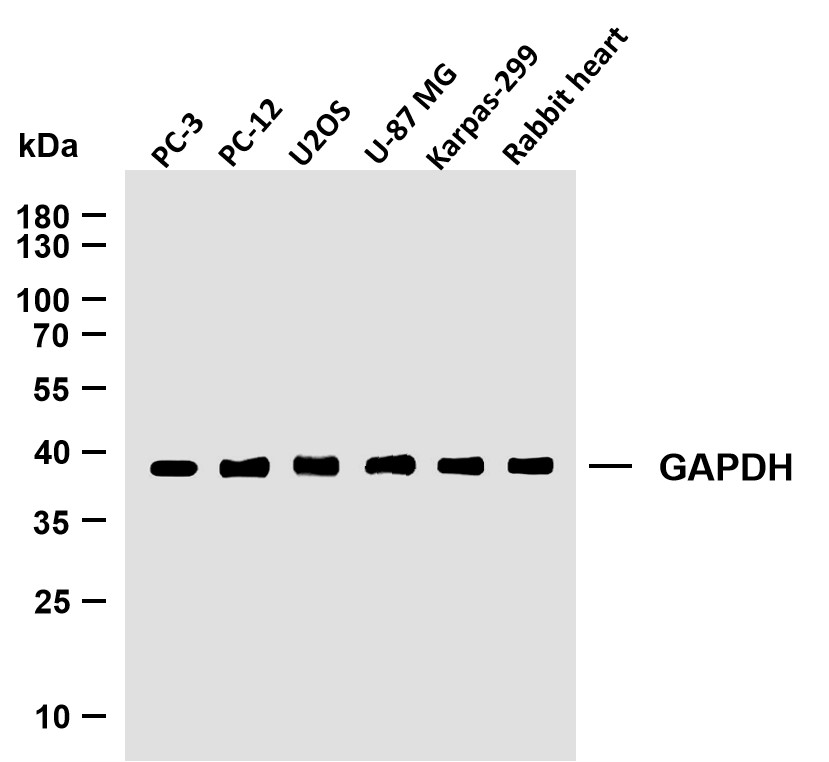
GAPDH (PTR2304) Mouse mAb
YM3029
预览→
抗原&靶点信息
免疫原:
Synthesized peptide derived from human E-Cadherin AA range: 700-800
展开内容
特异性:
The antibody can specifically recognize E-cadherin protein.
展开内容
基因名称:
CDH1 CDHE UVO
展开内容
蛋白名称:
Cadherin-1 (CAM 120/80) (Epithelial cadherin) (E-cadherin) (Uvomorulin) (CD antigen CD324) [Cleaved into: E-Cad/CTF1; E-Cad/CTF2; E-Cad/CTF3]
展开内容
背景:
This gene encodes a classical cadherin of the cadherin superfamily. Alternative splicing results in multiple transcript variants , at least one of which encodes a preproprotein that is proteolytically processed to generate the mature glycoprotein. This calcium-dependent cell-cell adhesion protein is comprised of five extracellular cadherin repeats , a transmembrane region and a highly conserved cytoplasmic tail. Mutations in this gene are correlated with gastric , breast , colorectal , thyroid and ovarian cancer. Loss of function of this gene is thought to contribute to cancer progression by increasing proliferation , invasion , and/or metastasis. The ectodomain of this protein mediates bacterial adhesion to mammalian cells and the cytoplasmic domain is required for internalization. This gene is present in a gene cluster with other members of the cadherin family on chromosome 16. [provided by RefSeq , Nov 2015] ,
展开内容
功能:
Disease:Defects in CDH1 are a cause of gastric cancer [MIM:137215]; also known as hereditary familial diffuse gastric cancer (HDGC) . ,Disease:Defects in CDH1 are a cause of susceptibility to endometrial cancer [MIM:608089]. ,Disease:Defects in CDH1 are associated with ovarian cancer [MIM:167000]. Ovarian cancer is the leading cause of death from gynecologic malignancy. It is characterized by advanced presentation with loco-regional dissemination in the peritoneal cavity and the rare incidence of visceral metastases. These typical features relate to the biology of the disease , which is a principal determinant of outcome. ,Disease:Defects in CDH1 are involved in dysfunction of the cell-cell adhesion system , triggering cancer invasion (gastric , breast , ovary , endometrium and thyroid) and metastasis. ,Function:Cadherins are calcium dependent cell adhesion proteins. ,Function:Cadherins are calcium-dependent cell adhesion proteins. They preferentially interact with themselves in a homophilic manner in connecting cells; cadherins may thus contribute to the sorting of heterogeneous cell types. CDH1 is involved in mechanisms regulating cell-cell adhesions , mobility and proliferation of epithelial cells. Has a potent invasive suppressor role. It is a ligand for integrin alpha-E/beta-7. ,Function:E-Cad/CTF2 promotes non-amyloidogenic degradation of Abeta precursors. Has a strong inhibitory effect on APP C99 and C83 production. ,online information:E-cadherin entry ,PTM:During apoptosis or with calcium influx , cleaved by a membrane-bound metalloproteinase (ADAM10) , PS1/gamma-secretase and caspase-3 to produce fragments of about 38 kDa (E-CAD/CTF1) , 33 kDa (E-CAD/CTF2) and 29 kDa (E-CAD/CTF3) , respectively. Processing by the metalloproteinase , induced by calcium influx , causes disruption of cell-cell adhesion and the subsequent release of beta-catenin into the cytoplasm. The residual membrane-tethered cleavage product is rapidly degraded via an intracellular proteolytic pathway. Cleavage by caspase-3 releases the cytoplasmic tail resulting in disintegration of the actin microfilament system. The gamma-secretase-mediated cleavage promotes disaaaembly of adherens junctions. ,similarity:Contains 5 cadherin domains. ,subcellular location:Colocalizes with DLGAP5 at sites of cell-cell contact in intestinal epithelial cells. Anchored to actin microfilaments through association with alpha- , beta- and gamma-catenin. Sequential proteolysis induced by apoptosis or calcium influx , results in translocation from sites of cell-cell contact to the cytoplasm. ,subunit:Homodimer; disulfide-linked. Interacts directly , via the cytoplasmic domain , with CTNNB1 or JUP to form the PSEN1/cadherin/catenin adhesion complex which connects to the actin skeleton through the actin binding of alpha-catenin. Interaction with PSEN1 , cleaves CDH1 resulting in the disassociation of cadherin-based adherens junctions (CAJs) . Interacts with AJAP1 , CTNND1 and DLGAP5. ,tissue specificity:Non-neural epithelial tissues. ,
展开内容
细胞定位:
Membranous
展开内容
组织表达:
研究领域:
>>Rap1 signaling pathway ;
>>Apelin signaling pathway ;
>>Hippo signaling pathway ;
>>Cell adhesion molecules ;
>>Adherens junction ;
>>Bacterial invasion of epithelial cells ;
>>Pathways in cancer ;
>>Endometrial cancer ;
>>Thyroid cancer ;
>>Melanoma ;
>>Bladder cancer ;
>>Gastric cancer
>>Apelin signaling pathway ;
>>Hippo signaling pathway ;
>>Cell adhesion molecules ;
>>Adherens junction ;
>>Bacterial invasion of epithelial cells ;
>>Pathways in cancer ;
>>Endometrial cancer ;
>>Thyroid cancer ;
>>Melanoma ;
>>Bladder cancer ;
>>Gastric cancer
展开内容
信号通路
Cellular Processes >> Cellular community - eukaryotes >> Adherens junction
Human Diseases >> Cancer: overview >> Pathways in cancer
Human Diseases >> Cancer: specific types >> Gastric cancer
Human Diseases >> Cancer: specific types >> Thyroid cancer
Human Diseases >> Cancer: specific types >> Melanoma
Human Diseases >> Cancer: specific types >> Bladder cancer
Human Diseases >> Cancer: specific types >> Endometrial cancer
Environmental Information Processing >> Signal transduction >> Rap1 signaling pathway
Environmental Information Processing >> Signal transduction >> Hippo signaling pathway
Environmental Information Processing >> Signal transduction >> Apelin signaling pathway
Environmental Information Processing >> Signaling molecules and interaction >> Cell adhesion molecules
文献引用({{totalcount}})
货号: YM6130
规格
价格
货期
数量
200μL
¥3,780.00
现货
0
100μL
¥2,300.00
现货
0
40μL
¥960.00
现货
0
加入购物车
已收藏
收藏
Recently Viewed Products
Clear all


×

Toggle night Mode
{{pinfoXq.title || ''}}
Catalog: {{pinfoXq.catalog || ''}}
Filter:
All
{{item.name}}
{{pinfo.title}}
-{{pinfo.catalog}}
主要信息
Target
{{pinfo.target}}
Reactivity
{{pinfo.react}}
Applications
{{pinfo.applicat}}
Conjugate/Modification
{{pinfo.coupling}}/{{pinfo.modific}}
MW (kDa)
{{pinfo.mwcalc}}
Host Species
{{pinfo.hostspec}}
Isotype
{{pinfo.isotype}}
产品 {{index}}/{{pcount}}
上一个产品
下一个产品
{{pvTitle}}
滚轮缩放图片
{{pvDescr}}