


Synuclein-α Mouse mAb
-YM0606




主要信息
Target
Synuclein-α
Host Species
Mouse
Reactivity
Human
Applications
WB, IHC, IF, ELISA
MW
14kD (Calculated)
Conjugate/Modification
Unmodified
货号: YM0606
规格
价格
货期
数量
200μL
¥5,880.00
一周
0
100μL
¥3,200.00
一周
0
50μL
¥2,000.00
一周
0
加入购物车


已收藏
收藏
详细信息
推荐稀释比
WB 1:500-1:2000; IHC 1:200-1:1000; ELISA 1:10000; IF 1:50-200
组成
Liquid in PBS containing 50% glycerol, 0.5% BSA and 0.02% sodium azide.
特异性
Synuclein-α Monoclonal Antibody detects endogenous levels of Synuclein-α protein.
纯化工艺
Affinity purification
储存
-15°C to -25°C/1 year (Do not lower than -25°C)
理论分子量
14kD
修饰
Unmodified
克隆性
Monoclonal
克隆号
16B2
相关产品
Primary Antibodies

Synuclein-α Rabbit pAb
YT5731
预览→
Primary Antibodies
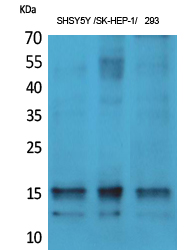
Synuclein-α (Phospho Tyr125) Rabbit pAb
YP1124
预览→
Primary Antibodies
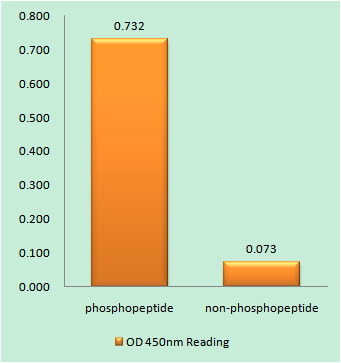
Synuclein-α (Phospho Tyr136) Rabbit pAb
YP0521
预览→
Primary Antibodies
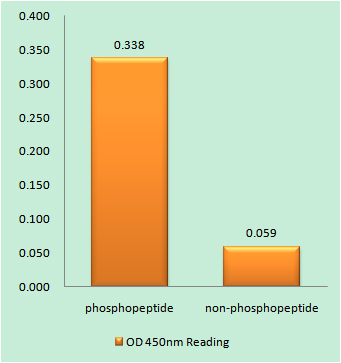
Synuclein-α (Phospho Tyr133) Rabbit pAb
YP0520
预览→
Primary Antibodies
Synuclein-α (Phospho Ser129) Rabbit pAb
YP0258
预览→
ELISA Kits
Total Synuclein-pan Cell-Based Colorimetric ELISA Kit
KA4383C
预览→
ELISA Kits
Total Synuclein-α Cell-Based Colorimetric ELISA Kit
KA3184C
预览→
ELISA Kits
Total Synuclein-α Cell-Based Colorimetric ELISA Kit
KA3183C
预览→
ELISA Kits
Synuclein-α (Phospho Tyr136) Cell-Based Colorimetric ELISA Kit
KA1663C
预览→
ELISA Kits
Synuclein-α (Phospho Tyr133) Cell-Based Colorimetric ELISA Kit
KA1662C
预览→
ELISA Kits
Synuclein-α (Phospho Ser129) Cell-Based Colorimetric ELISA Kit
KA1340C
预览→
抗原&靶点信息
免疫原:
Purified recombinant fragment of Synuclein-α expressed in E. Coli.
展开内容
特异性:
Synuclein-α Monoclonal Antibody detects endogenous levels of Synuclein-α protein.
展开内容
基因名称:
SNCA
展开内容
蛋白名称:
Alpha-synuclein
展开内容
别名:
SNCA ;
NACP ;
PARK1 ;
Alpha-synuclein ;
Non-A beta component of AD amyloid ;
Non-A4 component of amyloid precursor ;
NACP
NACP ;
PARK1 ;
Alpha-synuclein ;
Non-A beta component of AD amyloid ;
Non-A4 component of amyloid precursor ;
NACP
展开内容
背景:
Alpha-synuclein is a member of the synuclein family , which also includes beta- and gamma-synuclein. Synucleins are abundantly expressed in the brain and alpha- and beta-synuclein inhibit phospholipase D2 selectively. SNCA may serve to integrate presynaptic signaling and membrane trafficking. Defects in SNCA have been implicated in the pathogenesis of Parkinson disease. SNCA peptides are a major component of amyloid plaques in the brains of patients with Alzheimer's disease. Alternatively spliced transcripts encoding different isoforms have been identified for this gene. [provided by RefSeq , Feb 2016] ,
展开内容
功能:
Alternative products:Additional isoforms seem to exist ,Disease:Brain iron accumulation type 1 (NBIA1 , also called Hallervorden-Spatz syndrome) , a rare neuroaxonal dystrophy , is histologically characterized by axonal spheroids , iron deposition , Lewy body (LB) -like intraneuronal inclusions , glial inclusions and neurofibrillary tangles. SNCA is found in LB-like inclusions , glial inclusions and spheroids. ,Disease:Defects in SNCA are a cause of autosomal dominant Parkinson disease 1 (PARK1) [MIM:168601 , 168600]. Parkinson disease (PD) is a complex , multifactorial disorder that typically manifests after the age of 50 years , although early-onset cases (before 50 years) are known. PD generally arises as a sporadic condition but is occasionally inherited as a simple mendelian trait. Although sporadic and familial PD are very similar , inherited forms of the disease usually begin at earlier ages and are associated with atypical clinical features. PD is characterized by bradykinesia , resting tremor , muscular rigidity and postural instability , as well as by a clinically significant response to treatment with levodopa. The pathology involves the loss of dopaminergic neurons in the substantia nigra and the presence of Lewy bodies (intraneuronal accumulations of aggregated proteins) , in surviving neurons in various areas of the brain. ,Disease:Defects in SNCA are the cause of Lewy body dementia (DLB) [MIM:127750]. DLB is a neurodegenerative disorder clinically characterized by dementia and parkinsonism , often with fluctuating cognitive function , visual hallucinations , falls , syncopal episodes , and sensitivity to neuroleptic medication. Presence of Lewy bodies are the only essential pathologic features. ,Disease:Defects in SNCA are the cause of Parkinson disease 4 (PARK4) [MIM:605543 , 168600]. ,Disease:Deposition of fibrillar amyloid proteins intraneuronally as neurofibrillary tangles is characteristic of Alzheimer disease (AD) . SNCA is a minor protein found within these deposits , but a major non amyloid component. ,Domain:The NAC domain is involved in the fibril formation. The middle region forms the core of the filaments. The C-terminus may regulate aggregation and determine the diameter of the filaments. ,Function:May be involved in the regulation of dopamine release and transport. Soluble protein , normally localized primarily at the presynaptic region of axons , which can form filamentous aggregates that are the major non amyloid component of intracellular inclusions in several neurodegenerative diseases (synucleinopathies) . Induces fibrillization of microtubule-associated protein tau. Reduces neuronal responsiveness to various apoptotic stimuli , leading to a decreased caspase-3 activation. ,PTM:Hallmark lesions of neurodegenerative synucleinopathies contain alpha-synuclein that is modified by nitration of tyrosine residues and possibly by dityrosine cross-linking to generated stable oligomers. ,PTM:Phosphorylated , predominantly on serine residues. Phosphorylation by CK1 appears to occur on residues distinct from the residue phosphorylated by other kinases. Phosphorylation of Ser-129 is selective and extensive in synucleinopathy lesions. In vitro , phosphorylation at Ser-129 promoted insoluble fibril formation. Phosphorylated on Tyr-125 by a PTK2B-dependent pathway upon osmotic stress. ,PTM:Ubiquitinated. The predominant conjugate is the diubiquitinated form. ,similarity:Belongs to the synuclein family. ,subcellular location:Membrane-bound in dopaminergic neurons. Also found in the nucleus. ,subunit:Soluble monomer which can form filamentous aggregates. Interacts with UCHL1 (By similarity) . Interacts with phospholipase D and histones. ,tissue specificity:Expressed principally in brain but is also expressed in low concentrations in all tissues examined except in liver. Concentrated in presynaptic nerve terminals. ,
展开内容
细胞定位:
Cytoplasm . Membrane . Nucleus . Cell junction , synapse . Secreted . Cell projection , axon . Membrane-bound in dopaminergic neurons (PubMed:15282274) . Expressed and colocalized with SEPTIN4 in dopaminergic axon terminals , especially at the varicosities (By similarity) . .
展开内容
研究领域:
>>Alzheimer disease ;
>>Parkinson disease ;
>>Pathways of neurodegeneration - multiple diseases
>>Parkinson disease ;
>>Pathways of neurodegeneration - multiple diseases
展开内容
信号通路
文献引用({{totalcount}})
货号: YM0606
规格
价格
货期
数量
200μL
¥5,880.00
一周
0
100μL
¥3,200.00
一周
0
50μL
¥2,000.00
一周
0
加入购物车
已收藏
收藏
Recently Viewed Products
Clear all


×

Toggle night Mode
{{pinfoXq.title || ''}}
Catalog: {{pinfoXq.catalog || ''}}
Filter:
All
{{item.name}}
{{pinfo.title}}
-{{pinfo.catalog}}
主要信息
Target
{{pinfo.target}}
Reactivity
{{pinfo.react}}
Applications
{{pinfo.applicat}}
Conjugate/Modification
{{pinfo.coupling}}/{{pinfo.modific}}
MW (kDa)
{{pinfo.mwcalc}}
Host Species
{{pinfo.hostspec}}
Isotype
{{pinfo.isotype}}
产品 {{index}}/{{pcount}}
上一个产品
下一个产品
{{pvTitle}}
滚轮缩放图片
{{pvDescr}}