


NSE (PT2281) IHC kit
-IHCM6755



主要信息
Target
Enolase
Host Species
Mouse
Conjugate/Modification
Unmodified
货号: IHCM6755
规格
价格
货期
数量
100mL
¥14,800.00
一周
0
10mL
¥1,780.00
一周
0
3mL
¥780.00
一周
0
加入购物车


已收藏
收藏
详细信息
特异性
The antibody can specifically recognize human NSE protein.
纯化工艺
The antibody was affinity-purified from ascites by affinity-chromatography using specific immunogen.
储存
2°C to 8°C/1 year,Ship by ice bag
修饰
Unmodified
克隆性
Monoclonal
克隆号
PT2281
同种型
IgG1, Kappa
相关产品
Secondary Antibodies
Goat Anti Mouse IgG(H+L) (HRP)
RS0001
预览→
Secondary Antibodies
Goat Anti Rabbit IgG(H+L) (HRP)
RS0002
预览→
Primary Antibodies
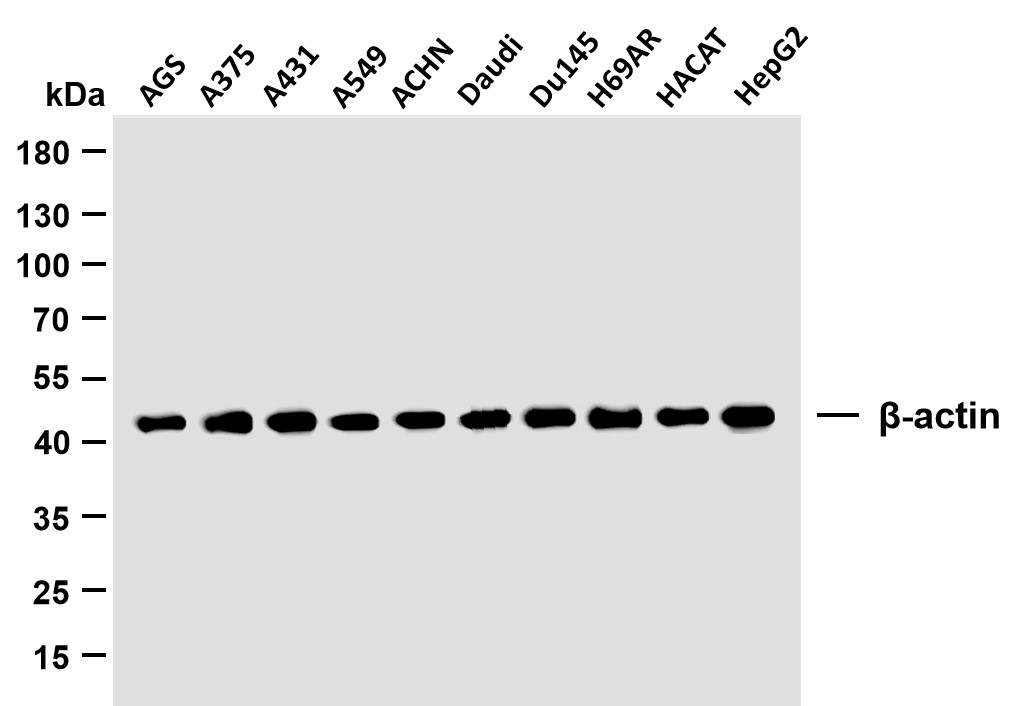
β-actin (PTR2364) Mouse mAb
YM3028
预览→
Primary Antibodies
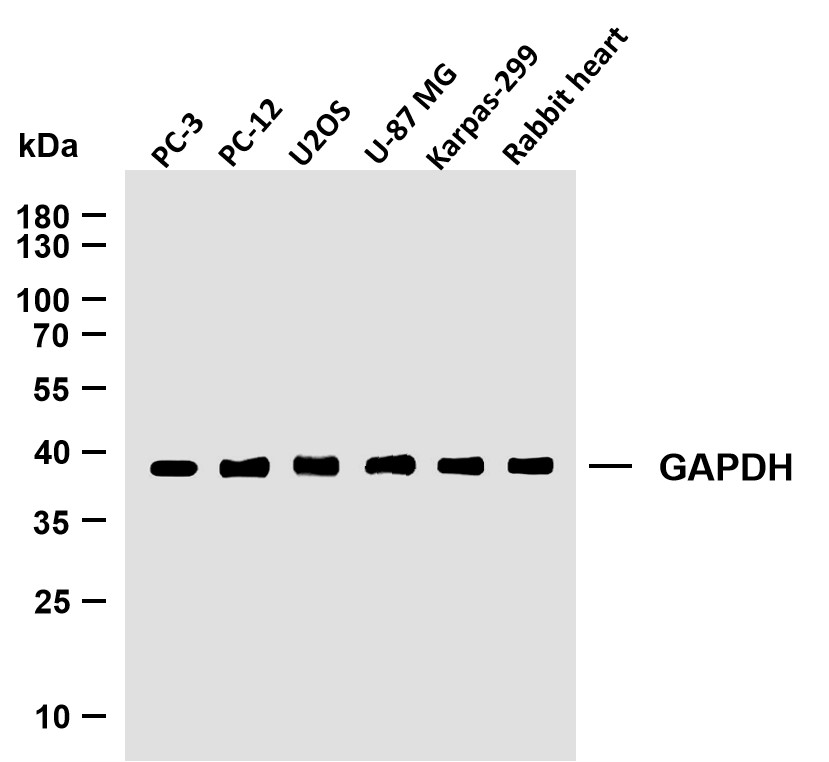
GAPDH (PTR2304) Mouse mAb
YM3029
预览→
抗原&靶点信息
免疫原:
Synthesized peptide derived from human Neuron-Specific Enolase(NSE) AA range: 300-434
展开内容
特异性:
The antibody can specifically recognize human NSE protein.
展开内容
基因名称:
ENO2
展开内容
蛋白名称:
Neuron-Specific Enolase (NSE)
展开内容
别名:
ENO2 ;
Gamma-enolase ;
2-phospho-D-glycerate hydro-lyase ;
Enolase 2 ;
Neural enolase ;
Neuron-specific enolase ;
NSE
Gamma-enolase ;
2-phospho-D-glycerate hydro-lyase ;
Enolase 2 ;
Neural enolase ;
Neuron-specific enolase ;
NSE
展开内容
背景:
enolase 2 (ENO2) Homo sapiens This gene encodes one of the three enolase isoenzymes found in mammals. This isoenzyme , a homodimer , is found in mature neurons and cells of neuronal origin. A switch from alpha enolase to gamma enolase occurs in neural tissue during development in rats and primates. [provided by RefSeq , Jul 2008] ,
展开内容
功能:
Catalytic activity:2-phospho-D-glycerate = phosphoenolpyruvate + H (2) O. ,cofactor:Magnesium. Required for catalysis and for stabilizing the dimer. ,developmental stage:During ontogenesis , there is a transition from the alpha/alpha homodimer to the alpha/beta heterodimer in striated muscle cells , and to the alpha/gamma heterodimer in nerve cells. ,Function:Has neurotrophic and neuroprotective properties on a broad spectrum of central nervous system (CNS) neurons. Binds , in a calcium-dependent manner , to cultured neocortical neurons and promotes cell survival. ,induction:Levels of ENO2 increase dramatically in cardiovascular accidents , cerebral trauma , brain tumors and Creutzfeldt-Jacob disease. ,pathway:Carbohydrate degradation; glycolysis; pyruvate from D-glyceraldehyde 3-phosphate: step 4/5. ,similarity:Belongs to the enolase family. ,subcellular location:Can translocate to the plasma membrane in either the homodimeric (alpha/alpha) or heterodimeric (alpha/gamma) form. ,subunit:Mammalian enolase is composed of 3 isozyme subunits , alpha , beta and gamma , which can form homodimers or heterodimers which are cell-type and development-specific. ,tissue specificity:The alpha/alpha homodimer is expressed in embryo and in most adult tissues. The alpha/beta heterodimer and the beta/beta homodimer are found in striated muscle , and the alpha/gamma heterodimer and the gamma/gamma homodimer in neurons. ,
展开内容
细胞定位:
Cytoplasmic
展开内容
研究领域:
>>Glycolysis / Gluconeogenesis ;
>>Metabolic pathways ;
>>Carbon metabolism ;
>>Biosynthesis of amino acids ;
>>RNA degradation ;
>>HIF-1 signaling pathway
>>Metabolic pathways ;
>>Carbon metabolism ;
>>Biosynthesis of amino acids ;
>>RNA degradation ;
>>HIF-1 signaling pathway
展开内容
信号通路
文献引用({{totalcount}})
货号: IHCM6755
规格
价格
货期
数量
100mL
¥14,800.00
一周
0
10mL
¥1,780.00
一周
0
3mL
¥780.00
一周
0
加入购物车
已收藏
收藏
Recently Viewed Products
Clear all


×

Toggle night Mode
{{pinfoXq.title || ''}}
Catalog: {{pinfoXq.catalog || ''}}
Filter:
All
{{item.name}}
{{pinfo.title}}
-{{pinfo.catalog}}
主要信息
Target
{{pinfo.target}}
Reactivity
{{pinfo.react}}
Applications
{{pinfo.applicat}}
Conjugate/Modification
{{pinfo.coupling}}/{{pinfo.modific}}
MW (kDa)
{{pinfo.mwcalc}}
Host Species
{{pinfo.hostspec}}
Isotype
{{pinfo.isotype}}
产品 {{index}}/{{pcount}}
上一个产品
下一个产品
{{pvTitle}}
滚轮缩放图片
{{pvDescr}}