


GLUT-1 (ABT-GLUT1) IHC kit
-IHCM6583



主要信息
Target
GLUT-1
Host Species
Mouse
Conjugate/Modification
Unmodified
货号: IHCM6583
规格
价格
货期
数量
100mL
¥14,800.00
一周
0
10mL
¥1,780.00
一周
0
3mL
¥780.00
一周
0
加入购物车


已收藏
收藏
详细信息
特异性
The antibody can specifically recognize human GLUT-1 protein.
纯化工艺
The antibody was affinity-purified from ascites by affinity-chromatography using specific immunogen.
储存
2°C to 8°C/1 year,Ship by ice bag
修饰
Unmodified
克隆性
Monoclonal
克隆号
ABT-GLUT1
同种型
IgG2a, Kappa
相关产品
Secondary Antibodies
Goat Anti Mouse IgG(H+L) (HRP)
RS0001
预览→
Secondary Antibodies
Goat Anti Rabbit IgG(H+L) (HRP)
RS0002
预览→
Primary Antibodies
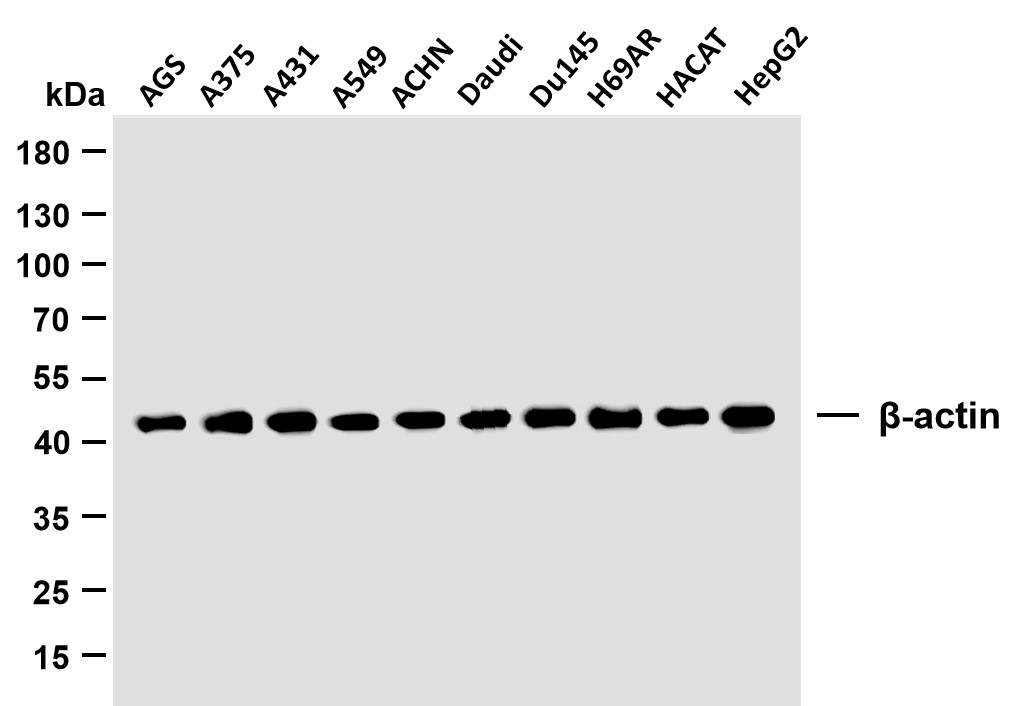
β-actin (PTR2364) Mouse mAb
YM3028
预览→
Primary Antibodies
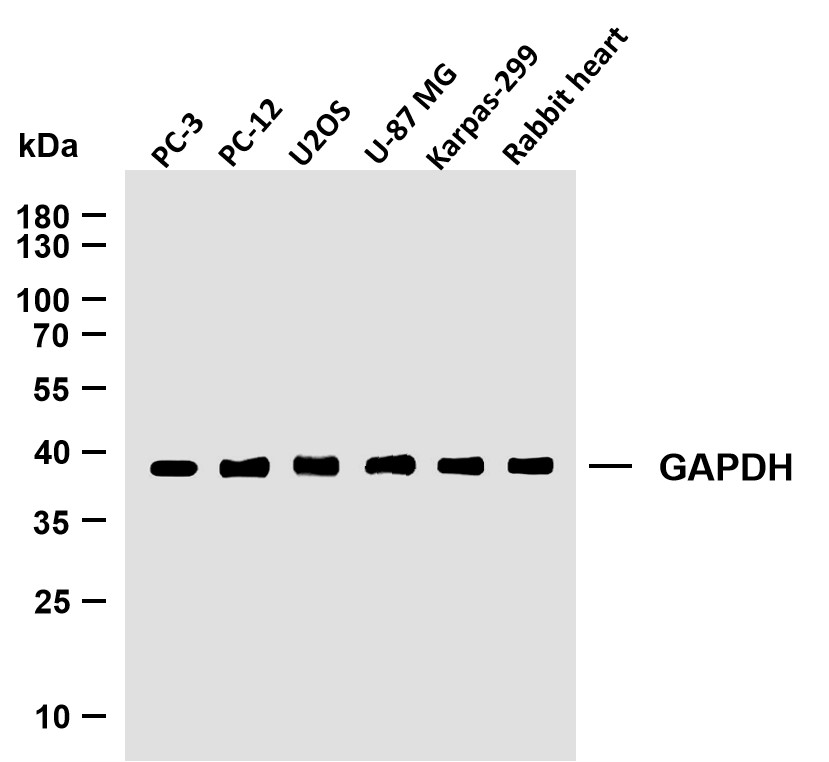
GAPDH (PTR2304) Mouse mAb
YM3029
预览→
抗原&靶点信息
免疫原:
Synthesized peptide derived from human GLUT-1 AA range: 400-492
展开内容
特异性:
The antibody can specifically recognize human GLUT-1 protein.
展开内容
基因名称:
SLC2A1 GLUT1
展开内容
蛋白名称:
Solute carrier family 2, facilitated glucose transporter member 1 (Glucose transporter type 1, erythrocyte/brain) (GLUT-1) (HepG2 glucose transporter)
展开内容
背景:
This gene encodes a major glucose transporter in the mammalian blood-brain barrier. The encoded protein is found primarily in the cell membrane and on the cell surface , where it can also function as a receptor for human T-cell leukemia virus (HTLV) I and II. Mutations in this gene have been found in a family with paroxysmal exertion-induced dyskinesia. [provided by RefSeq , Apr 2013] ,
展开内容
功能:
Disease:Defects in SLC2A1 are the cause of autosomal dominant GLUT1 deficiency syndrome [MIM:606777]; also called blood-brain barrier glucose transport defect. This disease causes a defect in glucose transport across the blood-brain barrier. It is characterized by infantile seizures , delayed development , and acquired microcephaly. ,Disease:Defects in SLC2A1 are the cause of dystonia type 18 (DYT18) [MIM:612126]. DYT18 is an exercise-induced paroxysmal dystonia/dyskinesia. Dystonia is defined by the presence of sustained involuntary muscle contraction , often leading to abnormal postures. DYT18 is characterized by attacks of involuntary movements triggered by certain stimuli such as sudden movement or prolonged exercise. In some patients involuntary exertion-induced dystonic , choreoathetotic , and ballistic movements may be associated with macrocytic hemolytic anemia. ,Function:Facilitative glucose transporter. This isoform may be responsible for constitutive or basal glucose uptake. Has a very broad substrate specificity; can transport a wide range of aldoses including both pentoses and hexoses. ,online information:GLUT1 entry ,PTM:Phosphorylated upon DNA damage , probably by ATM or ATR. ,similarity:Belongs to the major facilitator superfamily. Sugar transporter (TC 2.A.1.1) family. Glucose transporter subfamily. ,subcellular location:Localizes primarily at the cell surface (By similarity) . Identified by mass spectrometry in melanosome fractions from stage I to stage IV. ,tissue specificity:Expressed at variable levels in many human tissues. ,
展开内容
细胞定位:
Membranous
展开内容
组织表达:
研究领域:
>>HIF-1 signaling pathway ;
>>Insulin secretion ;
>>Thyroid hormone signaling pathway ;
>>Adipocytokine signaling pathway ;
>>Glucagon signaling pathway ;
>>Insulin resistance ;
>>Bile secretion ;
>>Human T-cell leukemia virus 1 infection ;
>>Pathways in cancer ;
>>Renal cell carcinoma ;
>>Central carbon metabolism in cancer ;
>>Diabetic cardiomyopathy
>>Insulin secretion ;
>>Thyroid hormone signaling pathway ;
>>Adipocytokine signaling pathway ;
>>Glucagon signaling pathway ;
>>Insulin resistance ;
>>Bile secretion ;
>>Human T-cell leukemia virus 1 infection ;
>>Pathways in cancer ;
>>Renal cell carcinoma ;
>>Central carbon metabolism in cancer ;
>>Diabetic cardiomyopathy
展开内容
信号通路
Organismal Systems >> Endocrine system >> Insulin secretion
Organismal Systems >> Endocrine system >> Glucagon signaling pathway
Organismal Systems >> Endocrine system >> Adipocytokine signaling pathway
Organismal Systems >> Endocrine system >> Thyroid hormone signaling pathway
Human Diseases >> Cancer: overview >> Pathways in cancer
Human Diseases >> Cancer: overview >> Central carbon metabolism in cancer
Human Diseases >> Cancer: specific types >> Renal cell carcinoma
Environmental Information Processing >> Signal transduction >> HIF-1 signaling pathway
文献引用({{totalcount}})
货号: IHCM6583
规格
价格
货期
数量
100mL
¥14,800.00
一周
0
10mL
¥1,780.00
一周
0
3mL
¥780.00
一周
0
加入购物车
已收藏
收藏
Recently Viewed Products
Clear all


×

Toggle night Mode
{{pinfoXq.title || ''}}
Catalog: {{pinfoXq.catalog || ''}}
Filter:
All
{{item.name}}
{{pinfo.title}}
-{{pinfo.catalog}}
主要信息
Target
{{pinfo.target}}
Reactivity
{{pinfo.react}}
Applications
{{pinfo.applicat}}
Conjugate/Modification
{{pinfo.coupling}}/{{pinfo.modific}}
MW (kDa)
{{pinfo.mwcalc}}
Host Species
{{pinfo.hostspec}}
Isotype
{{pinfo.isotype}}
产品 {{index}}/{{pcount}}
上一个产品
下一个产品
{{pvTitle}}
滚轮缩放图片
{{pvDescr}}