


Rad21 Rabbit pAb
-YT3960




主要信息
Target
Rad21
Host Species
Rabbit
Reactivity
Human, Mouse
Applications
WB, IHC, IF, ELISA
MW
75kD (Calculated)
120-130kD (Observed)
Conjugate/Modification
Unmodified

货号: YT3960
规格
价格
货期
数量
200μL
¥3,780.00
一个月
0
100μL
¥2,300.00
一个月
0
40μL
¥960.00
一个月
0
加入购物车


已收藏
收藏
详细信息
推荐稀释比
WB 1:500-1:2000; IHC 1:100-1:300; IF 1:200-1:1000; ELISA 1:5000; Not yet tested in other applications.
Note: For IHC, we suggest antigen retrieval with TE buffer pH 9.0 (Cat#YS0004)
Note: For IHC, we suggest antigen retrieval with TE buffer pH 9.0 (Cat#YS0004)
组成
Liquid in PBS containing 50% glycerol, 0.5% BSA and 0.02% sodium azide.
特异性
Rad21 Polyclonal Antibody detects endogenous levels of Rad21 protein.
纯化工艺
The antibody was affinity-purified from rabbit antiserum by affinity-chromatography using epitope-specific immunogen.
储存
-15°C to -25°C/1 year (Do not lower than -25°C)
浓度
1 mg/ml
理论分子量
75kD
实测条带
120-130kD
修饰
Unmodified
克隆性
Polyclonal
同种型
IgG
相关产品
Secondary Antibodies
Goat Anti Mouse IgG(H+L) (HRP)
RS0001
预览→
Secondary Antibodies
Goat Anti Rabbit IgG(H+L) (HRP)
RS0002
预览→
Primary Antibodies
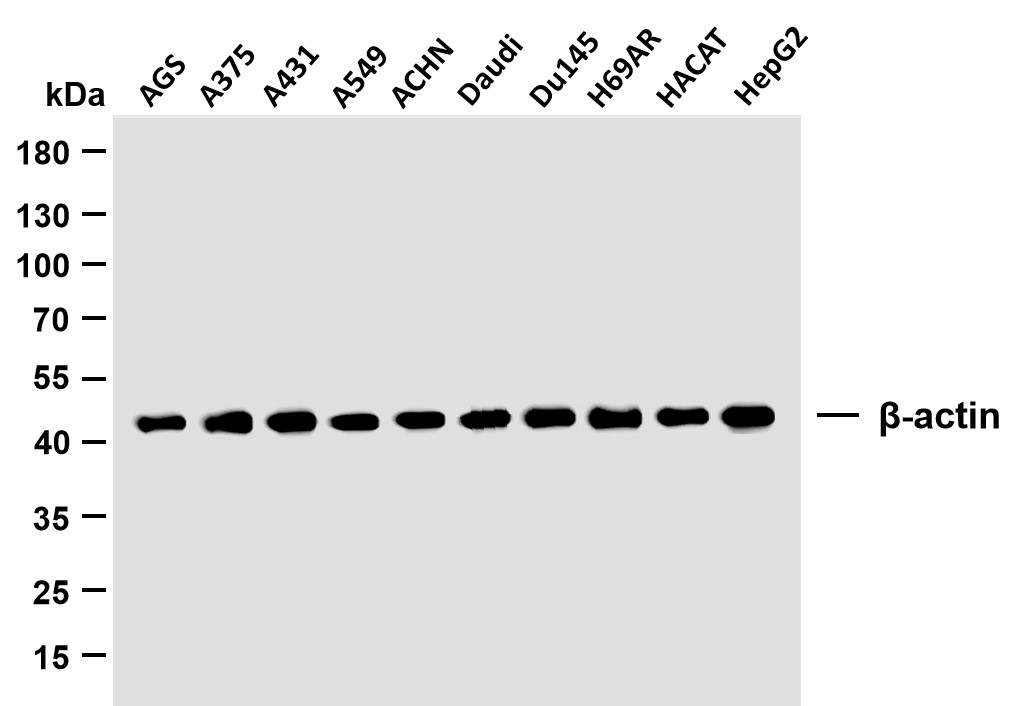
β-actin (PTR2364) Mouse mAb
YM3028
预览→
Primary Antibodies
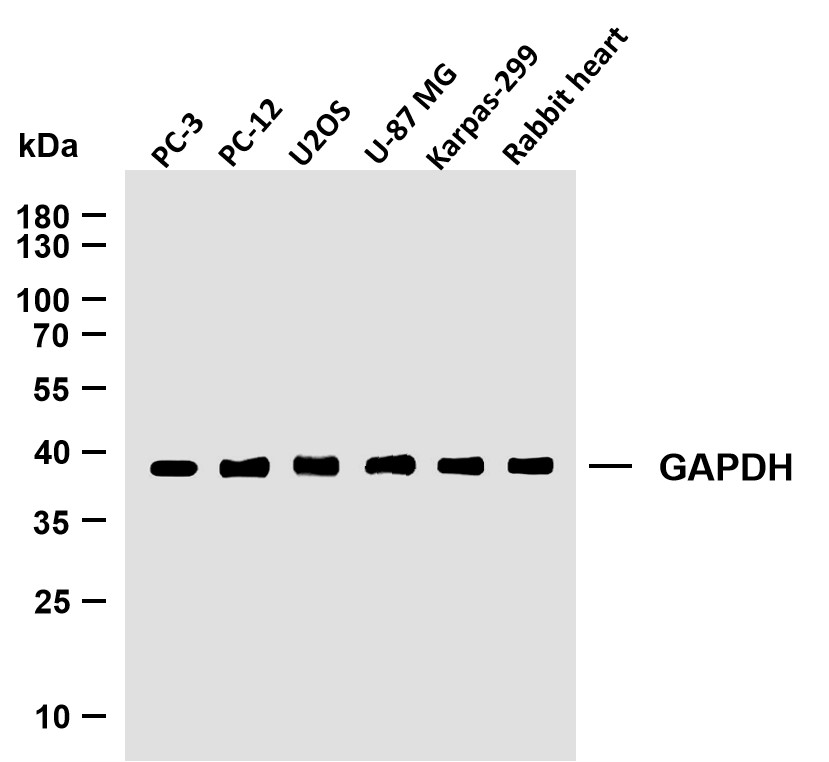
GAPDH (PTR2304) Mouse mAb
YM3029
预览→
抗原&靶点信息
免疫原:
The antiserum was produced against synthesized peptide derived from human RAD21. AA range:521-570
展开内容
特异性:
Rad21 Polyclonal Antibody detects endogenous levels of Rad21 protein.
展开内容
基因名称:
RAD21
展开内容
蛋白名称:
Double-strand-break repair protein rad21 homolog
展开内容
别名:
RAD21 ;
HR21 ;
KIAA0078 ;
NXP1 ;
Double-strand-break repair protein rad21 homolog ;
hHR21 ;
Nuclear matrix protein 1 ;
NXP-1 ;
SCC1 homolog
HR21 ;
KIAA0078 ;
NXP1 ;
Double-strand-break repair protein rad21 homolog ;
hHR21 ;
Nuclear matrix protein 1 ;
NXP-1 ;
SCC1 homolog
展开内容
背景:
The protein encoded by this gene is highly similar to the gene product of Schizosaccharomyces pombe rad21 , a gene involved in the repair of DNA double-strand breaks , as well as in chromatid cohesion during mitosis. This protein is a nuclear phospho-protein , which becomes hyperphosphorylated in cell cycle M phase. The highly regulated association of this protein with mitotic chromatin specifically at the centromere region suggests its role in sister chromatid cohesion in mitotic cells. [provided by RefSeq , Jul 2008] ,
展开内容
功能:
Domain:The C-terminal part associates with the head of SMC1A , while the N-terminal part binds to the head of SMC3. ,Function:Cleavable component of the cohesin complex , involved in chromosome cohesion during cell cycle , in DNA repair , and in apoptosis. The cohesin complex is required for the cohesion of sister chromatids after DNA replication. The cohesin complex apparently forms a large proteinaceous ring within which sister chromatids can be trapped. At metaphase-anaphase transition , this protein is cleaved by separase/ESPL1 and dissociates from chromatin , allowing sister chromatids to segregate. The cohesin complex may also play a role in spindle pole assembly during mitosis. Also plays a role in apoptosis , via its cleavage by caspase-3/CASP3 or caspase-7/CASP7 during early steps of apoptosis: the C-terminal 64 kDa cleavage product may act as a nuclear signal to initiate cytoplasmic events involved in the apoptotic pathway. ,polymorphism:Some radiosensitive cancer patients seem to have Arg-481 instead of the conserved Gly-481. It may be that this mutation could contribute to radiosensitivity. ,PTM:Cleaved by separase/ESPL1 at the onset of anaphase. Cleaved by caspase-3 and caspase-7 at the beginning of apoptosis. The cleavage by ESPL1 and caspase-3 take place at different sites. ,PTM:Phosphorylated; becomes hyperphosphorylated in M phase of cell cycle. The large dissociation of cohesin from chromosome arms during prophase may be partly due to its phosphorylation by PLK. ,similarity:Belongs to the rad21 family. ,subcellular location:Associates with chromatin. Before prophase it is scattered along chromosome arms. During prophase , most of cohesin complexes dissociate from chromatin probably because of phosphorylation by PLK , except at centromeres , where cohesin complexes remain. At anaphase , it is cleaved by separase/ESPL1 , leading to the dissociation of the complex from chromosomes , allowing chromosome separation. Once cleaved by caspase-3 , the C-terminal 64 kDa cleavage product translocates to the cytoplasm , where it may trigger apoptosis. ,subunit:Cohesin complexes are composed of the SMC1 (SMC1A or SMC1B) and SMC3 heterodimer attached via their hinge domain , RAD21 which link them , and one STAG protein (STAG1 , STAG2 or STAG3) , which interacts with RAD21. Found in a complex with SMC1A , SMC3 , CDCA5 , PDS5A/APRIN and PDS5B/SCC-112. ,
展开内容
细胞定位:
[Double-strand-break repair protein rad21 homolog]: Nucleus . Nucleus matrix . Chromosome . Chromosome , centromere . Cytoplasm , cytoskeleton , spindle pole . Associates with chromatin (PubMed:11590136 , PubMed:11073952) . Before prophase , scattered along chromosome arms (PubMed:11073952) . During prophase and prometaphase , most cohesins dissociate from the arms of condensing chromosome , possibly through PLK1-mediated phosphorylation (PubMed:11931760) . A small amount of cohesin remains in centromeric regions and is removed from chromosomes only at the onset of anaphase. At anaphase , cleavage by separase/ESPL1 leads to the dissociation of cohesin from chromosomes and chromosome separation (PubMed:11073952 , PubMed:11509732) . .; [64-kDa C-terminal product]: Cytoplasm , cytosol . Nucleus .
展开内容
组织表达:
研究领域:
>>Cell cycle
展开内容
文献引用({{totalcount}})
货号: YT3960
规格
价格
货期
数量
200μL
¥3,780.00
一个月
0
100μL
¥2,300.00
一个月
0
40μL
¥960.00
一个月
0
加入购物车
已收藏
收藏
Recently Viewed Products
Clear all


×

Toggle night Mode
{{pinfoXq.title || ''}}
Catalog: {{pinfoXq.catalog || ''}}
Filter:
All
{{item.name}}
{{pinfo.title}}
-{{pinfo.catalog}}
主要信息
Target
{{pinfo.target}}
Reactivity
{{pinfo.react}}
Applications
{{pinfo.applicat}}
Conjugate/Modification
{{pinfo.coupling}}/{{pinfo.modific}}
MW (kDa)
{{pinfo.mwcalc}}
Host Species
{{pinfo.hostspec}}
Isotype
{{pinfo.isotype}}
产品 {{index}}/{{pcount}}
上一个产品
下一个产品
{{pvTitle}}
滚轮缩放图片
{{pvDescr}}