



PDGFR-β (Phospho Tyr1021) Rabbit pAb
-YP0994




主要信息
Target
PDGFR-β Phospho Tyr1021
Host Species
Rabbit
Reactivity
Human, Mouse, Rat
Applications
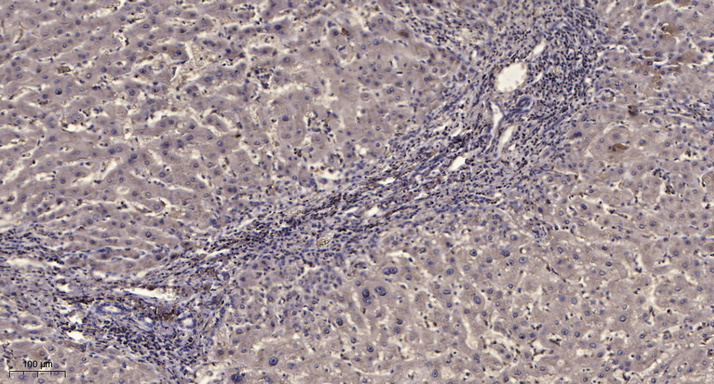
WB, IHC, IF, ELISA
MW
135-180kD (Observed)
Conjugate/Modification
phosphate
货号: YP0994
规格
价格
货期
数量
200μL
¥4,680.00
现货
0
100μL
¥2,800.00
现货
0
50μL
¥1,500.00
现货
0
加入购物车


已收藏
收藏
详细信息
推荐稀释比
WB 1:500-2000; IHC 1:100-1:300; ELISA 1:5000; IF 1:50-200
Note: For IHC, we suggest antigen retrieval with TE buffer pH 9.0 (Cat#YS0004)
Note: For IHC, we suggest antigen retrieval with TE buffer pH 9.0 (Cat#YS0004)
组成
Liquid in PBS containing 50% glycerol, 0.5% BSA and 0.02% sodium azide.
特异性
Phospho-PDGFR-β (Y1021) Polyclonal Antibody detects endogenous levels of PDGFR-β protein only when phosphorylated at Y1021.The name of modified sites may be influenced by many factors, such as species (the modified site was not originally found in human samples) and the change of protein sequence (the previous protein sequence is incomplete, and the protein sequence may be prolonged with the development of protein sequencing technology). When naming, we will use the "numbers" in historical reference to keep the sites consistent with the reports. The antibody binds to the following modification sequence (lowercase letters are modification sites):NDyII
纯化工艺
The antibody was affinity-purified from rabbit antiserum by affinity-chromatography using epitope-specific immunogen.
储存
-15°C to -25°C/1 year (Do not lower than -25°C)
浓度
1 mg/ml
实测条带
135-180kD
修饰
phosphate
克隆性
Polyclonal
同种型
IgG
相关产品
Primary Antibodies

PDGFR-β Rabbit pAb
YT3639
预览→
Primary Antibodies
PDGFR-β Rabbit pAb
YT3638
预览→
Primary Antibodies
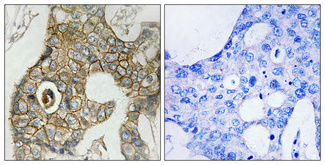
PDGFR-β (Phospho Tyr751) Rabbit pAb
YP1123
预览→
Primary Antibodies
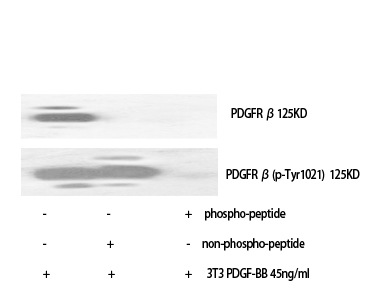
PDGFR-β (Phospho Tyr1021) Rabbit pAb
YP0994
预览→
Primary Antibodies
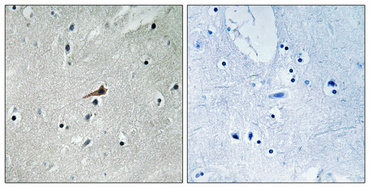
PDGFR-β (Phospho Tyr740) Rabbit pAb
YP0742
预览→
Primary Antibodies
PDGFR-β (Phospho Tyr771) Rabbit pAb
YP0431
预览→
ELISA Kits
Total PDGFR-β Cell-Based Colorimetric ELISA Kit
KA4226C
预览→
ELISA Kits
PDGFR-β (Phospho Tyr740) Cell-Based Colorimetric ELISA Kit
KA1469C
预览→
抗原&靶点信息
免疫原:
The antiserum was produced against synthesized peptide derived from human PDGFR beta around the phosphorylation site of Tyr1021. AA range:991-1040
展开内容
特异性:
Phospho-PDGFR-β (Y1021) Polyclonal Antibody detects endogenous levels of PDGFR-β protein only when phosphorylated at Y1021.The name of modified sites may be influenced by many factors, such as species (the modified site was not originally found in human samples) and the change of protein sequence (the previous protein sequence is incomplete, and the protein sequence may be prolonged with the development of protein sequencing technology). When naming, we will use the "numbers" in historical reference to keep the sites consistent with the reports. The antibody binds to the following modification sequence (lowercase letters are modification sites):NDyII
展开内容
基因名称:
PDGFRB PDGFR PDGFR1
展开内容
蛋白名称:
Platelet-derived growth factor receptor beta
展开内容
别名:
PDGFRB ;
PDGFR ;
PDGFR1 ;
Platelet-derived growth factor receptor beta ;
PDGF-R-beta ;
PDGFR-beta ;
Beta platelet-derived growth factor receptor ;
Beta-type platelet-derived growth factor receptor ;
CD140 antigen-like family member B ;
Platelet-deri
PDGFR ;
PDGFR1 ;
Platelet-derived growth factor receptor beta ;
PDGF-R-beta ;
PDGFR-beta ;
Beta platelet-derived growth factor receptor ;
Beta-type platelet-derived growth factor receptor ;
CD140 antigen-like family member B ;
Platelet-deri
展开内容
背景:
This gene encodes a cell surface tyrosine kinase receptor for members of the platelet-derived growth factor family. These growth factors are mitogens for cells of mesenchymal origin. The identity of the growth factor bound to a receptor monomer determines whether the functional receptor is a homodimer or a heterodimer , composed of both platelet-derived growth factor receptor alpha and beta polypeptides. This gene is flanked on chromosome 5 by the genes for granulocyte-macrophage colony-stimulating factor and macrophage-colony stimulating factor receptor; all three genes may be implicated in the 5-q syndrome. A translocation between chromosomes 5 and 12 , that fuses this gene to that of the translocation , ETV6 , leukemia gene , results in chronic myeloproliferative disorder with eosinophilia. [provided by RefSeq , Jul 2008] ,
展开内容
功能:
Catalytic activity:ATP + a [protein]-L-tyrosine = ADP + a [protein]-L-tyrosine phosphate. ,Disease:A chromosomal aberration involving PDGFRB is a cause in many instances of chronic myeloproliferative disorder with eosinophilia (MPE) [MIM:131440]. Translocation t (5;12) with ETV6 on chromosome 12 creating an PDGFRB-ETV6 fusion protein. ,Disease:A chromosomal aberration involving PDGFRB is found in a form of chronic myelomonocytic leukemia (CMML) . Translocation t (5;12) (q33;p13) with EVT6/TEL. It is characterized by abnormal clonal myeloid proliferation and by progression to acute myelogenous leukemia (AML) . ,Disease:A chromosomal aberration involving PDGFRB may be a cause of acute myelogenous leukemia. Translocation t (5;14) (q33;q32) with TRIP11. The fusion protein may be involved in clonal evolution of leukemia and eosinophilia. ,Disease:A chromosomal aberration involving PDGFRB may be a cause of juvenile myelomonocytic leukemia. Translocation t (5;17) (q33;p11.2) with SPECC1. ,Disease:A chromosomal aberration involving PDGFRB may be the cause of a myeloproliferative disorder (MBD) associated with eosinophilia. Translocation t (1;5) (q23;q33) that forms a PDE4DIP-PDGFRB fusion protein. ,Function:Receptor that binds specifically to PDGFB and PDGFD and has a tyrosine-protein kinase activity. Phosphorylates Tyr residues at the C-terminus of PTPN11 creating a binding site for the SH2 domain of GRB2. ,similarity:Belongs to the protein kinase superfamily. Tyr protein kinase family. ,similarity:Belongs to the protein kinase superfamily. Tyr protein kinase family. CSF-1/PDGF receptor subfamily. ,similarity:Contains 1 protein kinase domain. ,similarity:Contains 5 Ig-like C2-type (immunoglobulin-like) domains. ,subunit:Homodimer , and heterodimer with PDGFRA. Interacts with APS. The autophosphorylated form interacts directly with SHB and with PIK3C2B , maybe indirectly. ,
展开内容
细胞定位:
Cell membrane; Single-pass type I membrane protein. Cytoplasmic vesicle. Lysosome lumen. After ligand binding , the autophosphorylated receptor is ubiquitinated and internalized , leading to its degradation.
展开内容
组织表达:
展开内容
研究领域:
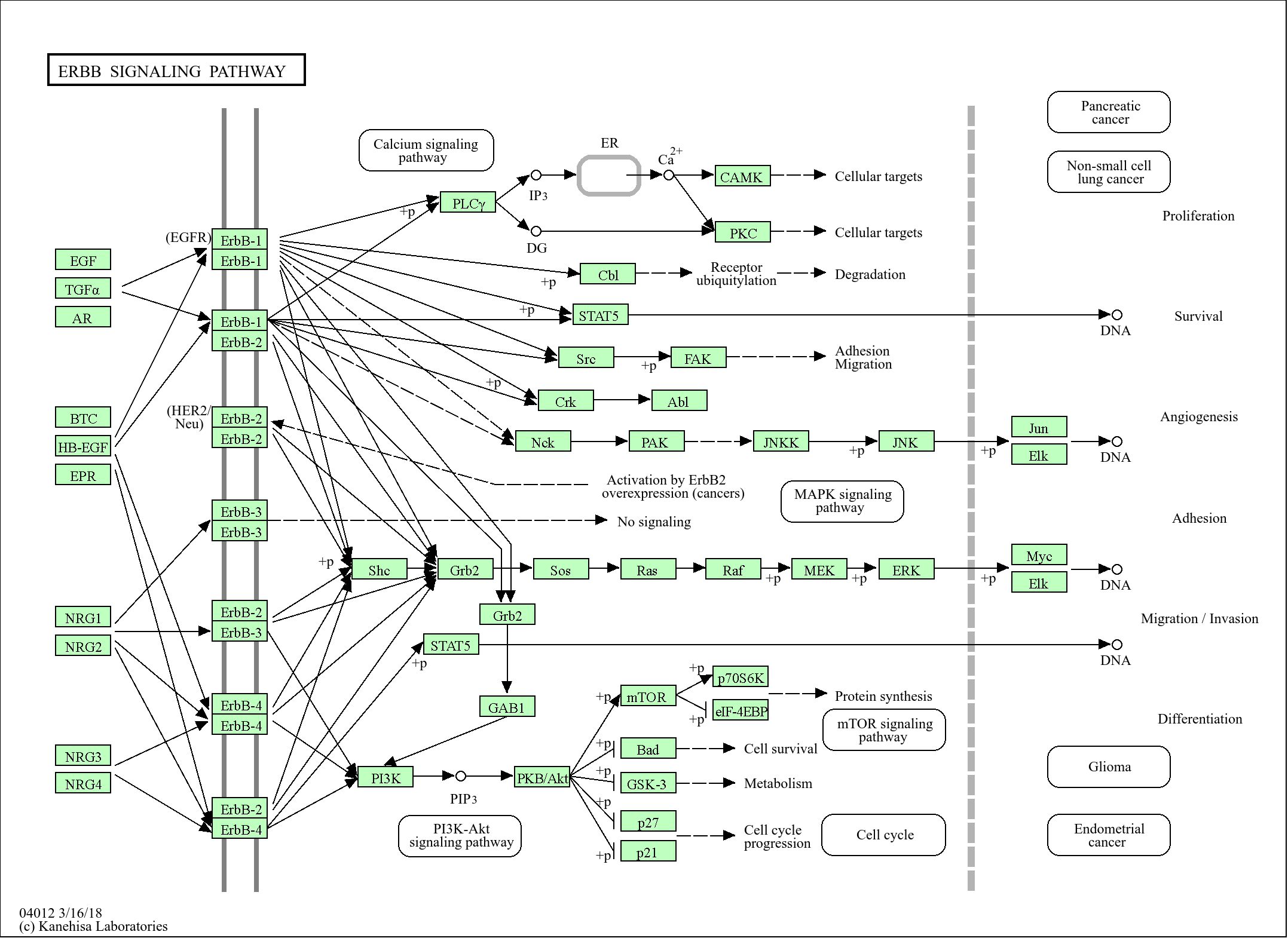
>>EGFR tyrosine kinase inhibitor resistance ;
>>MAPK signaling pathway ;
>>Ras signaling pathway ;
>>Rap1 signaling pathway ;
>>Calcium signaling pathway ;
>>Phospholipase D signaling pathway ;
>>PI3K-Akt signaling pathway ;
>>Focal adhesion ;
>>Gap junction ;
>>JAK-STAT signaling pathway ;
>>Regulation of actin cytoskeleton ;
>>Human papillomavirus infection ;
>>Pathways in cancer ;
>>MicroRNAs in cancer ;
>>Glioma ;
>>Prostate cancer ;
>>Melanoma ;
>>Central carbon metabolism in cancer ;
>>Choline metabolism in cancer
>>MAPK signaling pathway ;
>>Ras signaling pathway ;
>>Rap1 signaling pathway ;
>>Calcium signaling pathway ;
>>Phospholipase D signaling pathway ;
>>PI3K-Akt signaling pathway ;
>>Focal adhesion ;
>>Gap junction ;
>>JAK-STAT signaling pathway ;
>>Regulation of actin cytoskeleton ;
>>Human papillomavirus infection ;
>>Pathways in cancer ;
>>MicroRNAs in cancer ;
>>Glioma ;
>>Prostate cancer ;
>>Melanoma ;
>>Central carbon metabolism in cancer ;
>>Choline metabolism in cancer
展开内容
信号通路
Cellular Processes >> Cellular community - eukaryotes >> Focal adhesion
Cellular Processes >> Cellular community - eukaryotes >> Gap junction
Cellular Processes >> Cell motility >> Regulation of actin cytoskeleton
Human Diseases >> Cancer: overview >> Pathways in cancer
Human Diseases >> Cancer: overview >> MicroRNAs in cancer
Human Diseases >> Cancer: overview >> Central carbon metabolism in cancer
Human Diseases >> Cancer: specific types >> Glioma
Human Diseases >> Cancer: specific types >> Melanoma
Human Diseases >> Cancer: specific types >> Prostate cancer
Environmental Information Processing >> Signal transduction >> MAPK signaling pathway
Environmental Information Processing >> Signal transduction >> Ras signaling pathway
Environmental Information Processing >> Signal transduction >> Rap1 signaling pathway
Environmental Information Processing >> Signal transduction >> JAK-STAT signaling pathway
Environmental Information Processing >> Signal transduction >> Calcium signaling pathway
Environmental Information Processing >> Signal transduction >> Phospholipase D signaling pathway
Environmental Information Processing >> Signal transduction >> PI3K-Akt signaling pathway
文献引用({{totalcount}})
货号: YP0994
规格
价格
货期
数量
200μL
¥4,680.00
现货
0
100μL
¥2,800.00
现货
0
50μL
¥1,500.00
现货
0
加入购物车
已收藏
收藏
Recently Viewed Products
Clear all


×

Toggle night Mode
{{pinfoXq.title || ''}}
Catalog: {{pinfoXq.catalog || ''}}
Filter:
All
{{item.name}}
{{pinfo.title}}
-{{pinfo.catalog}}
主要信息
Target
{{pinfo.target}}
Reactivity
{{pinfo.react}}
Applications
{{pinfo.applicat}}
Conjugate/Modification
{{pinfo.coupling}}/{{pinfo.modific}}
MW (kDa)
{{pinfo.mwcalc}}
Host Species
{{pinfo.hostspec}}
Isotype
{{pinfo.isotype}}
产品 {{index}}/{{pcount}}
上一个产品
下一个产品
{{pvTitle}}
滚轮缩放图片
{{pvDescr}}