


RSK3 (Phospho Thr353) Rabbit pAb
-YP1635




主要信息
Target
RSK3 Phospho Thr353
Host Species
Rabbit
Reactivity
Human, Mouse
Applications
WB, ELISA
MW
80kD (Observed)
Conjugate/Modification
phosphate

货号: YP1635
规格
价格
货期
数量
200μL
¥4,680.00
现货
0
100μL
¥2,800.00
现货
0
50μL
¥1,500.00
现货
0
加入购物车


已收藏
收藏
详细信息
推荐稀释比
WB 1:1000-2000; ELISA 1:5000-20000
组成
Liquid in PBS containing 50% glycerol, 0.5% BSA and 0.02% sodium azide.
特异性
This antibody detects endogenous levels of Human,Mouse RSK3 (Phospho Thr353).The name of modified sites may be influenced by many factors, such as species (the modified site was not originally found in human samples) and the change of protein sequence (the previous protein sequence is incomplete, and the protein sequence may be prolonged with the development of protein sequencing technology). When naming, we will use the "numbers" in historical reference to keep the sites consistent with the reports. The antibody binds to the following modification sequence (lowercase letters are modification sites):EFtARtPT
纯化工艺
The antibody was affinity-purified from rabbit serum by affinity-chromatography using specific immunogen.
储存
-15°C to -25°C/1 year (Do not lower than -25°C)
浓度
1 mg/ml
实测条带
80kD
修饰
phosphate
克隆性
Polyclonal
同种型
IgG
相关产品
Secondary Antibodies
Goat Anti Mouse IgG(H+L) (HRP)
RS0001
预览→
Secondary Antibodies
Goat Anti Rabbit IgG(H+L) (HRP)
RS0002
预览→
Primary Antibodies
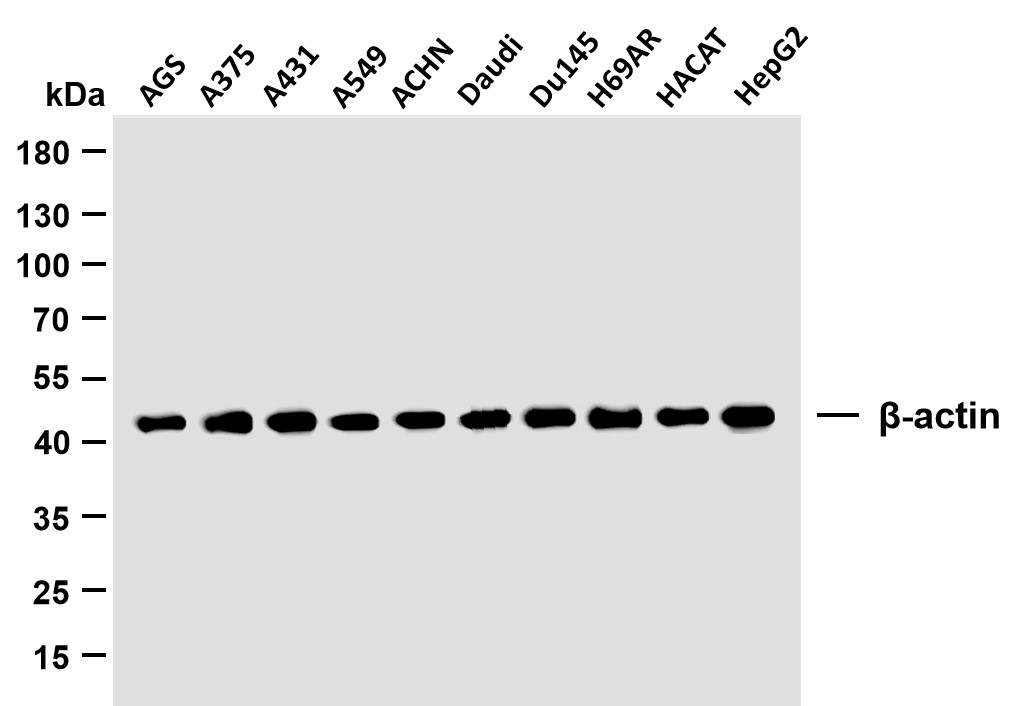
β-actin (PTR2364) Mouse mAb
YM3028
预览→
抗原&靶点信息
免疫原:
Synthesized peptide derived from human RSK3 (Phospho Thr353)
展开内容
特异性:
This antibody detects endogenous levels of Human,Mouse RSK3 (Phospho Thr353).The name of modified sites may be influenced by many factors, such as species (the modified site was not originally found in human samples) and the change of protein sequence (the previous protein sequence is incomplete, and the protein sequence may be prolonged with the development of protein sequencing technology). When naming, we will use the "numbers" in historical reference to keep the sites consistent with the reports. The antibody binds to the following modification sequence (lowercase letters are modification sites):EFtARtPT
展开内容
基因名称:
RPS6KA2 MAPKAPK1C RSK3
展开内容
蛋白名称:
RSK3 (Phospho Thr353)
展开内容
别名:
Ribosomal protein S6 kinase alpha-2 ;
S6K-alpha-2 ;
90 kDa ribosomal protein S6 kinase 2 ;
p90-RSK 2 ;
p90RSK2 ;
MAP kinase-activated protein kinase 1c ;
MAPK-activated protein kinase 1c ;
MAPKAP kinase 1c ;
MAPKAPK-1c ;
Ribosomal S6 kinase 3 ;
RSK-3 ;
pp90RSK3 ;
S6K-alpha-2 ;
90 kDa ribosomal protein S6 kinase 2 ;
p90-RSK 2 ;
p90RSK2 ;
MAP kinase-activated protein kinase 1c ;
MAPK-activated protein kinase 1c ;
MAPKAP kinase 1c ;
MAPKAPK-1c ;
Ribosomal S6 kinase 3 ;
RSK-3 ;
pp90RSK3 ;
展开内容
背景:
catalytic activity:ATP + a protein = ADP + a phosphoprotein. ,cofactor:Magnesium. ,enzyme regulation:Activated by multiple phosphorylations on threonine and serine residues. ,function:Serine/threonine kinase that may play a role in mediating the growth-factor and stress induced activation of the transcription factor CREB. ,PTM:Autophosphorylated on Ser-377 , as part of the activation process. ,similarity:Belongs to the protein kinase superfamily. ,similarity:Belongs to the protein kinase superfamily. AGC Ser/Thr protein kinase family. S6 kinase subfamily. ,similarity:Contains 1 AGC-kinase C-terminal domain. ,similarity:Contains 2 protein kinase domains. ,subunit:Forms a complex with either ERK1 or ERK2 in quiescent cells. Transiently dissociates following mitogenic stimulation. ,tissue specificity:Expressed in many tissues. Highest expression in lung and skeletal muscle. ,
展开内容
功能:
protein amino acid phosphorylation , phosphorus metabolic process , phosphate metabolic process , intracellular signaling cascade , protein kinase cascade , phosphorylation ,
展开内容
细胞定位:
Nucleus . Cytoplasm .
展开内容
研究领域:
>>MAPK signaling pathway ;
>>Oocyte meiosis ;
>>mTOR signaling pathway ;
>>Thermogenesis ;
>>Long-term potentiation ;
>>Neurotrophin signaling pathway ;
>>Progesterone-mediated oocyte maturation ;
>>Insulin resistance ;
>>Yersinia infection ;
>>Chemical carcinogenesis - receptor activation
>>Oocyte meiosis ;
>>mTOR signaling pathway ;
>>Thermogenesis ;
>>Long-term potentiation ;
>>Neurotrophin signaling pathway ;
>>Progesterone-mediated oocyte maturation ;
>>Insulin resistance ;
>>Yersinia infection ;
>>Chemical carcinogenesis - receptor activation
展开内容
信号通路
文献引用({{totalcount}})
货号: YP1635
规格
价格
货期
数量
200μL
¥4,680.00
现货
0
100μL
¥2,800.00
现货
0
50μL
¥1,500.00
现货
0
加入购物车
已收藏
收藏
Recently Viewed Products
Clear all


×

Toggle night Mode
{{pinfoXq.title || ''}}
Catalog: {{pinfoXq.catalog || ''}}
Filter:
All
{{item.name}}
{{pinfo.title}}
-{{pinfo.catalog}}
主要信息
Target
{{pinfo.target}}
Reactivity
{{pinfo.react}}
Applications
{{pinfo.applicat}}
Conjugate/Modification
{{pinfo.coupling}}/{{pinfo.modific}}
MW (kDa)
{{pinfo.mwcalc}}
Host Species
{{pinfo.hostspec}}
Isotype
{{pinfo.isotype}}
产品 {{index}}/{{pcount}}
上一个产品
下一个产品
{{pvTitle}}
滚轮缩放图片
{{pvDescr}}