



IRF-7 (Phospho Ser477) Rabbit pAb
-YP1366



主要信息
Target
IRF-7 Phospho Ser477
Host Species
Rabbit
Reactivity
Human, Mouse, Rat
Applications
WB, IHC
MW
55kD (Observed)
Conjugate/Modification
phosphate
货号: YP1366
规格
价格
货期
数量
200μL
¥4,680.00
现货
0
100μL
¥2,800.00
现货
0
50μL
¥1,500.00
现货
0
加入购物车


已收藏
收藏
详细信息
推荐稀释比
WB 1:500-2000; IHC 1:50-300
组成
Liquid in PBS containing 50% glycerol, 0.5% BSA and 0.02% sodium azide.
特异性
This antibody detects endogenous levels of Human IRF-7 (phospho-Ser477) ,Mouse IRF-7 (phospho-Ser431), Rat IRF-7 (phospho-Ser429) .The name of modified sites may be influenced by many factors, such as species (the modified site was not originally found in human samples) and the change of protein sequence (the previous protein sequence is incomplete, and the protein sequence may be prolonged with the development of protein sequencing technology). When naming, we will use the "numbers" in historical reference to keep the sites consistent with the reports. The antibody binds to the following modification sequence (lowercase letters are modification sites):DSSsL
纯化工艺
The antibody was affinity-purified from rabbit serum by affinity-chromatography using specific immunogen.
储存
-15°C to -25°C/1 year (Do not lower than -25°C)
浓度
1 mg/ml
实测条带
55kD
修饰
phosphate
克隆性
Polyclonal
同种型
IgG
相关产品
Secondary Antibodies
Goat Anti Mouse IgG(H+L) (HRP)
RS0001
预览→
Secondary Antibodies
Goat Anti Rabbit IgG(H+L) (HRP)
RS0002
预览→
Primary Antibodies
β-actin (PTR2364) Mouse mAb
YM3028
预览→
Primary Antibodies
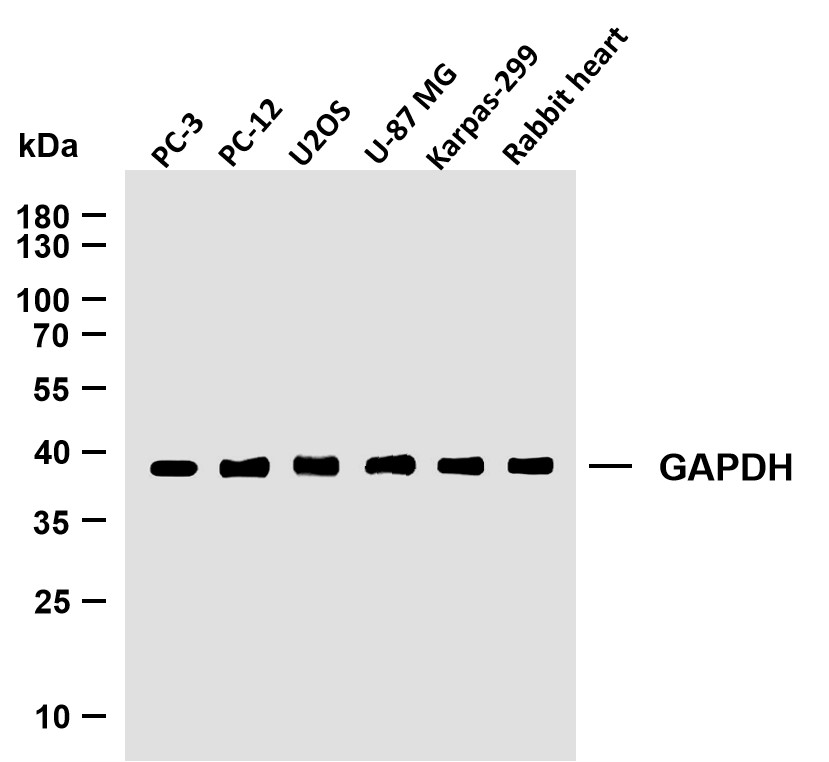
GAPDH (PTR2304) Mouse mAb
YM3029
预览→
抗原&靶点信息
免疫原:
Synthesized phosho peptide around human IRF-7 (Ser477)
展开内容
特异性:
This antibody detects endogenous levels of Human IRF-7 (phospho-Ser477) ,Mouse IRF-7 (phospho-Ser431), Rat IRF-7 (phospho-Ser429) .The name of modified sites may be influenced by many factors, such as species (the modified site was not originally found in human samples) and the change of protein sequence (the previous protein sequence is incomplete, and the protein sequence may be prolonged with the development of protein sequencing technology). When naming, we will use the "numbers" in historical reference to keep the sites consistent with the reports. The antibody binds to the following modification sequence (lowercase letters are modification sites):DSSsL
展开内容
基因名称:
IRF7
展开内容
蛋白名称:
IRF-7 (Ser477)
展开内容
别名:
Interferon regulatory factor 7 ;
IRF-7 ;
IRF-7 ;
展开内容
背景:
IRF7 encodes interferon regulatory factor 7 , a member of the interferon regulatory transcription factor (IRF) family. IRF7 has been shown to play a role in the transcriptional activation of virus-inducible cellular genes , including interferon beta chain genes. Inducible expression of IRF7 is largely restricted to lymphoid tissue. Multiple IRF7 transcript variants have been identified , although the functional consequences of these have not yet been established. [provided by RefSeq , Jul 2008] ,
展开内容
功能:
Function:Transcriptional activator. Binds to the interferon-stimulated response element (ISRE) in IFN promoters and in the Q promoter (Qp) of EBV nuclear antigen 1 (EBNA1) . Functions as a molecular switch for antiviral activity. Activated by phosphorylation in response to infection. Activation leads to nuclear retention , DNA binding , and derepression of transactivation ability. ,induction:By type I interferons. ,PTM:In response to a viral infection , phosphorylated on the C-terminal serine cluster. Phosphorylation , and subsequent activation is inhibited by vaccinia virus protein E3. ,similarity:Belongs to the IRF family. ,similarity:Contains 1 tryptophan pentad repeat DNA-binding domain. ,subcellular location:The phosphorylated and active form accumulates selectively in the nucleus. ,subunit:Homodimer; phosphorylation-induced. Interacts with TICAM1 and TICAM2. Interacts with rotavirus A NSP1; this interaction leads to the proteasome-dependent degradation of IRF7. Interacts with Epstein-Barr virus LF2. ,tissue specificity:Expressed predominantly in spleen , thymus and peripheral blood leukocytes. ,
展开内容
细胞定位:
Nucleus. Cytoplasm. The phosphorylated and active form accumulates selectively in the nucleus.
展开内容
研究领域:
>>Toll-like receptor signaling pathway ;
>>NOD-like receptor signaling pathway ;
>>RIG-I-like receptor signaling pathway ;
>>Cytosolic DNA-sensing pathway ;
>>Hepatitis C ;
>>Hepatitis B ;
>>Measles ;
>>Influenza A ;
>>Kaposi sarcoma-associated herpesvirus infection ;
>>Herpes simplex virus 1 infection ;
>>Epstein-Barr virus infection ;
>>Viral carcinogenesis ;
>>Lipid and atherosclerosis
>>NOD-like receptor signaling pathway ;
>>RIG-I-like receptor signaling pathway ;
>>Cytosolic DNA-sensing pathway ;
>>Hepatitis C ;
>>Hepatitis B ;
>>Measles ;
>>Influenza A ;
>>Kaposi sarcoma-associated herpesvirus infection ;
>>Herpes simplex virus 1 infection ;
>>Epstein-Barr virus infection ;
>>Viral carcinogenesis ;
>>Lipid and atherosclerosis
展开内容
信号通路
文献引用({{totalcount}})
货号: YP1366
规格
价格
货期
数量
200μL
¥4,680.00
现货
0
100μL
¥2,800.00
现货
0
50μL
¥1,500.00
现货
0
加入购物车
已收藏
收藏
Recently Viewed Products
Clear all


×

Toggle night Mode
{{pinfoXq.title || ''}}
Catalog: {{pinfoXq.catalog || ''}}
Filter:
All
{{item.name}}
{{pinfo.title}}
-{{pinfo.catalog}}
主要信息
Target
{{pinfo.target}}
Reactivity
{{pinfo.react}}
Applications
{{pinfo.applicat}}
Conjugate/Modification
{{pinfo.coupling}}/{{pinfo.modific}}
MW (kDa)
{{pinfo.mwcalc}}
Host Species
{{pinfo.hostspec}}
Isotype
{{pinfo.isotype}}
产品 {{index}}/{{pcount}}
上一个产品
下一个产品
{{pvTitle}}
滚轮缩放图片
{{pvDescr}}