


MDC1 (Phospho Ser513) Rabbit pAb
-YP1100



主要信息
Target
MDC1 Phospho Ser513
Host Species
Rabbit
Reactivity
Human, Mouse, Rat
Applications
IHC, IF, ELISA
MW
227kD (Calculated)
Conjugate/Modification
phosphate
货号: YP1100
规格
价格
货期
数量
200μL
¥4,680.00
现货
0
100μL
¥2,800.00
现货
0
50μL
¥1,500.00
现货
0
加入购物车


已收藏
收藏
详细信息
推荐稀释比
IHC 1:100-1:300; ELISA 1:5000; IF 1:50-200
组成
Liquid in PBS containing 50% glycerol, 0.5% BSA and 0.02% sodium azide.
特异性
Phospho-MDC1 (S513) Polyclonal Antibody detects endogenous levels of MDC1 protein only when phosphorylated at S513.The name of modified sites may be influenced by many factors, such as species (the modified site was not originally found in human samples) and the change of protein sequence (the previous protein sequence is incomplete, and the protein sequence may be prolonged with the development of protein sequencing technology). When naming, we will use the "numbers" in historical reference to keep the sites consistent with the reports. The antibody binds to the following modification sequence (lowercase letters are modification sites):LERsQ
纯化工艺
The antibody was affinity-purified from rabbit antiserum by affinity-chromatography using epitope-specific immunogen.
储存
-15°C to -25°C/1 year (Do not lower than -25°C)
浓度
1 mg/ml
理论分子量
227kD
修饰
phosphate
克隆性
Polyclonal
同种型
IgG
相关产品
Secondary Antibodies
Goat Anti Mouse IgG(H+L) (HRP)
RS0001
预览→
Secondary Antibodies
Goat Anti Rabbit IgG(H+L) (HRP)
RS0002
预览→
Primary Antibodies
β-actin (PTR2364) Mouse mAb
YM3028
预览→
Primary Antibodies
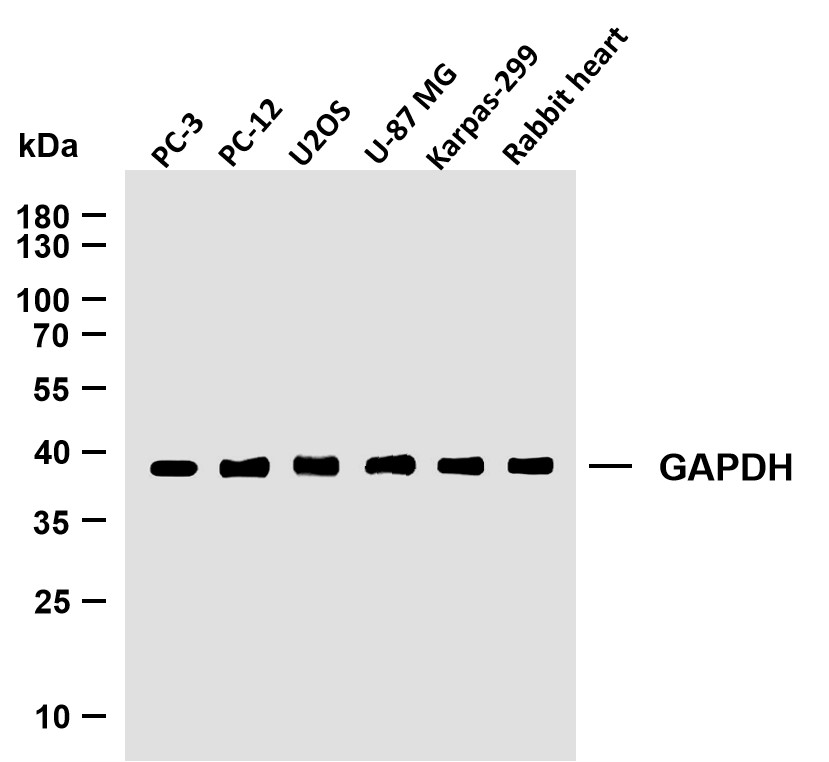
GAPDH (PTR2304) Mouse mAb
YM3029
预览→
抗原&靶点信息
免疫原:
The antiserum was produced against synthesized peptide derived from human MDC1 around the phosphorylation site of Ser513. AA range:479-528
展开内容
特异性:
Phospho-MDC1 (S513) Polyclonal Antibody detects endogenous levels of MDC1 protein only when phosphorylated at S513.The name of modified sites may be influenced by many factors, such as species (the modified site was not originally found in human samples) and the change of protein sequence (the previous protein sequence is incomplete, and the protein sequence may be prolonged with the development of protein sequencing technology). When naming, we will use the "numbers" in historical reference to keep the sites consistent with the reports. The antibody binds to the following modification sequence (lowercase letters are modification sites):LERsQ
展开内容
基因名称:
MDC1
展开内容
蛋白名称:
Mediator of DNA damage checkpoint protein 1
展开内容
别名:
MDC1 ;
KIAA0170 ;
NFBD1 ;
Mediator of DNA damage checkpoint protein 1 ;
Nuclear factor with BRCT domains 1
KIAA0170 ;
NFBD1 ;
Mediator of DNA damage checkpoint protein 1 ;
Nuclear factor with BRCT domains 1
展开内容
背景:
The protein encoded by this gene contains an N-terminal forkhead domain , two BRCA1 C-terminal (BRCT) motifs and a central domain with 13 repetitions of an approximately 41-amino acid sequence. The encoded protein is required to activate the intra-S phase and G2/M phase cell cycle checkpoints in response to DNA damage. This nuclear protein interacts with phosphorylated histone H2AX near sites of DNA double-strand breaks through its BRCT motifs , and facilitates recruitment of the ATM kinase and meiotic recombination 11 protein complex to DNA damage foci. [provided by RefSeq , Jul 2008] ,
展开内容
功能:
Domain:Tandemly repeated BRCT domains are characteristic of proteins involved in DNA damage signaling. In MDC1 , these repeats are required for localization to chromatin which flanks sites of DNA damage marked by 'Ser-139' phosphorylation of H2AFX. ,Function:Required for checkpoint mediated cell cycle arrest in response to DNA damage within both the S phase and G2/M phases of the cell cycle. May serve as a scaffold for the recruitment of DNA repair and signal transduction proteins to discrete foci of DNA damage marked by 'Ser-139' phosphorylation of histone H2AFX. Also required for downstream events subsequent to the recruitment of these proteins. These include phosphorylation and activation of the ATM , CHEK1/CHK1 and CHEK2/CHK2/CDS1 kinases , and stabilization of TP53 and apoptosis. ATM and CHEK2 may also be activated independently by a parallel pathway mediated by TP53BP1. ,PTM:Phosphorylated upon exposure to ionizing radiation (IR) , ultraviolet radiation (UV) , and hydroxyurea (HU) . Phosphorylation in response to IR requires ATM , NBN , and possibly CHEK2. Also phosphorylated during the G2/M phase of the cell cycle and during activation of the mitotic spindle checkpoint. ,sequence Caution:Translated as Gln. ,similarity:Contains 1 FHA domain. ,similarity:Contains 2 BRCT domains. ,subcellular location:Associated with chromatin. Relocalizes to discrete nuclear foci following DNA damage , this requires 'Ser-139' phosphorylation of H2AFX. ,subunit:Interacts with several proteins involved in the DNA damage response , although not all these interactions may be direct. Interacts with H2AFX , which requires phosphorylation of H2AFX on 'Ser-139'. Interacts with the MRN complex , composed of MRE11A/MRE11 , RAD50 , and NBN. Interacts with CHEK2/CHK2/CDS1 , which requires ATM-mediated phosphorylation of 'Thr-68' within the FHA domain of CHEK2. Interacts constitutively with the BRCA1-BARD1 complex , SMC1A and TP53BP1. Interacts with ATM and FANCD2 , and these interactions are reduced upon DNA damage. Also interacts with the PRKDC complex , composed of G22P1/KU70 , XRCC5/KU80 and PRKDC/XRCC7. This interaction may be required for PRKDC autophosphorylation , which is essential for DNA double strand break (DSB) repair. When phosphorylated by ATM , interacts with RNF8. Interacts with CEP164. ,tissue specificity:Highly expressed in testis. ,
展开内容
细胞定位:
Nucleus . Chromosome . Associated with chromatin. Relocalizes to discrete nuclear foci following DNA damage , this requires 'Ser-139' phosphorylation of H2AX. Colocalizes with APTX at sites of DNA double-strand breaks.
展开内容
组织表达:
文献引用({{totalcount}})
货号: YP1100
规格
价格
货期
数量
200μL
¥4,680.00
现货
0
100μL
¥2,800.00
现货
0
50μL
¥1,500.00
现货
0
加入购物车
已收藏
收藏
Recently Viewed Products
Clear all


×

Toggle night Mode
{{pinfoXq.title || ''}}
Catalog: {{pinfoXq.catalog || ''}}
Filter:
All
{{item.name}}
{{pinfo.title}}
-{{pinfo.catalog}}
主要信息
Target
{{pinfo.target}}
Reactivity
{{pinfo.react}}
Applications
{{pinfo.applicat}}
Conjugate/Modification
{{pinfo.coupling}}/{{pinfo.modific}}
MW (kDa)
{{pinfo.mwcalc}}
Host Species
{{pinfo.hostspec}}
Isotype
{{pinfo.isotype}}
产品 {{index}}/{{pcount}}
上一个产品
下一个产品
{{pvTitle}}
滚轮缩放图片
{{pvDescr}}