


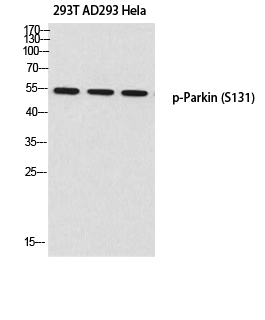
Parkin (Phospho Ser131) Rabbit pAb
-YP0962



主要信息
Target
Parkin Phospho Ser131
Host Species
Rabbit
Reactivity
Human, Mouse, Rat
Applications
WB, IHC, IF, ELISA
MW
51kD (Observed)
Conjugate/Modification
phosphate
货号: YP0962
规格
价格
货期
数量
200μL
¥4,680.00
现货
0
100μL
¥2,800.00
现货
0
50μL
¥1,500.00
现货
0
加入购物车


已收藏
收藏
详细信息
推荐稀释比
WB 1:500-2000; IHC 1:100-1:300; ELISA 1:20000; IF 1:50-200
组成
Liquid in PBS containing 50% glycerol, 0.5% BSA and 0.02% sodium azide.
特异性
Phospho-Parkin (S131) Polyclonal Antibody detects endogenous levels of Parkin protein only when phosphorylated at S131.The name of modified sites may be influenced by many factors, such as species (the modified site was not originally found in human samples) and the change of protein sequence (the previous protein sequence is incomplete, and the protein sequence may be prolonged with the development of protein sequencing technology). When naming, we will use the "numbers" in historical reference to keep the sites consistent with the reports. The antibody binds to the following modification sequence (lowercase letters are modification sites):KDsPP
纯化工艺
The antibody was affinity-purified from rabbit antiserum by affinity-chromatography using epitope-specific immunogen.
储存
-15°C to -25°C/1 year (Do not lower than -25°C)
浓度
1 mg/ml
实测条带
51kD
修饰
phosphate
克隆性
Polyclonal
同种型
IgG
相关产品
Primary Antibodies
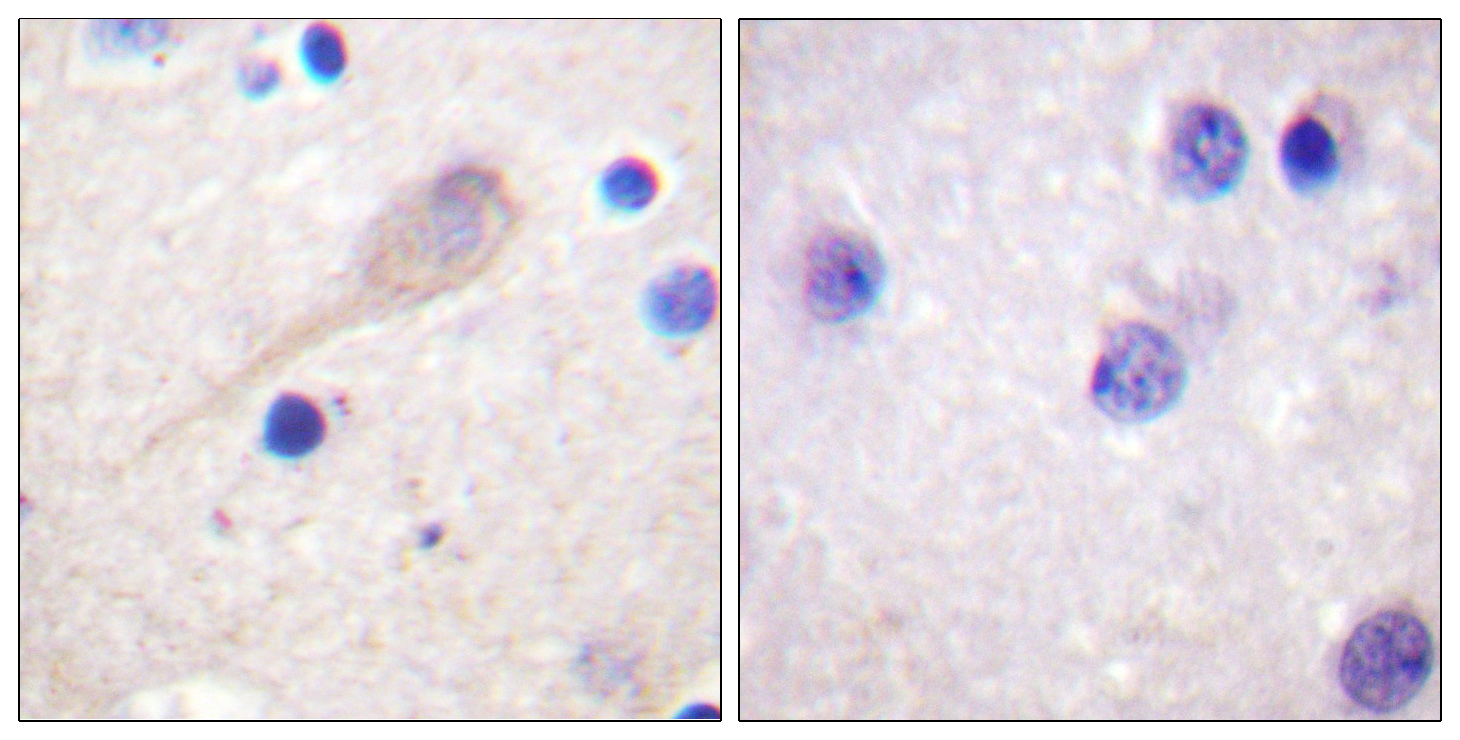
Parkin Rabbit pAb
YT3593
预览→
Primary Antibodies
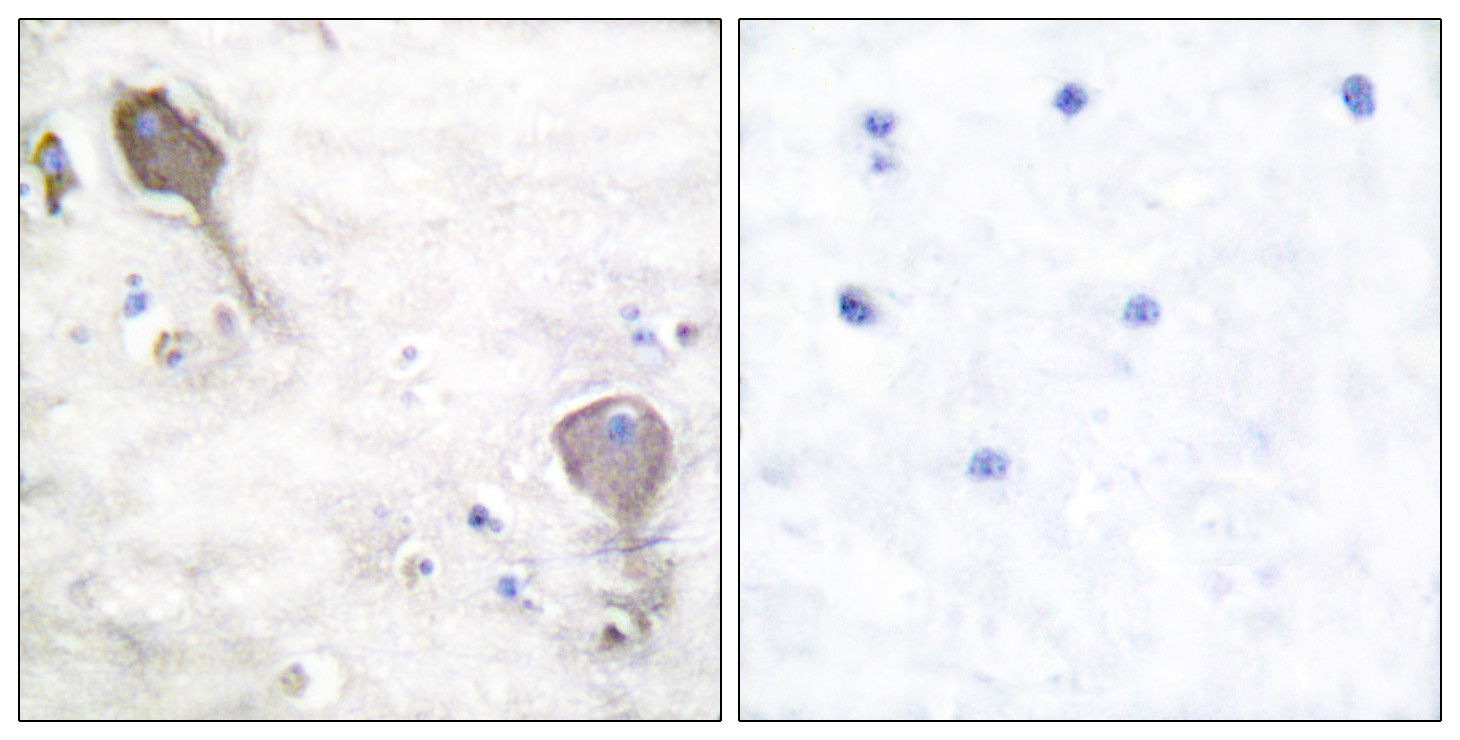
Parkin Rabbit pAb
YT3591
预览→
Primary Antibodies
Parkin (Phospho Ser131) Rabbit pAb
YP0962
预览→
ELISA Kits

Total Parkin Cell-Based Colorimetric ELISA Kit
KA4220C
预览→
ELISA Kits
Total PARK2 Cell-Based Colorimetric ELISA Kit
KA3353C
预览→
抗原&靶点信息
免疫原:
The antiserum was produced against synthesized peptide derived from human Parkin around the phosphorylation site of Ser131. AA range:101-150
展开内容
特异性:
Phospho-Parkin (S131) Polyclonal Antibody detects endogenous levels of Parkin protein only when phosphorylated at S131.The name of modified sites may be influenced by many factors, such as species (the modified site was not originally found in human samples) and the change of protein sequence (the previous protein sequence is incomplete, and the protein sequence may be prolonged with the development of protein sequencing technology). When naming, we will use the "numbers" in historical reference to keep the sites consistent with the reports. The antibody binds to the following modification sequence (lowercase letters are modification sites):KDsPP
展开内容
基因名称:
PARK2
展开内容
蛋白名称:
E3 ubiquitin-protein ligase parkin
展开内容
别名:
PARK2 ;
PRKN ;
E3 ubiquitin-protein ligase parkin ;
Parkinson juvenile disease protein 2 ;
Parkinson disease protein 2
PRKN ;
E3 ubiquitin-protein ligase parkin ;
Parkinson juvenile disease protein 2 ;
Parkinson disease protein 2
展开内容
背景:
The precise function of this gene is unknown; however , the encoded protein is a component of a multiprotein E3 ubiquitin ligase complex that mediates the targeting of substrate proteins for proteasomal degradation. Mutations in this gene are known to cause Parkinson disease and autosomal recessive juvenile Parkinson disease. Alternative splicing of this gene produces multiple transcript variants encoding distinct isoforms. Additional splice variants of this gene have been described but currently lack transcript support. [provided by RefSeq , Jul 2008] ,
展开内容
功能:
Disease:Defects in PARK2 are a cause of Parkinson disease (PD) [MIM:168600]. PD is a complex , multifactorial disorder that typically manifests after the age of 50 years , although early-onset cases (before 50 years) are known. PD generally arises as a sporadic condition but is occasionally inherited as a simple mendelian trait. Although sporadic and familial PD are very similar , inherited forms of the disease usually begin at earlier ages and are associated with atypical clinical features. PD is characterized by bradykinesia , resting tremor , muscular rigidity and postural instability , as well as by a clinically significant response to treatment with levodopa. The pathology of PD involves the loss of dopaminergic neurons in the substantia nigra and the presence of Lewy bodies (intraneuronal accumulations of aggregated proteins) , in surviving neurons in various areas of the brain. ,Disease:Defects in PARK2 are the cause of autosomal recessive early onset Parkinson disease 2 (PARK2) [MIM:600116]; also known as early-onset parkinsonism with diurnal fluctuation (EPDF) or autosomal recessive juvenile Parkinson disease (PDJ) . PARK2 is symptomatically different in several aspects from idiopathic Parkinson disease , although classic symptoms such as bradykinesia , rigidity and tremor are present. Additional clinical features include early DOPA-induced dyskinesia , diurnal fluctuation of the symptoms , sleep benefit , dystonia and hyper-reflexia. PARK2 is usually characterized by onset before 40 , with a mean age at onset of 23.2 years. Pathologically , PARK2 patients show loss of dopaminergic neurons in the substantia nigra , similar to that seen in Parkinson disease; however , Lewy bodies (intraneuronal accumulations of aggregated proteins) are absent. ,Disease:Defects in PARK2 may be involved in the development and/or progression of ovarian cancer. ,Domain:The ubiquitin-like domain binds the PSMD4 subunit of 26S proteasomes. ,Function:Functions within a multiprotein E3 ubiquitin ligase complex , catalyzing the covalent attachment of ubiquitin moieties onto substrate proteins. These substrates include SYT11 , CCNE1 , GPR37 , STUB1 , a 22 kDa O-linked glycosylated isoform of SNCAIP and SEPT5. May play a more general role in the ubiquitin proteasomal pathway by participating in the removal and/or detoxification of abnormally folded or damaged protein. Loss of this ubiquitin ligase activity appears to be the mechanism underlying pathogenesis of PARK2. May protect neurons against alpha synuclein toxicity , proteasomal dysfunction , GPR37 accumulation , and kainate-induced excitotoxicity. May play a role in controlling neurotransmitter trafficking at the presynaptic terminal and in calcium-dependent exocytosis. Regulates cyclin E during neuronal apoptosis. May represent a tumor suppressor gene. ,miscellaneous:The parkin locus (PRKN) , adjacent to the 6q telomere is hyper-recombinable and lies within FRA6E , the third most common fragile site in tumor tissue. ,pathway:Protein modification; protein ubiquitination. ,PTM:Auto-ubiquitinates in an E2-dependent manner leading to its own degradation. ,PTM:S-nitrosylated. The inhibition of PARK2 ubiquitin E3 ligase activity by S-nitrosylation could contribute to the degenerative process in PD by impairing the ubiquitination of PARK2 substrates. ,similarity:Belongs to the RBR family. Parkin subfamily. ,similarity:Contains 1 IBR-type zinc finger. ,similarity:Contains 1 ubiquitin-like domain. ,similarity:Contains 2 RING-type zinc fingers. ,subcellular location:Co-localizes with SYT11 in neutrites. Co-localizes with SNCAIP in brainstem Lewy bodies. ,subunit:Forms an E3 ubiquitin ligase complex with UBE2L3 or UBE2L6. Part of a SCF-like complex , consisting of PARK2 , CUL1 and FBXW7. Interacts with SNCAIP. Binds to the C2A and C2B domains of SYT11. Interacts and regulates the turnover of SEPT5. Part of a complex , including STUB1 , HSP70 and GPR37. The amount of STUB1 in the complex increases during ER stress. STUB1 promotes the dissociation of HSP70 from PARK2 and GPR37 , thus facilitating PARK2-mediated GPR37 ubiquitination. HSP70 transiently associates with unfolded GPR37 and inhibits the E3 activity of PARK2 , whereas , STUB1 enhances the E3 activity of PARK2 through promotion of dissociation of HSP70 from PARK2-GPR37 complexes. Interacts with PSMD4 and PACRG. Interacts with LRRK2. Interacts with RANBP2. Interacts with SUMO1 but not SUMO2 , which promotes nuclear localization and autoubiquitination. ,tissue specificity:Highly expressed in the brain including the substantia nigra. Expressed in heart , testis and skeletal muscle. Expression is down-regulated or absent in tumor biopsies , and absent in the brain of PARK2 patients. Overexpression protects dopamine neurons from kainate-mediated apoptosis. ,
展开内容
细胞定位:
Cytoplasm , cytosol . Nucleus . Endoplasmic reticulum . Mitochondrion . Mitochondrion outer membrane . Cell projection , neuron projection . Cell junction , synapse , postsynaptic density . Cell junction , synapse , presynapse . Mainly localizes in the cytosol (PubMed:19029340 , PubMed:19229105) . Co-localizes with SYT11 in neutrites (PubMed:12925569) . Co-localizes with SNCAIP in brainstem Lewy bodies (PubMed:10319893 , PubMed:11431533) . Translocates to dysfunctional mitochondria that have lost the mitochondrial membrane potential; recruitment to mitochondria is PINK1-dependent (PubMed:24898855 , PubMed:18957282 , PubMed:19966284 , PubMed:23620051) . Mitochondrial localization also gradually increases with cellular growth (PubMed:22082830) . .
展开内容
研究领域:
>>Ubiquitin mediated proteolysis ;
>>Mitophagy - animal ;
>>Protein processing in endoplasmic reticulum ;
>>Parkinson disease ;
>>Amyotrophic lateral sclerosis ;
>>Pathways of neurodegeneration - multiple diseases
>>Mitophagy - animal ;
>>Protein processing in endoplasmic reticulum ;
>>Parkinson disease ;
>>Amyotrophic lateral sclerosis ;
>>Pathways of neurodegeneration - multiple diseases
展开内容
信号通路
Cellular Processes >> Transport and catabolism >> Mitophagy - animal
Human Diseases >> Neurodegenerative disease >> Parkinson disease
Human Diseases >> Neurodegenerative disease >> Amyotrophic lateral sclerosis
Human Diseases >> Neurodegenerative disease >> Pathways of neurodegeneration - multiple diseases
Genetic Information Processing >> Folding, sorting and degradation >> Ubiquitin mediated proteolysis
文献引用({{totalcount}})
货号: YP0962
规格
价格
货期
数量
200μL
¥4,680.00
现货
0
100μL
¥2,800.00
现货
0
50μL
¥1,500.00
现货
0
加入购物车
已收藏
收藏
Recently Viewed Products
Clear all


×

Toggle night Mode
{{pinfoXq.title || ''}}
Catalog: {{pinfoXq.catalog || ''}}
Filter:
All
{{item.name}}
{{pinfo.title}}
-{{pinfo.catalog}}
主要信息
Target
{{pinfo.target}}
Reactivity
{{pinfo.react}}
Applications
{{pinfo.applicat}}
Conjugate/Modification
{{pinfo.coupling}}/{{pinfo.modific}}
MW (kDa)
{{pinfo.mwcalc}}
Host Species
{{pinfo.hostspec}}
Isotype
{{pinfo.isotype}}
产品 {{index}}/{{pcount}}
上一个产品
下一个产品
{{pvTitle}}
滚轮缩放图片
{{pvDescr}}