



GRIP-1 (Phospho Ser736) Rabbit pAb
-YP0825



主要信息
Target
GRIP-1 Phospho Ser736
Host Species
Rabbit
Reactivity
Human, Mouse, Rat
Applications
WB, IHC, IF, ELISA
MW
180kD (Observed)
Conjugate/Modification
phosphate
货号: YP0825
规格
价格
货期
数量
200μL
¥4,680.00
现货
0
100μL
¥2,800.00
现货
0
50μL
¥1,500.00
现货
0
加入购物车


已收藏
收藏
详细信息
推荐稀释比
WB 1:500-1:2000; IHC 1:100-1:300; ELISA 1:5000; IF 1:50-200
组成
Liquid in PBS containing 50% glycerol, 0.5% BSA and 0.02% sodium azide.
特异性
Phospho-GRIP-1 (S736) Polyclonal Antibody detects endogenous levels of GRIP-1 protein only when phosphorylated at S736.The name of modified sites may be influenced by many factors, such as species (the modified site was not originally found in human samples) and the change of protein sequence (the previous protein sequence is incomplete, and the protein sequence may be prolonged with the development of protein sequencing technology). When naming, we will use the "numbers" in historical reference to keep the sites consistent with the reports. The antibody binds to the following modification sequence (lowercase letters are modification sites):PVsPK
纯化工艺
The antibody was affinity-purified from rabbit antiserum by affinity-chromatography using epitope-specific immunogen.
储存
-15°C to -25°C/1 year (Do not lower than -25°C)
浓度
1 mg/ml
实测条带
180kD
修饰
phosphate
克隆性
Polyclonal
同种型
IgG
相关产品
Secondary Antibodies
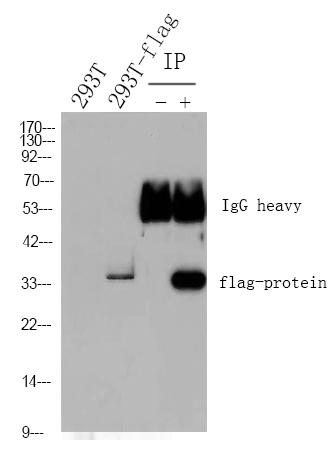
Goat Anti Mouse IgG(H+L) (HRP)
RS0001
预览→
Secondary Antibodies
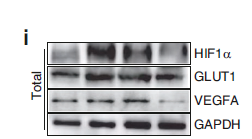
Goat Anti Rabbit IgG(H+L) (HRP)
RS0002
预览→
Primary Antibodies
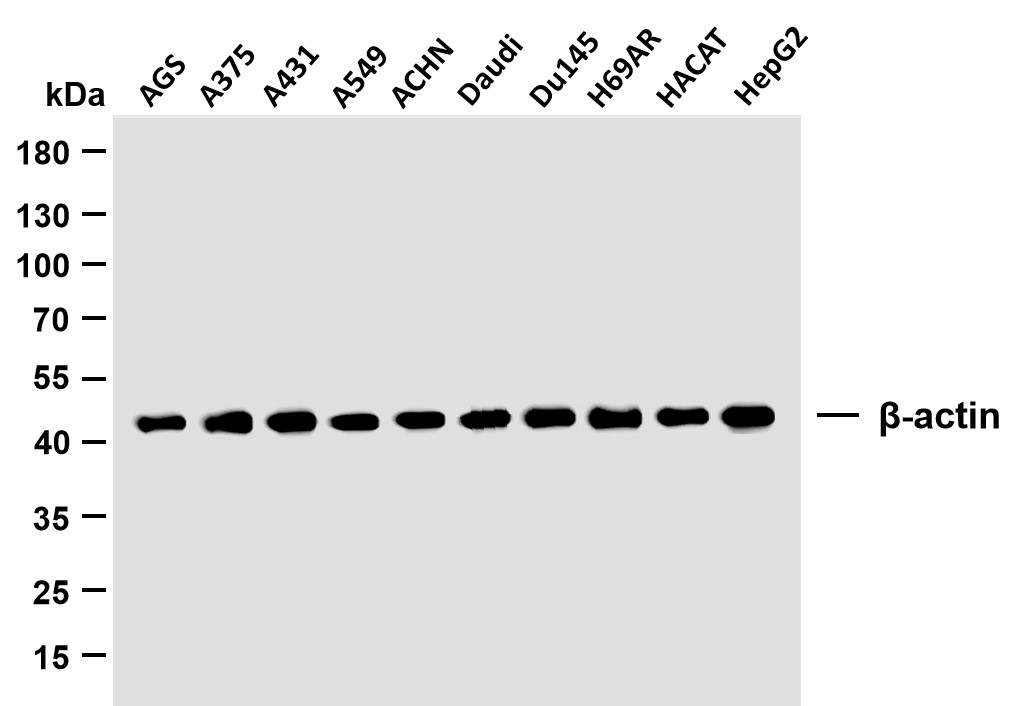
β-actin (PTR2364) Mouse mAb
YM3028
预览→
Primary Antibodies
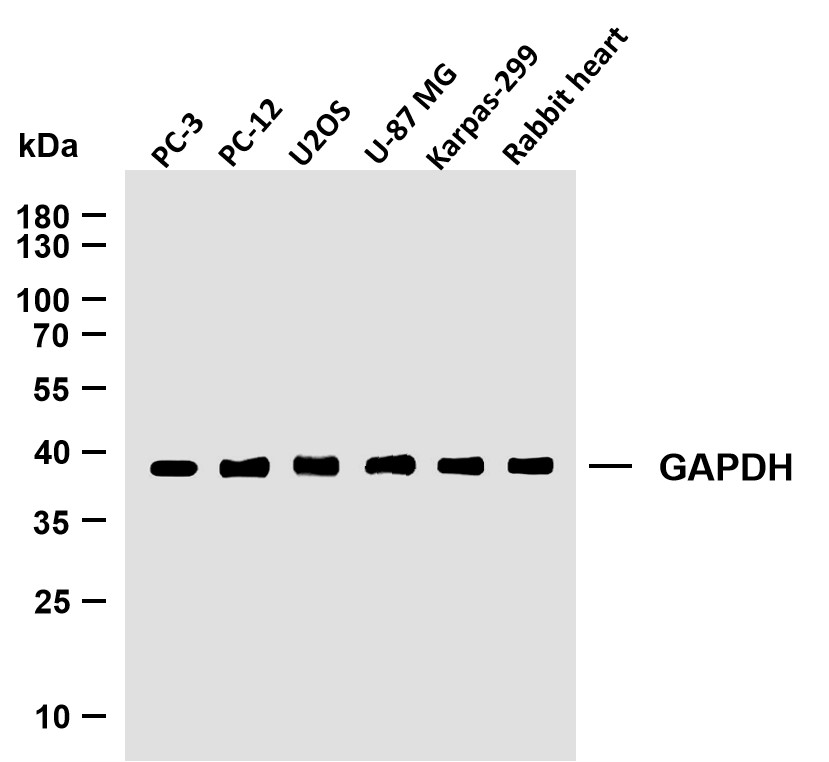
GAPDH (PTR2304) Mouse mAb
YM3029
预览→
抗原&靶点信息
免疫原:
The antiserum was produced against synthesized peptide derived from human NCoA2 around the phosphorylation site of Ser736. AA range:702-751
展开内容
特异性:
Phospho-GRIP-1 (S736) Polyclonal Antibody detects endogenous levels of GRIP-1 protein only when phosphorylated at S736.The name of modified sites may be influenced by many factors, such as species (the modified site was not originally found in human samples) and the change of protein sequence (the previous protein sequence is incomplete, and the protein sequence may be prolonged with the development of protein sequencing technology). When naming, we will use the "numbers" in historical reference to keep the sites consistent with the reports. The antibody binds to the following modification sequence (lowercase letters are modification sites):PVsPK
展开内容
基因名称:
NCOA2
展开内容
蛋白名称:
Nuclear receptor coactivator 2
展开内容
别名:
NCOA2 ;
BHLHE75 ;
TIF2 ;
Nuclear receptor coactivator 2 ;
NCoA-2 ;
Class E basic helix-loop-helix protein 75 ;
bHLHe75 ;
Transcriptional intermediary factor 2 ;
hTIF2
BHLHE75 ;
TIF2 ;
Nuclear receptor coactivator 2 ;
NCoA-2 ;
Class E basic helix-loop-helix protein 75 ;
bHLHe75 ;
Transcriptional intermediary factor 2 ;
hTIF2
展开内容
背景:
The protein encoded by this gene functions as a transcriptional coactivator for nuclear hormone receptors , including steroid , thyroid , retinoid , and vitamin D receptors. The encoded protein acts as an intermediary factor for the ligand-dependent activity of these nuclear receptors , which regulate their target genes upon binding of cognate response elements. This gene has been found to be involved in translocations that result in fusions with other genes in various cancers , including the lysine acetyltransferase 6A (KAT6A) gene in acute myeloid leukemia , the ETS variant 6 (ETV6) gene in acute lymphoblastic leukemia , and the hes related family bHLH transcription factor with YRPW motif 1 (HEY1) gene in mesenchymal chondrosarcoma. Alternative splicing results in multiple transcript variants. [provided by RefSeq , Mar 2016] ,
展开内容
功能:
Disease:Chromosomal aberrations involving NCOA2 may be a cause of acute myeloid leukemias. Inversion inv (8) (p11;q13) generates the MYST3-NCOA2 oncogene , which consists of the N-terminus part of MYST3/MOZ and the C-terminus part of NCOA2/TIF2. MYST3-NCOA2 binds to CREBBP and disrupts its function in transcription activation. ,Domain:Contains 2 C-terminal transcription activation domains (AD1 and AD2) that can function independently. ,Domain:Contains four Leu-Xaa-Xaa-Leu-Leu (LXXLL) motifs. The LXXLL motifs are essential for the association with nuclear receptors and are , at least in part , functionally redundant. ,Domain:The LLXXLXXXL motif is involved in transcriptional coactivation and CREBBP/CBP binding. ,Function:Transcriptional coactivator for steroid receptors and nuclear receptors. Coactivator of the steroid binding domain (AF-2) but not of the modulating N-terminal domain (AF-1) . Required with NCOA1 to control energy balance between white and brown adipose tissues. ,PTM:Phosphorylated upon DNA damage , probably by ATM or ATR. ,similarity:Belongs to the SRC/p160 nuclear receptor coactivator family. ,similarity:Contains 1 basic helix-loop-helix (bHLH) domain. ,similarity:Contains 1 PAS (PER-ARNT-SIM) domain. ,subunit:Present in a complex containing CARM1 and EP300/P300 , and interacts with CARM1 and NR3C2 (By similarity) . Present in a complex containing NCOA3 , IKKA , IKKB , IKBKG and CREBBP. Interacts (via C-terminus) with CREBBP. Interacts with HIF1A , NCOA1 , APEX and NR3C1. Interacts with CASP8AP2 and TTLL5/STAMP. Interacts with ESR1 , RARA and RXRA. ,
展开内容
细胞定位:
Nucleus .
展开内容
组织表达:
研究领域:
>>Estrogen signaling pathway ;
>>Thyroid hormone signaling pathway
>>Thyroid hormone signaling pathway
展开内容
信号通路
文献引用({{totalcount}})
货号: YP0825
规格
价格
货期
数量
200μL
¥4,680.00
现货
0
100μL
¥2,800.00
现货
0
50μL
¥1,500.00
现货
0
加入购物车
已收藏
收藏
Recently Viewed Products
Clear all


×

Toggle night Mode
{{pinfoXq.title || ''}}
Catalog: {{pinfoXq.catalog || ''}}
Filter:
All
{{item.name}}
{{pinfo.title}}
-{{pinfo.catalog}}
主要信息
Target
{{pinfo.target}}
Reactivity
{{pinfo.react}}
Applications
{{pinfo.applicat}}
Conjugate/Modification
{{pinfo.coupling}}/{{pinfo.modific}}
MW (kDa)
{{pinfo.mwcalc}}
Host Species
{{pinfo.hostspec}}
Isotype
{{pinfo.isotype}}
产品 {{index}}/{{pcount}}
上一个产品
下一个产品
{{pvTitle}}
滚轮缩放图片
{{pvDescr}}