
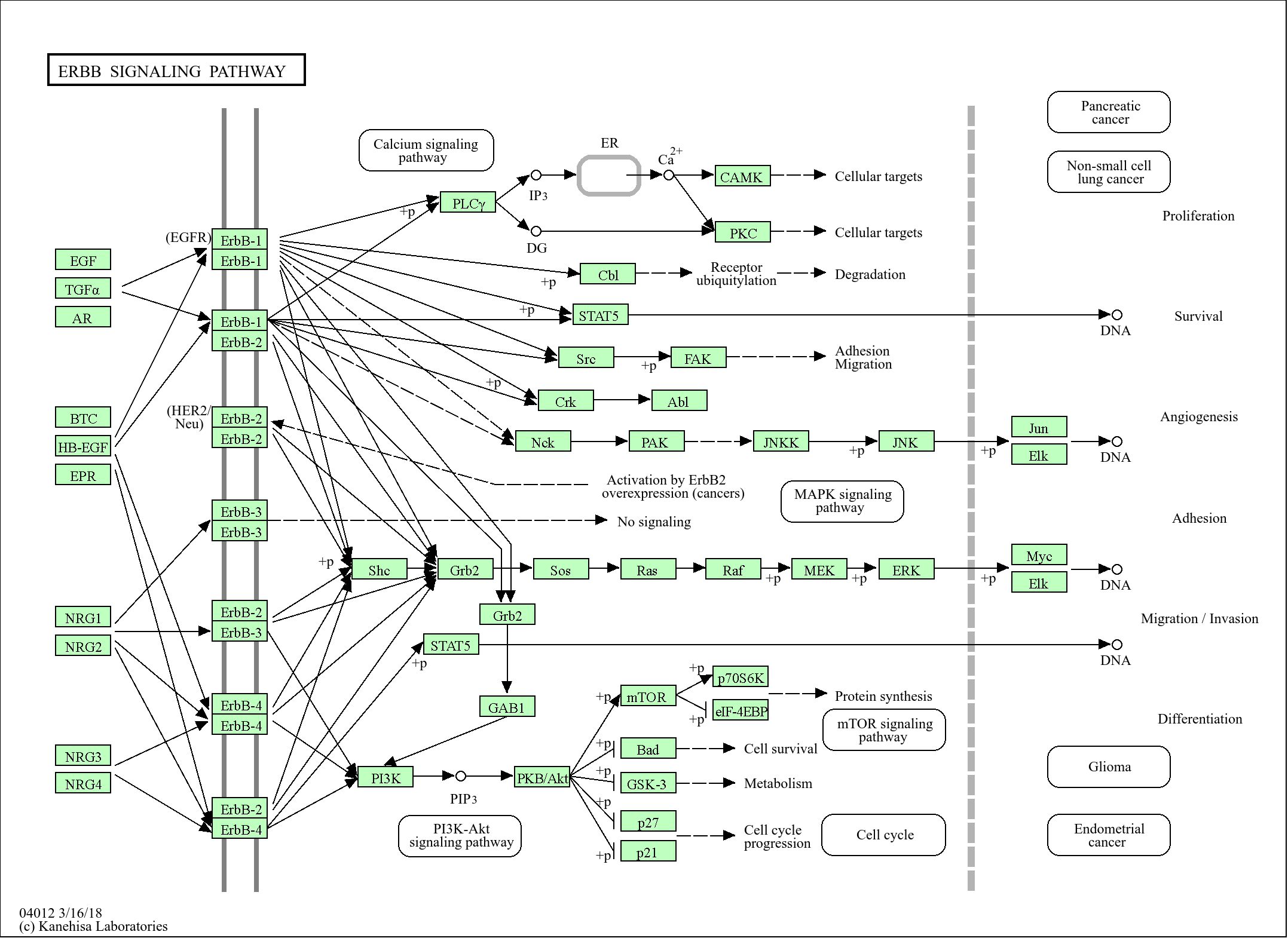


VASP (Phospho Ser157) Rabbit pAb
-YP0617



主要信息
Target
VASP Phospho Ser157
Host Species
Rabbit
Reactivity
Human, Mouse, Rat
Applications
WB, IHC, IF, ELISA
MW
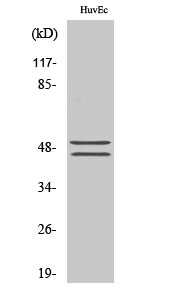
39 46kD (Observed)
Conjugate/Modification
phosphate
货号: YP0617
规格
价格
货期
数量
200μL
¥4,680.00
现货
0
100μL
¥2,800.00
现货
0
50μL
¥1,500.00
现货
0
加入购物车


已收藏
收藏
详细信息
推荐稀释比
WB 1:500-1:2000; IHC 1:100-1:300; ELISA 1:5000; IF 1:50-200
组成
Liquid in PBS containing 50% glycerol, 0.5% BSA and 0.02% sodium azide.
特异性
Phospho-VASP (S157) Polyclonal Antibody detects endogenous levels of VASP protein only when phosphorylated at S157.The name of modified sites may be influenced by many factors, such as species (the modified site was not originally found in human samples) and the change of protein sequence (the previous protein sequence is incomplete, and the protein sequence may be prolonged with the development of protein sequencing technology). When naming, we will use the "numbers" in historical reference to keep the sites consistent with the reports. The antibody binds to the following modification sequence (lowercase letters are modification sites):RVsNA
纯化工艺
The antibody was affinity-purified from rabbit antiserum by affinity-chromatography using epitope-specific immunogen.
储存
-15°C to -25°C/1 year (Do not lower than -25°C)
浓度
1 mg/ml
实测条带
39
46kD
修饰
phosphate
克隆性
Polyclonal
同种型
IgG
相关产品
Primary Antibodies

VASP Rabbit pAb
YT4857
预览→
Primary Antibodies
VASP Rabbit pAb
YT4856
预览→
Primary Antibodies
VASP Rabbit pAb
YT4855
预览→
Primary Antibodies
VASP Rabbit pAb
YT4854
预览→
Primary Antibodies
VASP (Phospho Thr278) Rabbit pAb
YP1120
预览→
Primary Antibodies
VASP (Phospho Ser157) Rabbit pAb
YP0617
预览→
Primary Antibodies
VASP (Phospho Ser238) Rabbit pAb
YP0272
预览→
Primary Antibodies
VASP (Phospho Ser157) Rabbit pAb
YP0271
预览→
ELISA Kits
Total VASP Cell-Based Colorimetric ELISA Kit
KA4315C
预览→
ELISA Kits
VASP (Phospho Ser238) Cell-Based Colorimetric ELISA Kit
KA1672C
预览→
ELISA Kits
VASP (Phospho Ser157) Cell-Based Colorimetric ELISA Kit
KA1227C
预览→
抗原&靶点信息
免疫原:
Synthesized phospho-peptide around the phosphorylation site of human VASP (phospho Ser157)
展开内容
特异性:
Phospho-VASP (S157) Polyclonal Antibody detects endogenous levels of VASP protein only when phosphorylated at S157.The name of modified sites may be influenced by many factors, such as species (the modified site was not originally found in human samples) and the change of protein sequence (the previous protein sequence is incomplete, and the protein sequence may be prolonged with the development of protein sequencing technology). When naming, we will use the "numbers" in historical reference to keep the sites consistent with the reports. The antibody binds to the following modification sequence (lowercase letters are modification sites):RVsNA
展开内容
基因名称:
VASP
展开内容
蛋白名称:
Vasodilator-stimulated phosphoprotein
展开内容
别名:
VASP ;
Vasodilator-stimulated phosphoprotein ;
VASP
Vasodilator-stimulated phosphoprotein ;
VASP
展开内容
背景:
Vasodilator-stimulated phosphoprotein (VASP) is a member of the Ena-VASP protein family. Ena-VASP family members contain an EHV1 N-terminal domain that binds proteins containing E/DFPPPPXD/E motifs and targets Ena-VASP proteins to focal adhesions. In the mid-region of the protein , family members have a proline-rich domain that binds SH3 and WW domain-containing proteins. Their C-terminal EVH2 domain mediates tetramerization and binds both G and F actin. VASP is associated with filamentous actin formation and likely plays a widespread role in cell adhesion and motility. VASP may also be involved in the intracellular signaling pathways that regulate integrin-extracellular matrix interactions. VASP is regulated by the cyclic nucleotide-dependent kinases PKA and PKG. [provided by RefSeq , Jul 2008] ,
展开内容
功能:
Domain:The EVH2 domain is comprised of 3 regions. Block A is a thymosin-like domain required for G-actin binding. The KLKR motif within this block is essential for the G-actin binding and for actin polymerization. Block B is required for F-actin binding and subcellular location , and Block C for tetramerization. ,Domain:The WH1 domain mediates interaction with XIRP1. ,Function:Ena/VASP proteins are actin-associated proteins involved in a range of processes dependent on cytoskeleton remodeling and cell polarity such as axon guidance and lamellipodial and filopodial dynamics in migrating cells. VASP promotes actin nucleation and increases the rate of actin polymerization in the presence of capping protein. Plays a role in actin-based activity of Listeria monocytogenes in platelets. ,PTM:Major substrate for cAMP-dependent (PKA) and cGMP-dependent protein kinase (PKG) in platelets. The preferred site for PKA is Ser-157 , the preferred site for PKG , Ser-239. In ADP-activated platelets , phosphorylation by PKA or PKG on Ser-157 leads to fibrinogen receptor inhibition. Phosphorylation on Thr-278 requires prior phosphorylation on Ser-157 and Ser-239. In response to phorbol ester (PMA) stimulation , phosphorylated by PKC/PRKCA. In response to thrombin , phosphorylated by both PKC and ROCK1. ,similarity:Belongs to the Ena/VASP family. ,similarity:Contains 1 WH1 domain. ,subcellular location:Targeted to stress fibers and focal adhesions through interaction with a number of proteins including MRL family members. Localizes to the plasma membrane in protruding lamellipodia and filopodial tips. Stimulation by thrombin or PMA , also translocates VASP to focal adhesions. ,subunit:Homotetramer. Interacts with PFN1 , PFN2 , LPP , ACTN1 and ACTG1. Interacts , via the EVH1 , with the Pro-rich regions of ZYX. This interaction is important for targeting to focal adhesions and the formation of actin-rich structures at the apical surface of cells. Interacts , via the EVH1 domain , with the Pro-rich domain of Listeria monocytogenes actA. Interacts with APBB1IP. Interacts , via the Pro-rich domain , with the C-terminal SH3 domain of DNMBP. ,tissue specificity:Highly expressed in platelets. ,
展开内容
细胞定位:
Cytoplasm. Cytoplasm , cytoskeleton. Cell junction , focal adhesion. Cell junction , tight junction . Cell projection , lamellipodium membrane. Cell projection , filopodium membrane. Targeted to stress fibers and focal adhesions through interaction with a number of proteins including MRL family members. Localizes to the plasma membrane in protruding lamellipodia and filopodial tips. Stimulation by thrombin or PMA , also translocates VASP to focal adhesions. Localized along the sides of actin filaments throughout the peripheral cytoplasm under basal conditions. In pre-apoptotic cells , colocalizes with MEFV in large specks (pyroptosomes) .
展开内容
组织表达:
研究领域:
>>Rap1 signaling pathway ;
>>cGMP-PKG signaling pathway ;
>>Focal adhesion ;
>>Tight junction ;
>>Platelet activation ;
>>Fc gamma R-mediated phagocytosis ;
>>Leukocyte transendothelial migration
>>cGMP-PKG signaling pathway ;
>>Focal adhesion ;
>>Tight junction ;
>>Platelet activation ;
>>Fc gamma R-mediated phagocytosis ;
>>Leukocyte transendothelial migration
展开内容
信号通路
Cellular Processes >> Cellular community - eukaryotes >> Focal adhesion
Cellular Processes >> Cellular community - eukaryotes >> Tight junction
Organismal Systems >> Immune system >> Platelet activation
Organismal Systems >> Immune system >> Fc gamma R-mediated phagocytosis
Organismal Systems >> Immune system >> Leukocyte transendothelial migration
Environmental Information Processing >> Signal transduction >> Rap1 signaling pathway
Environmental Information Processing >> Signal transduction >> cGMP-PKG signaling pathway
文献引用({{totalcount}})
货号: YP0617
规格
价格
货期
数量
200μL
¥4,680.00
现货
0
100μL
¥2,800.00
现货
0
50μL
¥1,500.00
现货
0
加入购物车
已收藏
收藏
Recently Viewed Products
Clear all


×

Toggle night Mode
{{pinfoXq.title || ''}}
Catalog: {{pinfoXq.catalog || ''}}
Filter:
All
{{item.name}}
{{pinfo.title}}
-{{pinfo.catalog}}
主要信息
Target
{{pinfo.target}}
Reactivity
{{pinfo.react}}
Applications
{{pinfo.applicat}}
Conjugate/Modification
{{pinfo.coupling}}/{{pinfo.modific}}
MW (kDa)
{{pinfo.mwcalc}}
Host Species
{{pinfo.hostspec}}
Isotype
{{pinfo.isotype}}
产品 {{index}}/{{pcount}}
上一个产品
下一个产品
{{pvTitle}}
滚轮缩放图片
{{pvDescr}}