


PAKα/β/γ (Phospho Ser144/141/139) Rabbit pAb
-YP0667




主要信息
Target
PAK1/2/3 Phospho Ser144/141/139
Host Species
Rabbit
Reactivity
Human, Mouse, Rat
Applications
WB, IHC, IF, ELISA
MW
65kD (Observed)
Conjugate/Modification
phosphate
货号: YP0667
规格
价格
货期
数量
200μL
¥4,680.00
现货
0
100μL
¥2,800.00
现货
0
50μL
¥1,500.00
现货
0
加入购物车


已收藏
收藏
详细信息
推荐稀释比
WB 1:500-1:2000; IHC 1:100-1:300; ELISA 1:10000; IF 1:50-200
组成
Liquid in PBS containing 50% glycerol, 0.5% BSA and 0.02% sodium azide.
特异性
This antibody detects endogenous levels of PAK1/2/3 only when phosphorylated at Human:S144/141/139, Mouse:S144/141/139, Rat:S144/141/139..The name of modified sites may be influenced by many factors, such as species (the modified site was not originally found in human samples) and the change of protein sequence (the previous protein sequence is incomplete, and the protein sequence may be prolonged with the development of protein sequencing technology). When naming, we will use the "numbers" in historical reference to keep the sites consistent with the reports. The antibody binds to the following modification sequence (lowercase letters are modification sites):YMsFT
纯化工艺
The antibody was affinity-purified from rabbit antiserum by affinity-chromatography using epitope-specific immunogen.
储存
-15°C to -25°C/1 year (Do not lower than -25°C)
浓度
1 mg/ml
实测条带
65kD
修饰
phosphate
克隆性
Polyclonal
同种型
IgG
相关产品
Secondary Antibodies
Goat Anti Mouse IgG(H+L) (HRP)
RS0001
预览→
Secondary Antibodies
Goat Anti Rabbit IgG(H+L) (HRP)
RS0002
预览→
Primary Antibodies
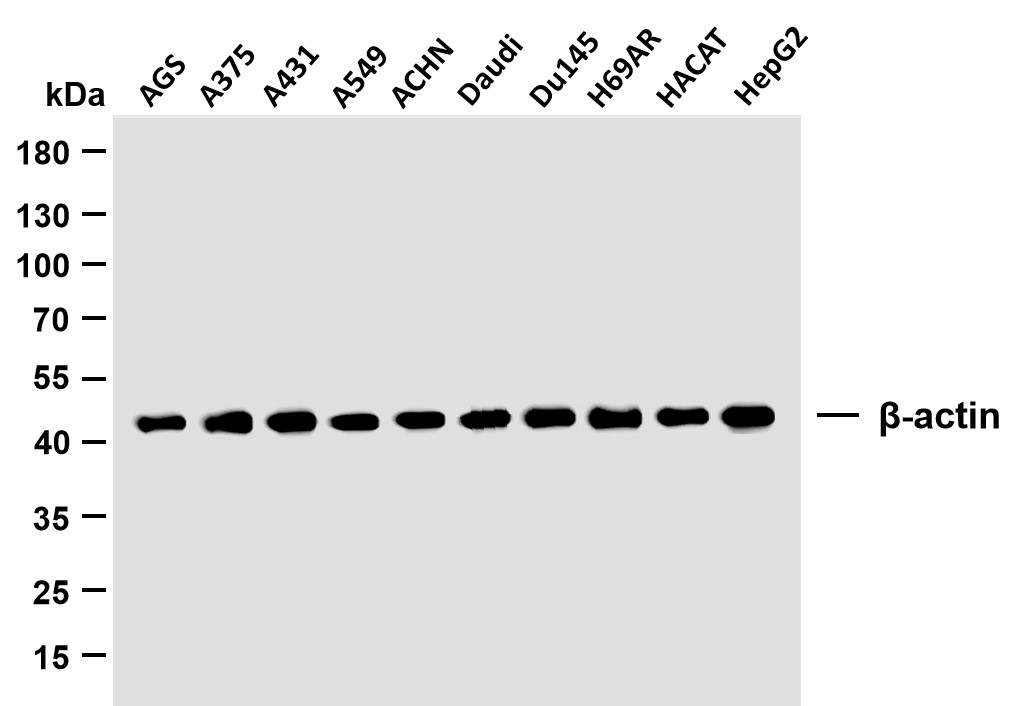
β-actin (PTR2364) Mouse mAb
YM3028
预览→
Primary Antibodies
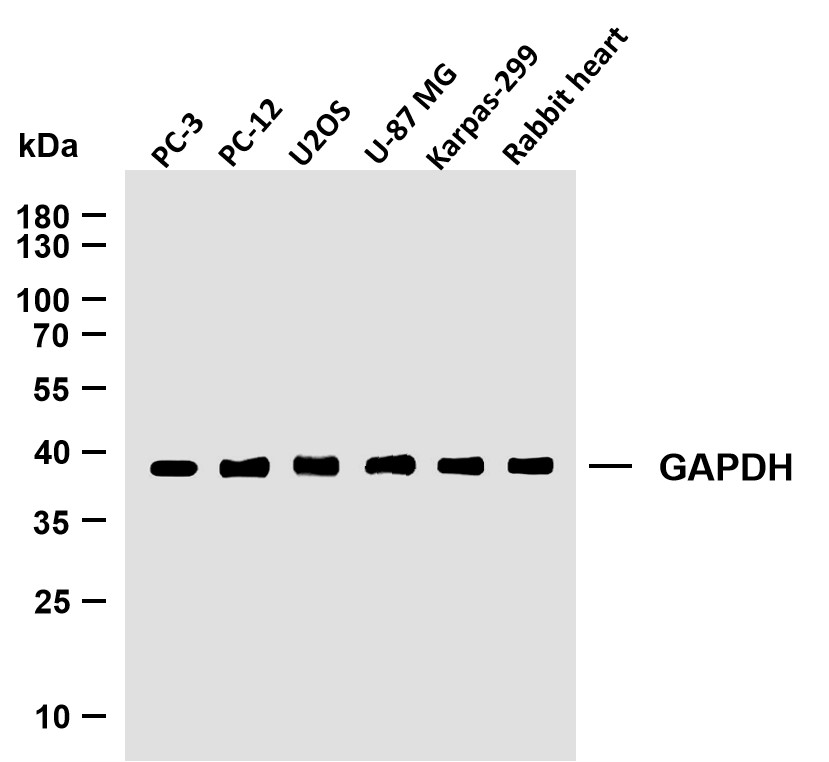
GAPDH (PTR2304) Mouse mAb
YM3029
预览→
抗原&靶点信息
免疫原:
The antiserum was produced against synthesized peptide derived from human PAK1/2/3 around the phosphorylation site of Ser144/141/139. AA range:111-160
展开内容
特异性:
This antibody detects endogenous levels of PAK1/2/3 only when phosphorylated at Human:S144/141/139, Mouse:S144/141/139, Rat:S144/141/139..The name of modified sites may be influenced by many factors, such as species (the modified site was not originally found in human samples) and the change of protein sequence (the previous protein sequence is incomplete, and the protein sequence may be prolonged with the development of protein sequencing technology). When naming, we will use the "numbers" in historical reference to keep the sites consistent with the reports. The antibody binds to the following modification sequence (lowercase letters are modification sites):YMsFT
展开内容
基因名称:
PAK1/PAK2/PAK3
展开内容
蛋白名称:
Serine/threonine-protein kinase PAK 1/Serine/threonine-protein kinase PAK 2/Serine/threonine-protein kinase PAK 3
展开内容
别名:
PAK1 ;
Serine/threonine-protein kinase PAK 1 ;
Alpha-PAK ;
p21-activated kinase 1 ;
PAK-1 ;
p65-PAK ;
PAK2 ;
Serine/threonine-protein kinase PAK 2 ;
Gamma-PAK ;
PAK65 ;
S6/H4 kinase ;
p21-activated kinase 2 ;
PAK-2 ;
p58 ;
PAK3 ;
OPHN3 ;
Serine/threonine-p
Serine/threonine-protein kinase PAK 1 ;
Alpha-PAK ;
p21-activated kinase 1 ;
PAK-1 ;
p65-PAK ;
PAK2 ;
Serine/threonine-protein kinase PAK 2 ;
Gamma-PAK ;
PAK65 ;
S6/H4 kinase ;
p21-activated kinase 2 ;
PAK-2 ;
p58 ;
PAK3 ;
OPHN3 ;
Serine/threonine-p
展开内容
数据库链接:
背景:
This gene encodes a family member of serine/threonine p21-activating kinases , known as PAK proteins. These proteins are critical effectors that link RhoGTPases to cytoskeleton reorganization and nuclear signaling , and they serve as targets for the small GTP binding proteins Cdc42 and Rac. This specific family member regulates cell motility and morphology. Alternatively spliced transcript variants encoding different isoforms have been found for this gene. [provided by RefSeq , Apr 2010] ,
展开内容
功能:
Catalytic activity:ATP + a protein = ADP + a phosphoprotein. ,cofactor:Magnesium. ,enzyme regulation:Activated by binding small G proteins. Binding of GTP-bound CDC42 or RAC1 to the autoregulatory region releases monomers from the autoinhibited dimer , enables phosphorylation of Thr-423 and allows the kinase domain to adopt an active structure. Also activated by binding to GTP-bound CDC42 , independent of the phosphorylation state of Thr-423. Phosphorylation of Thr-84 by OXSR1 inhibits this activation. ,Function:The activated kinase acts on a variety of targets. Likely to be the GTPase effector that links the Rho-related GTPases to the JNK MAP kinase pathway. Activated by CDC42 and RAC1. Involved in dissolution of stress fibers and reorganization of focal complexes. Involved in regulation of microtubule biogenesis through phosphorylation of TBCB. Activity is inhibited in cells undergoing apoptosis , potentially due to binding of CDC2L1 and CDC2L2. ,PTM:Autophosphorylated when activated by CDC42/p21 and RAC1. ,similarity:Belongs to the protein kinase superfamily. STE Ser/Thr protein kinase family. STE20 subfamily. ,similarity:Contains 1 CRIB domain. ,similarity:Contains 1 protein kinase domain. ,subcellular location:Recruited to focal adhesions upon activation. ,subunit:Homodimer in its autoinhibited state. Active as monomer. Interacts tightly with GTP-bound but not GDP-bound CDC42/P21 and RAC1. Binds to the caspase-cleaved p110 isoform of CDC2L1 and CDC2L2 , p110C , but not the full-length proteins. Component of cytoplasmic complexes , which also contain PXN , ARHGEF6 and GIT1. Interacts with ARHGEF7. Also interacts with CRIPAK. Interacts with NISCH. ,
展开内容
细胞定位:
Cytoplasm . Cell junction , focal adhesion . Cell projection , lamellipodium . Cell membrane . Cell projection , ruffle membrane . Cell projection , invadopodium . Nucleus , nucleoplasm . Chromosome . Cytoplasm , cytoskeleton , microtubule organizing center , centrosome . Colocalizes with RUFY3 , F-actin and other core migration components in invadopodia at the cell periphery (PubMed:25766321) . Recruited to the cell membrane by interaction with CDC42 and RAC1. Recruited to focal adhesions upon activation. Colocalized with CIB1 within membrane ruffles during cell spreading upon readhesion to fibronectin. Upon DNA damage , translocates to the nucleoplasm when phosphorylated at Thr-212 where is co-recruited with MORC2 on damaged chromatin (PubMed:23260667) . Localization to the centrosome does not depend upon the presence of gamma-tubulin (PubMed:27012601) . Localization of the active , but not inactive , protein to the adhesions and edge of lamellipodia is mediated by interaction with GIT1 (PubMed:11896197) . .
展开内容
研究领域:
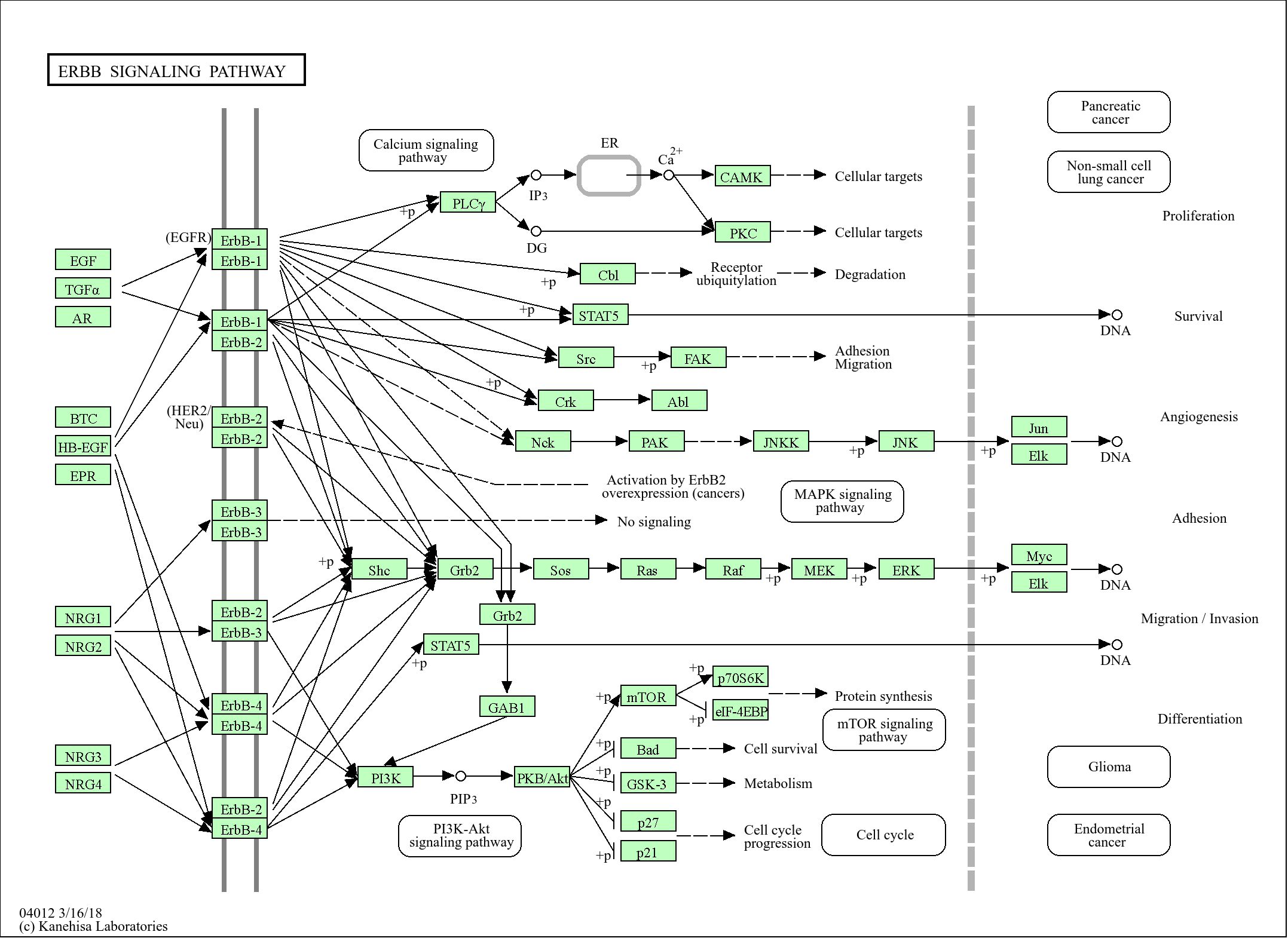
>>MAPK signaling pathway ;
>>ErbB signaling pathway ;
>>Ras signaling pathway ;
>>cAMP signaling pathway ;
>>Chemokine signaling pathway ;
>>Axon guidance ;
>>Hippo signaling pathway - multiple species ;
>>Focal adhesion ;
>>C-type lectin receptor signaling pathway ;
>>Natural killer cell mediated cytotoxicity ;
>>T cell receptor signaling pathway ;
>>Fc gamma R-mediated phagocytosis ;
>>Regulation of actin cytoskeleton ;
>>Epithelial cell signaling in Helicobacter pylori infection ;
>>Pathogenic Escherichia coli infection ;
>>Salmonella infection ;
>>Human immunodeficiency virus 1 infection ;
>>Proteoglycans in cancer ;
>>Renal cell carcinoma
>>ErbB signaling pathway ;
>>Ras signaling pathway ;
>>cAMP signaling pathway ;
>>Chemokine signaling pathway ;
>>Axon guidance ;
>>Hippo signaling pathway - multiple species ;
>>Focal adhesion ;
>>C-type lectin receptor signaling pathway ;
>>Natural killer cell mediated cytotoxicity ;
>>T cell receptor signaling pathway ;
>>Fc gamma R-mediated phagocytosis ;
>>Regulation of actin cytoskeleton ;
>>Epithelial cell signaling in Helicobacter pylori infection ;
>>Pathogenic Escherichia coli infection ;
>>Salmonella infection ;
>>Human immunodeficiency virus 1 infection ;
>>Proteoglycans in cancer ;
>>Renal cell carcinoma
展开内容
信号通路
Cellular Processes >> Cellular community - eukaryotes >> Focal adhesion
Cellular Processes >> Cell motility >> Regulation of actin cytoskeleton
Organismal Systems >> Immune system >> Natural killer cell mediated cytotoxicity
Organismal Systems >> Immune system >> T cell receptor signaling pathway
Organismal Systems >> Immune system >> Fc gamma R-mediated phagocytosis
Organismal Systems >> Immune system >> Chemokine signaling pathway
Human Diseases >> Cancer: specific types >> Renal cell carcinoma
Environmental Information Processing >> Signal transduction >> MAPK signaling pathway
Environmental Information Processing >> Signal transduction >> ErbB signaling pathway
Environmental Information Processing >> Signal transduction >> Ras signaling pathway
Environmental Information Processing >> Signal transduction >> Hippo signaling pathway - multiple species
Environmental Information Processing >> Signal transduction >> cAMP signaling pathway
文献引用({{totalcount}})
货号: YP0667
规格
价格
货期
数量
200μL
¥4,680.00
现货
0
100μL
¥2,800.00
现货
0
50μL
¥1,500.00
现货
0
加入购物车
已收藏
收藏
Recently Viewed Products
Clear all


×

Toggle night Mode
{{pinfoXq.title || ''}}
Catalog: {{pinfoXq.catalog || ''}}
Filter:
All
{{item.name}}
{{pinfo.title}}
-{{pinfo.catalog}}
主要信息
Target
{{pinfo.target}}
Reactivity
{{pinfo.react}}
Applications
{{pinfo.applicat}}
Conjugate/Modification
{{pinfo.coupling}}/{{pinfo.modific}}
MW (kDa)
{{pinfo.mwcalc}}
Host Species
{{pinfo.hostspec}}
Isotype
{{pinfo.isotype}}
产品 {{index}}/{{pcount}}
上一个产品
下一个产品
{{pvTitle}}
滚轮缩放图片
{{pvDescr}}