


5-LO (Phospho Ser523) Rabbit pAb
-YP0491



主要信息
Target
5-LO Phospho Ser523
Host Species
Rabbit
Reactivity
Human, Rat
Applications
WB, ELISA
MW
77kD (Observed)
Conjugate/Modification
phosphate

货号: YP0491
规格
价格
货期
数量
200μL
¥4,680.00
现货
0
100μL
¥2,800.00
现货
0
50μL
¥1,500.00
现货
0
加入购物车


已收藏
收藏
详细信息
推荐稀释比
WB 1:500-1:2000; ELISA 1:10000; Not yet tested in other applications.
组成
Liquid in PBS containing 50% glycerol, 0.5% BSA and 0.02% sodium azide.
特异性
Phospho-5-LO (S523) Polyclonal Antibody detects endogenous levels of 5-LO protein only when phosphorylated at S523.The name of modified sites may be influenced by many factors, such as species (the modified site was not originally found in human samples) and the change of protein sequence (the previous protein sequence is incomplete, and the protein sequence may be prolonged with the development of protein sequencing technology). When naming, we will use the "numbers" in historical reference to keep the sites consistent with the reports. The antibody binds to the following modification sequence (lowercase letters are modification sites):KSsGF
纯化工艺
The antibody was affinity-purified from rabbit antiserum by affinity-chromatography using epitope-specific immunogen.
储存
-15°C to -25°C/1 year (Do not lower than -25°C)
浓度
1 mg/ml
实测条带
77kD
修饰
phosphate
克隆性
Polyclonal
同种型
IgG
相关产品
Secondary Antibodies
Goat Anti Mouse IgG(H+L) (HRP)
RS0001
预览→
Secondary Antibodies
Goat Anti Rabbit IgG(H+L) (HRP)
RS0002
预览→
Primary Antibodies
β-actin (PTR2364) Mouse mAb
YM3028
预览→
Primary Antibodies
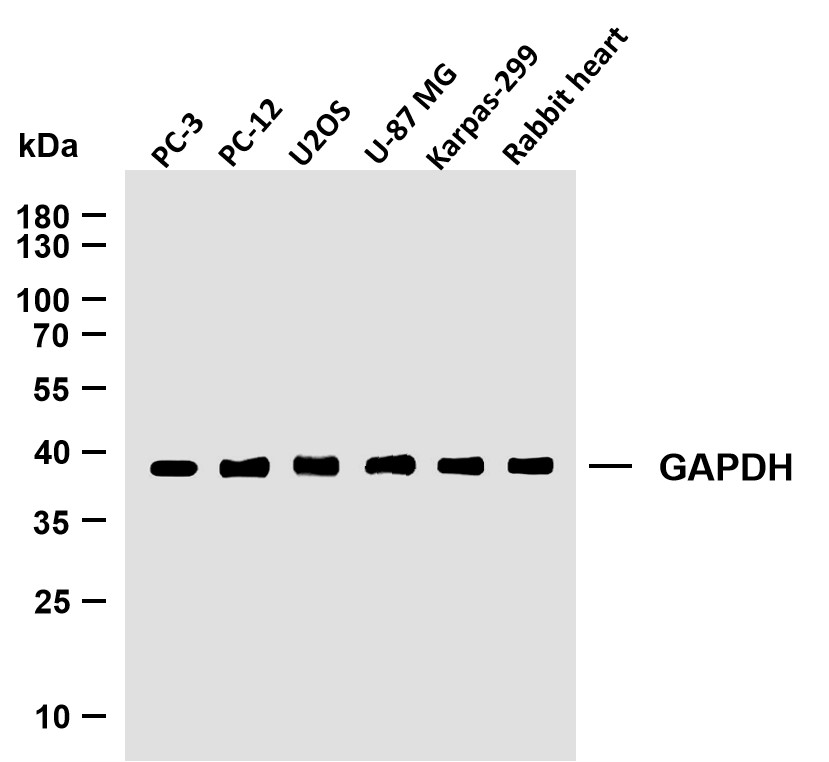
GAPDH (PTR2304) Mouse mAb
YM3029
预览→
抗原&靶点信息
免疫原:
Synthesized phospho-peptide around the phosphorylation site of human 5-LO (phospho Ser523)
展开内容
特异性:
Phospho-5-LO (S523) Polyclonal Antibody detects endogenous levels of 5-LO protein only when phosphorylated at S523.The name of modified sites may be influenced by many factors, such as species (the modified site was not originally found in human samples) and the change of protein sequence (the previous protein sequence is incomplete, and the protein sequence may be prolonged with the development of protein sequencing technology). When naming, we will use the "numbers" in historical reference to keep the sites consistent with the reports. The antibody binds to the following modification sequence (lowercase letters are modification sites):KSsGF
展开内容
基因名称:
ALOX5
展开内容
蛋白名称:
Arachidonate 5-lipoxygenase
展开内容
别名:
ALOX5 ;
LOG5 ;
Arachidonate 5-lipoxygenase ;
5-LO ;
5-lipoxygenase
LOG5 ;
Arachidonate 5-lipoxygenase ;
5-LO ;
5-lipoxygenase
展开内容
背景:
This gene encodes a member of the lipoxygenase gene family and plays a dual role in the synthesis of leukotrienes from arachidonic acid. The encoded protein , which is expressed specifically in bone marrow-derived cells , catalyzes the conversion of arachidonic acid to 5 (S) -hydroperoxy-6-trans-8 ,11 ,14-cis-eicosatetraenoic acid , and further to the allylic epoxide 5 (S) -trans-7 ,9-trans-11 ,14-cis-eicosatetrenoic acid (leukotriene A4) . Leukotrienes are important mediators of a number of inflammatory and allergic conditions. Mutations in the promoter region of this gene lead to a diminished response to antileukotriene drugs used in the treatment of asthma and may also be associated with atherosclerosis and several cancers. Alternatively spliced transcript variants encoding different isoforms have been found for this gene. [provided by RefSeq , Jan 2012] ,
展开内容
功能:
Catalytic activity:Arachidonate + O (2) = leukotriene A (4) + H (2) O. ,cofactor:Binds 1 iron ion per subunit. ,cofactor:Binds 2 calcium ions per subunit. ,Function:Catalyzes the first step in leukotriene biosynthesis , and thereby plays a role in inflammatory processes. ,pathway:Lipid metabolism; leukotriene A4 biosynthesis. ,PTM:Serine phosphorylation by MAPKAPK2 is stimulated by arachidonic acid. Phosphorylation on Ser-523 by PKA has an inhibitory effect. Phosphorylation on Ser-272 prevents export from the nucleus. ,similarity:Belongs to the lipoxygenase family. ,similarity:Contains 1 lipoxygenase domain. ,similarity:Contains 1 PLAT domain. ,subcellular location:Shuttles between cytoplasm and nucleus. Found exclusively in the nucleus , when phosphorylated on Ser-272. Calcium binding promotes translocation from the cytosol and the nuclear matrix to the nuclear envelope and membrane association. ,subunit:Interacts with ALOX5AP and LTC4S. ,
展开内容
细胞定位:
Cytoplasm . Nucleus matrix . Nucleus membrane ; Peripheral membrane protein . Cytoplasm , perinuclear region . Cytoplasm , cytosol . Nucleus envelope . Nucleus intermembrane space . Shuttles between cytoplasm and nucleus (PubMed:19233132) . Found exclusively in the nucleus , when phosphorylated on Ser-272 (PubMed:18978352) . Calcium binding promotes translocation from the cytosol and the nuclear matrix to the nuclear envelope and membrane association (PubMed:19233132 , PubMed:3118366 , PubMed:8245774 , PubMed:16275640) . .
展开内容
组织表达:
展开内容
研究领域:
>>Arachidonic acid metabolism ;
>>Metabolic pathways ;
>>Fc epsilon RI signaling pathway ;
>>Serotonergic synapse ;
>>Ovarian steroidogenesis ;
>>Toxoplasmosis
>>Metabolic pathways ;
>>Fc epsilon RI signaling pathway ;
>>Serotonergic synapse ;
>>Ovarian steroidogenesis ;
>>Toxoplasmosis
展开内容
文献引用({{totalcount}})
货号: YP0491
规格
价格
货期
数量
200μL
¥4,680.00
现货
0
100μL
¥2,800.00
现货
0
50μL
¥1,500.00
现货
0
加入购物车
已收藏
收藏
Recently Viewed Products
Clear all


×

Toggle night Mode
{{pinfoXq.title || ''}}
Catalog: {{pinfoXq.catalog || ''}}
Filter:
All
{{item.name}}
{{pinfo.title}}
-{{pinfo.catalog}}
主要信息
Target
{{pinfo.target}}
Reactivity
{{pinfo.react}}
Applications
{{pinfo.applicat}}
Conjugate/Modification
{{pinfo.coupling}}/{{pinfo.modific}}
MW (kDa)
{{pinfo.mwcalc}}
Host Species
{{pinfo.hostspec}}
Isotype
{{pinfo.isotype}}
产品 {{index}}/{{pcount}}
上一个产品
下一个产品
{{pvTitle}}
滚轮缩放图片
{{pvDescr}}