
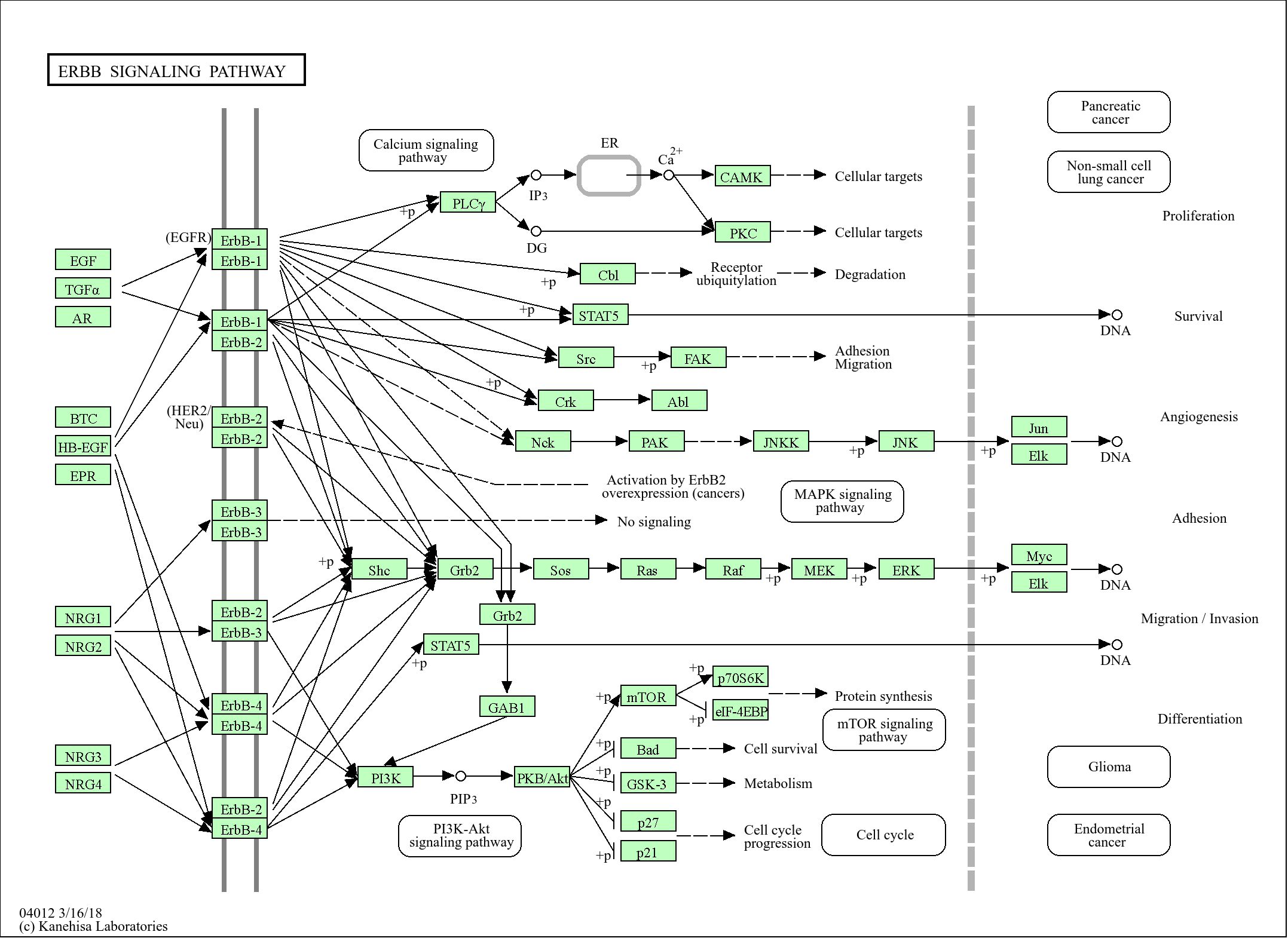


PDLIM5 (Phospho Tyr251) Rabbit pAb
-YP0223



主要信息
Target
PDLIM5 Phospho Tyr251
Host Species
Rabbit
Reactivity
Human, Mouse, Rat
Applications
WB, IHC, ELISA
MW
64kD (Observed)
Conjugate/Modification
phosphate
货号: YP0223
规格
价格
货期
数量
200μL
¥4,680.00
现货
0
100μL
¥2,800.00
现货
0
50μL
¥1,500.00
现货
0
加入购物车


已收藏
收藏
详细信息
推荐稀释比
WB 1:500-2000; IHC 1:50-300; ELISA 1:2000-20000
组成
Liquid in PBS containing 50% glycerol, 0.5% BSA and 0.02% sodium azide.
特异性
Phospho-PDLIM5 (Y251) Polyclonal Antibody detects endogenous levels of PDLIM5 protein only when phosphorylated at Y251.The name of modified sites may be influenced by many factors, such as species (the modified site was not originally found in human samples) and the change of protein sequence (the previous protein sequence is incomplete, and the protein sequence may be prolonged with the development of protein sequencing technology). When naming, we will use the "numbers" in historical reference to keep the sites consistent with the reports. The antibody binds to the following modification sequence (lowercase letters are modification sites):EFyHV
纯化工艺
The antibody was affinity-purified from rabbit antiserum by affinity-chromatography using epitope-specific immunogen.
储存
-15°C to -25°C/1 year (Do not lower than -25°C)
浓度
1 mg/ml
实测条带
64kD
修饰
phosphate
克隆性
Polyclonal
同种型
IgG
相关产品
Primary Antibodies
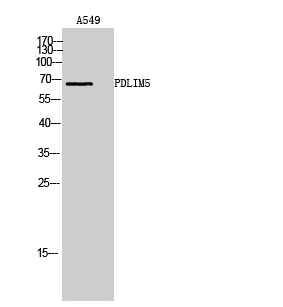
PDLIM5 Rabbit pAb
YT3647
预览→
Primary Antibodies
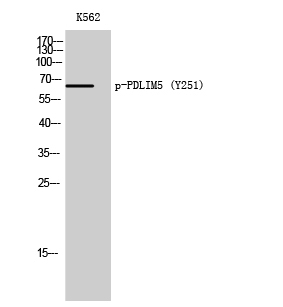
PDLIM5 (Phospho Tyr251) Rabbit pAb
YP0223
预览→
Secondary Antibodies
Goat Anti Mouse IgG(H+L) (HRP)
RS0001
预览→
Secondary Antibodies
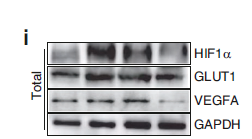
Goat Anti Rabbit IgG(H+L) (HRP)
RS0002
预览→
Primary Antibodies
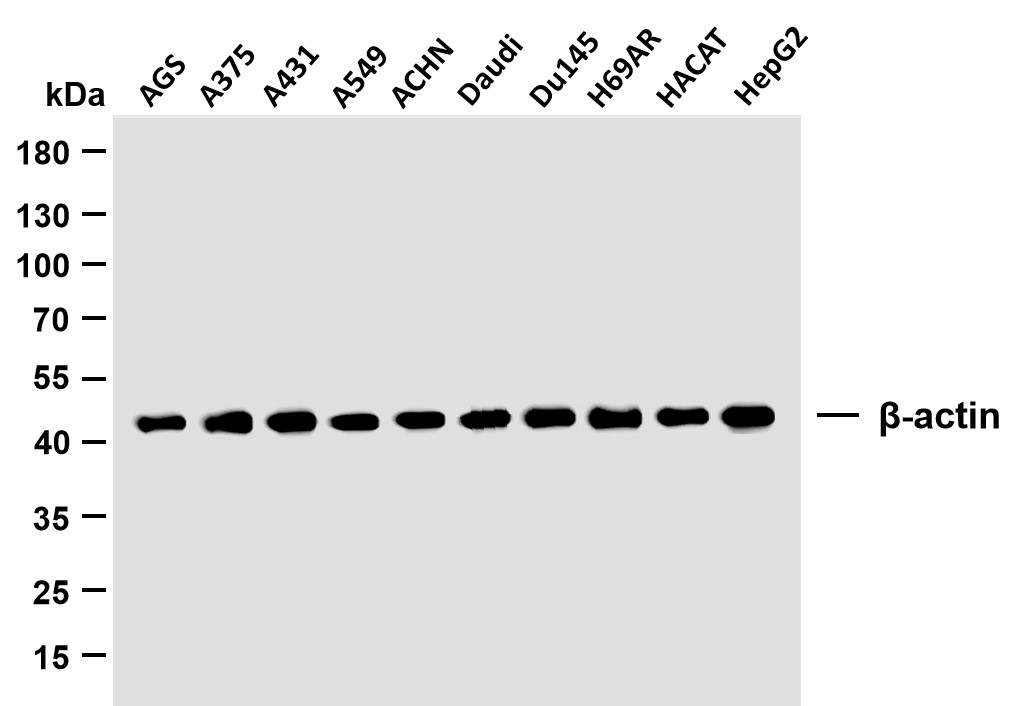
β-actin (PTR2364) Mouse mAb
YM3028
预览→
Primary Antibodies
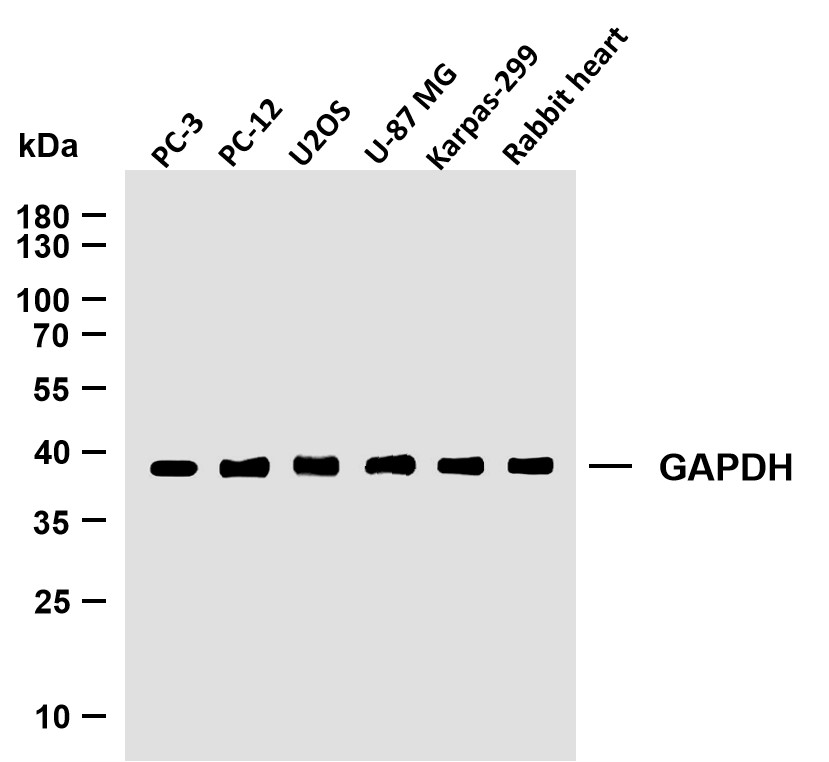
GAPDH (PTR2304) Mouse mAb
YM3029
预览→
抗原&靶点信息
免疫原:
Synthesized phospho-peptide around the phosphorylation site of human PDLIM5 (phospho Tyr251)
展开内容
特异性:
Phospho-PDLIM5 (Y251) Polyclonal Antibody detects endogenous levels of PDLIM5 protein only when phosphorylated at Y251.The name of modified sites may be influenced by many factors, such as species (the modified site was not originally found in human samples) and the change of protein sequence (the previous protein sequence is incomplete, and the protein sequence may be prolonged with the development of protein sequencing technology). When naming, we will use the "numbers" in historical reference to keep the sites consistent with the reports. The antibody binds to the following modification sequence (lowercase letters are modification sites):EFyHV
展开内容
基因名称:
PDLIM5
展开内容
蛋白名称:
PDZ and LIM domain protein 5
展开内容
别名:
PDLIM5 ;
ENH ;
L9 ;
PDZ and LIM domain protein 5 ;
Enigma homolog ;
Enigma-like PDZ and LIM domains protein
ENH ;
L9 ;
PDZ and LIM domain protein 5 ;
Enigma homolog ;
Enigma-like PDZ and LIM domains protein
展开内容
背景:
This gene encodes a member of a family of proteins that possess a 100-amino acid PDZ domain at the N terminus and one to three LIM domains at the C-terminus. This family member functions as a scaffold protein that tethers protein kinases to the Z-disk in striated muscles. It is thought to function in cardiomyocyte expansion and in restraining postsynaptic growth of excitatory synapses. Alternative splicing of this gene results in multiple transcript variants. [provided by RefSeq , Jan 2012] ,
展开内容
功能:
Caution:The sequence shown here is derived from an Ensembl automatic analysis pipeline and should be considered as preliminary data. ,Disease:May play a role in genetic susceptibility to schizophrenia. PDLIM5 is commonly increased in the brain of patients with bipolar disorder , schizophrenia , and major depression. ,Function:May play an important role in the heart development by scaffolding PKC to the Z-disk region. ,similarity:Contains 1 PDZ (DHR) domain. ,similarity:Contains 3 LIM zinc-binding domains. ,subunit:Interacts with various PKC isoforms through the LIM domains. Interacts with actin and alpha-actinin through the PDZ domain. ,tissue specificity:Heart and skeletal muscle specific. ,
展开内容
细胞定位:
Cell junction , synapse , postsynaptic density . Cell junction , synapse , presynapse . Cell junction , synapse , postsynapse . Cytoplasm , cytosol . Detected both at presynaptic and postsynaptic sites , exclusively at excitatory synapses , but not inhibitory synapses , in hippocampal neurons. .
展开内容
文献引用({{totalcount}})
货号: YP0223
规格
价格
货期
数量
200μL
¥4,680.00
现货
0
100μL
¥2,800.00
现货
0
50μL
¥1,500.00
现货
0
加入购物车
已收藏
收藏
Recently Viewed Products
Clear all


×

Toggle night Mode
{{pinfoXq.title || ''}}
Catalog: {{pinfoXq.catalog || ''}}
Filter:
All
{{item.name}}
{{pinfo.title}}
-{{pinfo.catalog}}
主要信息
Target
{{pinfo.target}}
Reactivity
{{pinfo.react}}
Applications
{{pinfo.applicat}}
Conjugate/Modification
{{pinfo.coupling}}/{{pinfo.modific}}
MW (kDa)
{{pinfo.mwcalc}}
Host Species
{{pinfo.hostspec}}
Isotype
{{pinfo.isotype}}
产品 {{index}}/{{pcount}}
上一个产品
下一个产品
{{pvTitle}}
滚轮缩放图片
{{pvDescr}}