



NFκB-p100 (Phospho Ser865) Rabbit pAb
-YP0181




主要信息
Target
NF-κB p100/p52 Phospho Ser865
Host Species
Rabbit
Reactivity
Human, Mouse, Rat
Applications
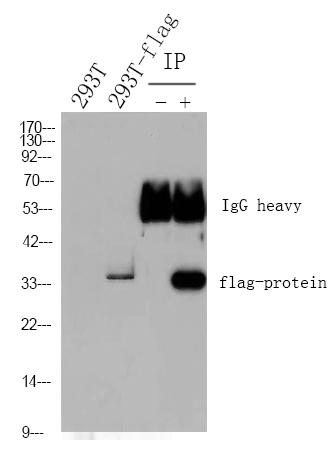
WB, IHC, IF, IP, ELISA
MW
97kD (Calculated)
Conjugate/Modification
phosphate
货号: YP0181
规格
价格
货期
数量
200μL
¥4,680.00
现货
0
100μL
¥2,800.00
现货
0
50μL
¥1,500.00
现货
0
加入购物车


已收藏
收藏
详细信息
推荐稀释比
WB 1:500-1:2000; IHC 1:100-1:300; IP 2-5 ug/mg lysate; IF 1:200-1:1000; ELISA 1:20000; Not yet tested in other applications.
组成
Liquid in PBS containing 50% glycerol, 0.5% BSA and 0.02% sodium azide.
特异性
Phospho-NFκB-p100 (S865) Polyclonal Antibody detects endogenous levels of NFκB-p100 protein only when phosphorylated at S865.The name of modified sites may be influenced by many factors, such as species (the modified site was not originally found in human samples) and the change of protein sequence (the previous protein sequence is incomplete, and the protein sequence may be prolonged with the development of protein sequencing technology). When naming, we will use the "numbers" in historical reference to keep the sites consistent with the reports. The antibody binds to the following modification sequence (lowercase letters are modification sites):EDsAY
纯化工艺
The antibody was affinity-purified from rabbit antiserum by affinity-chromatography using epitope-specific immunogen.
储存
-15°C to -25°C/1 year (Do not lower than -25°C)
浓度
1 mg/ml
理论分子量
97kD
修饰
phosphate
克隆性
Polyclonal
同种型
IgG
相关产品
Secondary Antibodies
Goat Anti Mouse IgG(H+L) (HRP)
RS0001
预览→
Secondary Antibodies
Goat Anti Rabbit IgG(H+L) (HRP)
RS0002
预览→
Primary Antibodies
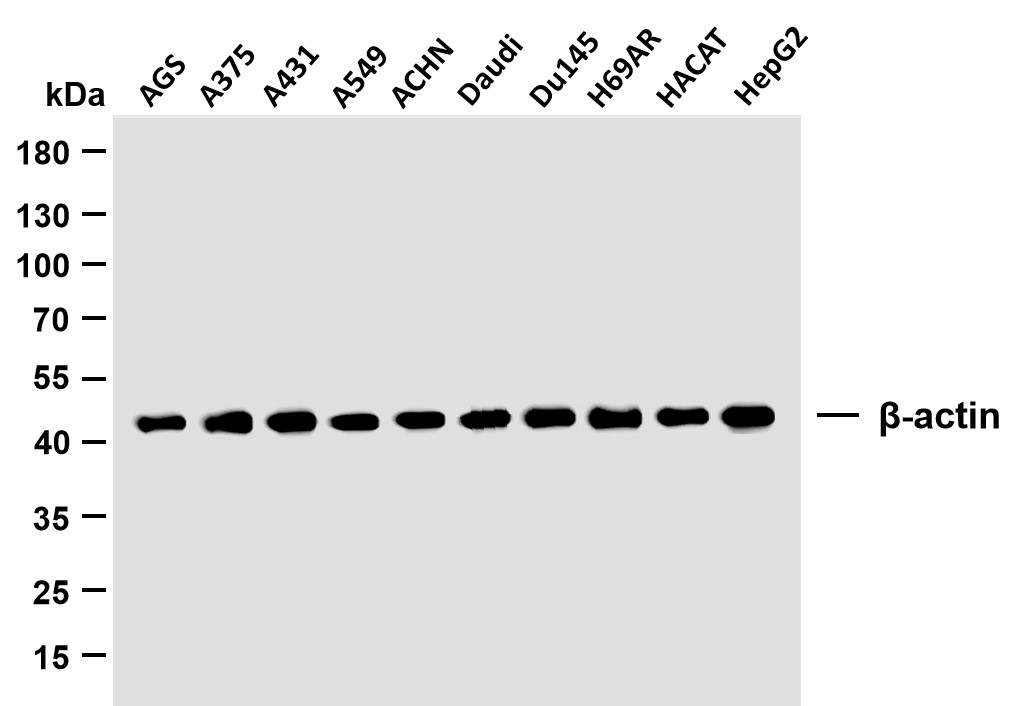
β-actin (PTR2364) Mouse mAb
YM3028
预览→
Primary Antibodies
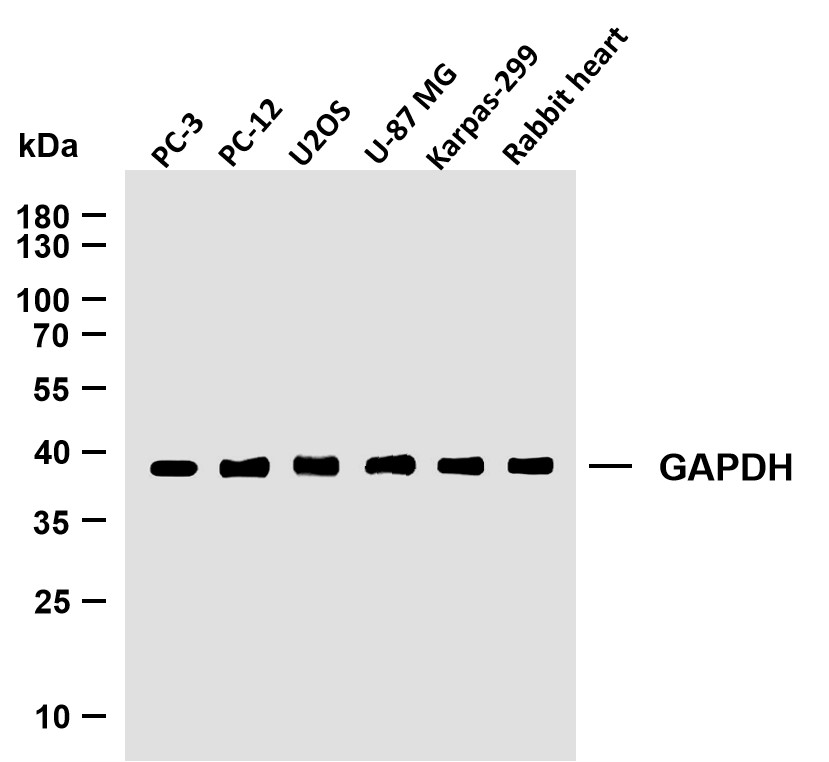
GAPDH (PTR2304) Mouse mAb
YM3029
预览→
抗原&靶点信息
免疫原:
The antiserum was produced against synthesized peptide derived from human NF-kappaB p100/p52 around the phosphorylation site of Ser865. AA range:833-882
展开内容
特异性:
Phospho-NFκB-p100 (S865) Polyclonal Antibody detects endogenous levels of NFκB-p100 protein only when phosphorylated at S865.The name of modified sites may be influenced by many factors, such as species (the modified site was not originally found in human samples) and the change of protein sequence (the previous protein sequence is incomplete, and the protein sequence may be prolonged with the development of protein sequencing technology). When naming, we will use the "numbers" in historical reference to keep the sites consistent with the reports. The antibody binds to the following modification sequence (lowercase letters are modification sites):EDsAY
展开内容
基因名称:
NFKB2 LYT10
展开内容
蛋白名称:
Nuclear factor NF-kappa-B p100 subunit
展开内容
别名:
NFKB2 ;
LYT10 ;
Nuclear factor NF-kappa-B p100 subunit ;
DNA-binding factor KBF2 ;
H2TF1 ;
Lymphocyte translocation chromosome 10 protein ;
Nuclear factor of kappa light polypeptide gene enhancer in B-cells 2 ;
Oncogene Lyt-10 ;
Lyt10 ;
[Cleaved into: Nuclear factor NF-kappa-B p52 subunit]
LYT10 ;
Nuclear factor NF-kappa-B p100 subunit ;
DNA-binding factor KBF2 ;
H2TF1 ;
Lymphocyte translocation chromosome 10 protein ;
Nuclear factor of kappa light polypeptide gene enhancer in B-cells 2 ;
Oncogene Lyt-10 ;
Lyt10 ;
[Cleaved into: Nuclear factor NF-kappa-B p52 subunit]
展开内容
背景:
nuclear factor kappa B subunit 2 (NFKB2) Homo sapiens This gene encodes a subunit of the transcription factor complex nuclear factor-kappa-B (NFkB) . The NFkB complex is expressed in numerous cell types and functions as a central activator of genes involved in inflammation and immune function. The protein encoded by this gene can function as both a transcriptional activator or repressor depending on its dimerization partner. The p100 full-length protein is co-translationally processed into a p52 active form. Chromosomal rearrangements and translocations of this locus have been observed in B cell lymphomas , some of which may result in the formation of fusion proteins. There is a pseudogene for this gene on chromosome 18. Alternative splicing results in multiple transcript variants. [provided by RefSeq , Dec 2013] ,
展开内容
功能:
Disease:A chromosomal aberration involving NFKB2 is found in a case of B-cell non Hodgkin lymphoma (B-NHL) . Translocation t (10;14) (q24;q32) with IGHA1. The resulting oncogene is also called Lyt-10C alpha variant. ,Disease:A chromosomal aberration involving NFKB2 is found in a cutaneous T-cell leukemia (C-TCL) cell line. This rearrangement produces the p80HT gene which encodes for a truncated 80 kDa protein (p80HT) . ,Disease:In B-cell leukemia (B-CLL) cell line , LB40 and EB308 , can be found after heterogeneous chromosomal aberrations , such as internal deletions. ,Domain:The C-terminus of p100 might be involved in cytoplasmic retention , inhibition of DNA-binding by p52 homodimers , and/or transcription activation. ,Domain:The glycine-rich region (GRR) appears to be a critical element in the generation of p52. ,Function:NF-kappa-B is a pleiotropic transcription factor which is present in almost all cell types and is involved in many biological processed such as inflammation , immunity , differentiation , cell growth , tumorigenesis and apoptosis. NF-kappa-B is a homo- or heterodimeric complex formed by the Rel-like domain-containing proteins RELA/p65 , RELB , NFKB1/p105 , NFKB1/p50 , REL and NFKB2/p52. The dimers bind at kappa-B sites in the DNA of their target genes and the individual dimers have distinct preferences for different kappa-B sites that they can bind with distinguishable affinity and specificity. Different dimer combinations act as transcriptional activators or repressors , respectively. NF-kappa-B is controlled by various mechanisms of post-translational modification and subcellular compartmentalization as well as by interactions with other cofactors or corepressors. NF-kappa-B complexes are held in the cytoplasm in an inactive state complexed with members of the NF-kappa-B inhibitor (I-kappa-B) family. In a conventional activation pathway , I-kappa-B is phosphorylated by I-kappa-B kinases (IKKs) in response to different activators , subsequently degraded thus liberating the active NF-kappa-B complex which translocates to the nucleus. In a non-canonical activation pathway , the MAP3K14-activated CHUK/IKKA homodimer phosphorylates NFKB2/p100 associated with RelB , inducing its proteolytic processing to NFKB2/p52 and the formation of NF-kappa-B RelB-p52 complexes. The NF-kappa-B heterodimeric RelB-p52 complex is a transcriptional activator. The NF-kappa-B p52-p52 homodimer is a transcriptional repressor. NFKB2 appears to have dual functions such as cytoplasmic retention of attached NF-kappa-B proteins by p100 and generation of p52 by a cotranslational processing. The proteasome-mediated process ensures the production of both p52 and p100 and preserves their independent function. p52 binds to the kappa-B consensus sequence 5'-GGRNNYYCC-3' , located in the enhancer region of genes involved in immune response and acute phase reactions. p52 and p100 are respectively the minor and major form; the processing of p100 being relatively poor. Isoform p49 is a subunit of the NF-kappa-B protein complex , which stimulates the HIV enhancer in synergy with p65. ,PTM:Constitutive processing is tightly suppressed by its C-terminal processing inhibitory domain , named PID , which contains the death domain. ,PTM:Subsequent to MAP3K14-dependent serine phosphorylation , p100 polyubiquitination occurs then triggering its proteasome-dependent processing. ,PTM:While translation occurs , the particular unfolded structure after the GRR repeat promotes the generation of p52 making it an acceptable substrate for the proteasome. This process is known as cotranslational processing. The processed form is active and the unprocessed form acts as an inhibitor (I kappa B-like) , being able to form cytosolic complexes with NF-kappa B , trapping it in the cytoplasm. Complete folding of the region downstream of the GRR repeat precludes processing. ,similarity:Contains 1 death domain. ,similarity:Contains 1 RHD (Rel-like) domain. ,similarity:Contains 7 ANK repeats. ,subcellular location:Nuclear , but also found in the cytoplasm in an inactive form complexed to an inhibitor (I-kappa-B) . ,subunit:Component of the NF-kappa-B RelB-p52 complex. Homodimer; component of the NF-kappa-B p52-p52 complex. Component of the NF-kappa-B p65-p52 complex. Component of the NF-kappa-B p52-c-Rel complex. NFKB2/p52 interacts with NFKBIE. Component of a complex consisting of the NF-kappa-B p50-p50 homodimer and BCL3. ,
展开内容
细胞定位:
Nucleus. Cytoplasm. Nuclear , but also found in the cytoplasm in an inactive form complexed to an inhibitor (I-kappa-B) .
展开内容
组织表达:
研究领域:
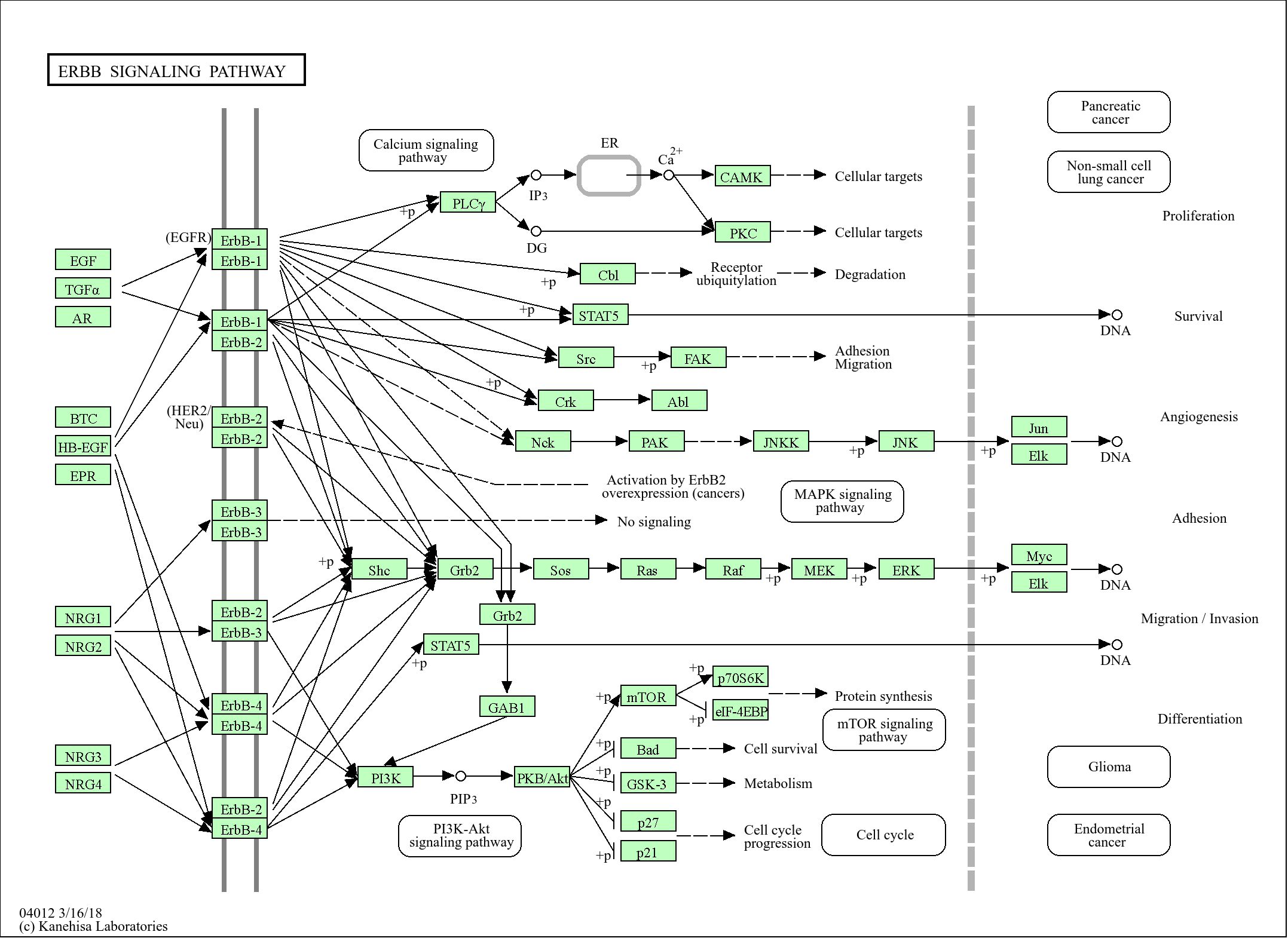
>>MAPK signaling pathway ;
>>NF-kappa B signaling pathway ;
>>Osteoclast differentiation ;
>>C-type lectin receptor signaling pathway ;
>>Legionellosis ;
>>Human T-cell leukemia virus 1 infection ;
>>Epstein-Barr virus infection ;
>>Pathways in cancer ;
>>Viral carcinogenesis ;
>>Breast cancer
>>NF-kappa B signaling pathway ;
>>Osteoclast differentiation ;
>>C-type lectin receptor signaling pathway ;
>>Legionellosis ;
>>Human T-cell leukemia virus 1 infection ;
>>Epstein-Barr virus infection ;
>>Pathways in cancer ;
>>Viral carcinogenesis ;
>>Breast cancer
展开内容
信号通路
Organismal Systems >> Development and regeneration >> Osteoclast differentiation
Human Diseases >> Cancer: overview >> Pathways in cancer
Human Diseases >> Cancer: specific types >> Breast cancer
Environmental Information Processing >> Signal transduction >> MAPK signaling pathway
Environmental Information Processing >> Signal transduction >> NF-kappa B signaling pathway
文献引用({{totalcount}})
货号: YP0181
规格
价格
货期
数量
200μL
¥4,680.00
现货
0
100μL
¥2,800.00
现货
0
50μL
¥1,500.00
现货
0
加入购物车
已收藏
收藏
Recently Viewed Products
Clear all


×

Toggle night Mode
{{pinfoXq.title || ''}}
Catalog: {{pinfoXq.catalog || ''}}
Filter:
All
{{item.name}}
{{pinfo.title}}
-{{pinfo.catalog}}
主要信息
Target
{{pinfo.target}}
Reactivity
{{pinfo.react}}
Applications
{{pinfo.applicat}}
Conjugate/Modification
{{pinfo.coupling}}/{{pinfo.modific}}
MW (kDa)
{{pinfo.mwcalc}}
Host Species
{{pinfo.hostspec}}
Isotype
{{pinfo.isotype}}
产品 {{index}}/{{pcount}}
上一个产品
下一个产品
{{pvTitle}}
滚轮缩放图片
{{pvDescr}}