


BRCA2 (Phospho Ser3291) Rabbit pAb
-YP0512




主要信息
Target
BRCA2 Phospho Ser3291
Host Species
Rabbit
Reactivity
Human, Mouse, Rat
Applications
WB, ELISA
MW
385kD (Observed)
Conjugate/Modification
Phospho

货号: YP0512
规格
价格
货期
数量
200μL
¥4,680.00
现货
0
100μL
¥2,800.00
现货
0
50μL
¥1,500.00
现货
0
加入购物车


已收藏
收藏
详细信息
推荐稀释比
WB 1:500-1:2000; ELISA 1:10000; Not yet tested in other applications.
组成
Liquid in PBS containing 50% glycerol, 0.5% BSA and 0.02% sodium azide.
特异性
Phospho-BRCA2 (S3291) Polyclonal Antibody detects endogenous levels of BRCA2 protein only when phosphorylated at S3291.The name of modified sites may be influenced by many factors, such as species (the modified site was not originally found in human samples) and the change of protein sequence (the previous protein sequence is incomplete, and the protein sequence may be prolonged with the development of protein sequencing technology). When naming, we will use the "numbers" in historical reference to keep the sites consistent with the reports. The antibody binds to the following modification sequence (lowercase letters are modification sites):FVsPA
纯化工艺
The antibody was affinity-purified from rabbit antiserum by affinity-chromatography using epitope-specific immunogen.
储存
-15°C to -25°C/1 year (Do not lower than -25°C)
浓度
1 mg/ml
实测条带
385kD
修饰
Phospho
克隆性
Polyclonal
同种型
IgG
相关产品
Secondary Antibodies
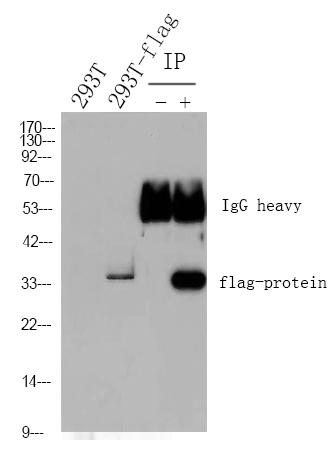
Goat Anti Mouse IgG(H+L) (HRP)
RS0001
预览→
Secondary Antibodies
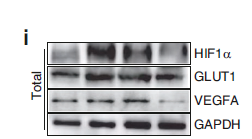
Goat Anti Rabbit IgG(H+L) (HRP)
RS0002
预览→
Primary Antibodies
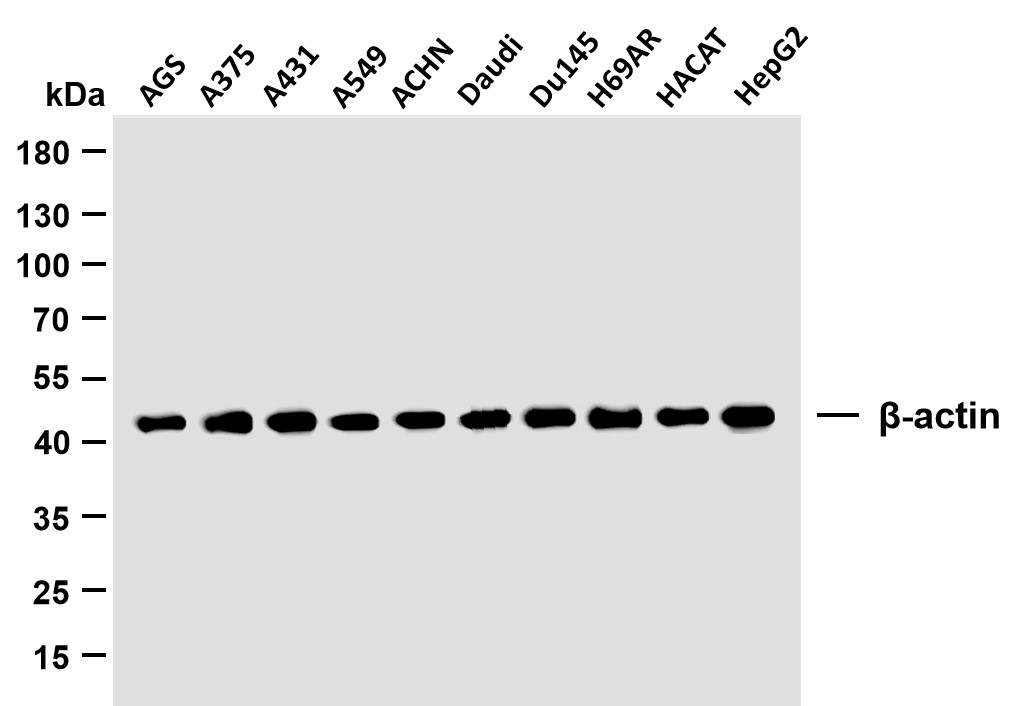
β-actin (PTR2364) Mouse mAb
YM3028
预览→
Primary Antibodies
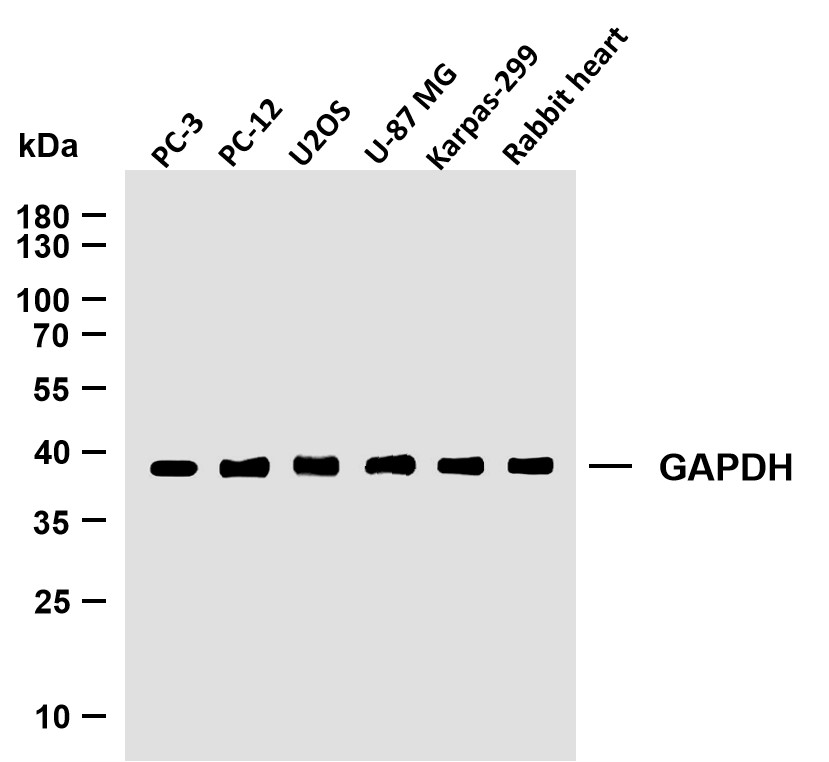
GAPDH (PTR2304) Mouse mAb
YM3029
预览→
抗原&靶点信息
免疫原:
Synthesized phospho-peptide around the phosphorylation site of human BRCA2 (phospho Ser3291)
展开内容
特异性:
Phospho-BRCA2 (S3291) Polyclonal Antibody detects endogenous levels of BRCA2 protein only when phosphorylated at S3291.The name of modified sites may be influenced by many factors, such as species (the modified site was not originally found in human samples) and the change of protein sequence (the previous protein sequence is incomplete, and the protein sequence may be prolonged with the development of protein sequencing technology). When naming, we will use the "numbers" in historical reference to keep the sites consistent with the reports. The antibody binds to the following modification sequence (lowercase letters are modification sites):FVsPA
展开内容
基因名称:
BRCA2
展开内容
蛋白名称:
Breast cancer type 2 susceptibility protein
展开内容
别名:
BRCA2 ;
FACD ;
FANCD1 ;
Breast cancer type 2 susceptibility protein ;
Fanconi anemia group D1 protein
FACD ;
FANCD1 ;
Breast cancer type 2 susceptibility protein ;
Fanconi anemia group D1 protein
展开内容
背景:
Inherited mutations in BRCA1 and this gene , BRCA2 , confer increased lifetime risk of developing breast or ovarian cancer. Both BRCA1 and BRCA2 are involved in maintenance of genome stability , specifically the homologous recombination pathway for double-strand DNA repair. The BRCA2 protein contains several copies of a 70 aa motif called the BRC motif , and these motifs mediate binding to the RAD51 recombinase which functions in DNA repair. BRCA2 is considered a tumor suppressor gene , as tumors with BRCA2 mutations generally exhibit loss of heterozygosity (LOH) of the wild-type allele. [provided by RefSeq , Dec 2008] ,
展开内容
功能:
Disease:Defects in BRCA2 are a cause of genetic susceptibility to breast cancer (BC) [MIM:612555 , 114480]; also called susceptibility to familial breast-ovarian cancer type 2 (BROVCA2) . BC is an extremely common malignancy , affecting one in eight women during their lifetime. A positive family history has been identified as major contributor to risk of development of the disease , and this link is striking for early-onset breast cancer. Mutations in BRCA2 are thought to be responsible for some inherited breast cancer. It is linked with male breast cancer. ,Disease:Defects in BRCA2 are the cause of Fanconi anemia complementation group D type 1 (FANCD1) [MIM:605724]. Fanconi anemia [MIM:227650] is an autosomal recessive disorder affecting all bone marrow elements and associated with cardiac , renal , and limb malformations as well as dermal pigmentary changes. ,Function:Involved in double-strand break repair and/or homologous recombination. May participate in S phase checkpoint activation. ,online information:BRCA2 entry ,polymorphism:Genetic variations in BRCA2 may underlie susceptibility to uveal melanoma [MIM:155720]. Uveal melanoma is the most common type of ocular malignant tumor , consisting of overgrowth of uveal melanocytes and often preceded by a uveal nevus. ,PTM:Phosphorylated by ATM upon irradiation-induced DNA damage. ,similarity:Contains 8 BRCA2 repeats. ,subunit:Interacts with RAD51 and DSS1. Interacts with ubiquitinated FANCD2. Interacts with PALB2 , enables the recombinational repair and checkpoints functions. Interacts with WDR16. ,tissue specificity:Highest levels of expression in breast and thymus , with slightly lower levels in lung , ovary and spleen. ,
展开内容
细胞定位:
Nucleus . Cytoplasm , cytoskeleton , microtubule organizing center , centrosome . Colocalizes with ERCC5/XPG to nuclear foci following DNA replication stress. .
展开内容
研究领域:
>>Homologous recombination ;
>>Fanconi anemia pathway ;
>>Pathways in cancer ;
>>Pancreatic cancer ;
>>Breast cancer
>>Fanconi anemia pathway ;
>>Pathways in cancer ;
>>Pancreatic cancer ;
>>Breast cancer
展开内容
信号通路
文献引用({{totalcount}})
货号: YP0512
规格
价格
货期
数量
200μL
¥4,680.00
现货
0
100μL
¥2,800.00
现货
0
50μL
¥1,500.00
现货
0
加入购物车
已收藏
收藏
Recently Viewed Products
Clear all


×

Toggle night Mode
{{pinfoXq.title || ''}}
Catalog: {{pinfoXq.catalog || ''}}
Filter:
All
{{item.name}}
{{pinfo.title}}
-{{pinfo.catalog}}
主要信息
Target
{{pinfo.target}}
Reactivity
{{pinfo.react}}
Applications
{{pinfo.applicat}}
Conjugate/Modification
{{pinfo.coupling}}/{{pinfo.modific}}
MW (kDa)
{{pinfo.mwcalc}}
Host Species
{{pinfo.hostspec}}
Isotype
{{pinfo.isotype}}
产品 {{index}}/{{pcount}}
上一个产品
下一个产品
{{pvTitle}}
滚轮缩放图片
{{pvDescr}}