



PKM2 (Phospho Tyr105) Rabbit pAb
-YP1444



主要信息
Target
PKM2 Phospho Tyr105
Host Species
Rabbit
Reactivity
Human, Mouse, Rat
Applications
WB, IHC, ELISA
MW
58kD (Observed)
Conjugate/Modification
phosphate
货号: YP1444
规格
价格
货期
数量
200μL
¥4,680.00
现货
0
100μL
¥2,800.00
现货
0
50μL
¥1,500.00
现货
0
加入购物车


已收藏
收藏
详细信息
推荐稀释比
WB 1:500-2000; IHC 1:50-300; ELISA 1:2000-20000
组成
Liquid in PBS containing 50% glycerol, 0.5% BSA and 0.02% sodium azide.
特异性
This antibody detects endogenous levels of Human Mouse Rat PKM2 (phospho-Tyr105)
纯化工艺
The antibody was affinity-purified from rabbit serum by affinity-chromatography using specific immunogen.
储存
-15°C to -25°C/1 year (Do not lower than -25°C)
浓度
1 mg/ml
实测条带
58kD
修饰
phosphate
克隆性
Polyclonal
同种型
IgG
相关产品
Primary Antibodies

PKM2 Rabbit pAb
YT3777
预览→
Primary Antibodies

PKM2 Mouse mAb
YM1323
预览→
Primary Antibodies

PKM2 Mouse mAb
YM1322
预览→
Secondary Antibodies
Goat Anti Mouse IgG(H+L) (HRP)
RS0001
预览→
Secondary Antibodies
Goat Anti Rabbit IgG(H+L) (HRP)
RS0002
预览→
Primary Antibodies
β-actin (PTR2364) Mouse mAb
YM3028
预览→
Primary Antibodies
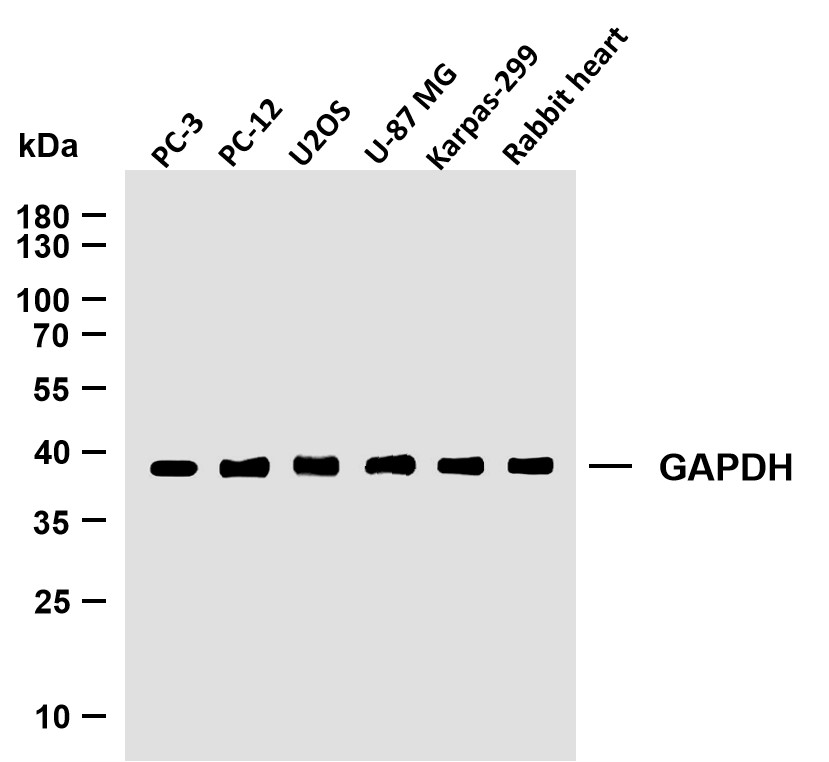
GAPDH (PTR2304) Mouse mAb
YM3029
预览→
抗原&靶点信息
免疫原:
Synthesized phosho peptide around human PKM2 (Tyr105)
展开内容
特异性:
This antibody detects endogenous levels of Human Mouse Rat PKM2 (phospho-Tyr105)
展开内容
基因名称:
PKM OIP3 PK2 PK3 PKM2
展开内容
蛋白名称:
PKM2 (Tyr105)
展开内容
别名:
Pyruvate kinase isozymes M1/M2 ;
Cytosolic thyroid hormone-binding protein ;
CTHBP ;
Opa-interacting protein 3 ;
OIP-3 ;
Pyruvate kinase 2/3 ;
Pyruvate kinase muscle isozyme ;
Thyroid hormone-binding protein 1 ;
THBP1 ;
Tumor M2-PK ;
p58 ;
Cytosolic thyroid hormone-binding protein ;
CTHBP ;
Opa-interacting protein 3 ;
OIP-3 ;
Pyruvate kinase 2/3 ;
Pyruvate kinase muscle isozyme ;
Thyroid hormone-binding protein 1 ;
THBP1 ;
Tumor M2-PK ;
p58 ;
展开内容
背景:
This gene encodes a protein involved in glycolysis. The encoded protein is a pyruvate kinase that catalyzes the transfer of a phosphoryl group from phosphoenolpyruvate to ADP , generating ATP and pyruvate. This protein has been shown to interact with thyroid hormone and may mediate cellular metabolic effects induced by thyroid hormones. This protein has been found to bind Opa protein , a bacterial outer membrane protein involved in gonococcal adherence to and invasion of human cells , suggesting a role of this protein in bacterial pathogenesis. Several alternatively spliced transcript variants encoding a few distinct isoforms have been reported. [provided by RefSeq , May 2011] ,
展开内容
功能:
Catalytic activity:ATP + pyruvate = ADP + phosphoenolpyruvate. ,cofactor:Divalent metal cations. ,cofactor:Magnesium. ,cofactor:Potassium. ,enzyme regulation:Isoform M2 is allosterically activated by D-fructose 1 ,6-biphosphate (FBP) . Inhibited by oxalate and 3 ,3' ,5-triiodo-L-thyronine (T3) . ,Function:Glycolytic enzyme that catalyzes the transfer of a phosphoryl group from phosphoenolpyruvate (PEP) to ADP , generating ATP. ,miscellaneous:There are 4 isozymes of pyruvate kinase in mammals: L , R , M1 and M2. L type is major isozyme in the liver , R is found in red cells , M1 is the main form in muscle , heart and brain , and M2 is found in early fetal tissues as well as in most cancer cells. ,online information:Pyruvate kinase entry ,pathway:Carbohydrate degradation; glycolysis; pyruvate from D-glyceraldehyde 3-phosphate: step 5/5. ,PTM:Phosphorylated upon DNA damage , probably by ATM or ATR. ,similarity:Belongs to the pyruvate kinase family. ,subunit:Monomer and homotetramer. Exists as a monomer in the absence of FBP , and reversibly associates to form a homotetramer in the presence of FBP. The monomeric form binds T3. Tetramer formation induces pyruvate kinase activity. Interacts with HERC1. ,
展开内容
细胞定位:
[Isoform M2]: Cytoplasm . Nucleus . Translocates to the nucleus in response to various signals , such as EGF receptor activation or apoptotic stimuli (PubMed:17308100 , PubMed:22056988 , PubMed:24120661) . Nuclear translocation is promoted by acetylation by EP300 (PubMed:24120661) . Deacetylation by SIRT6 promotes its nuclear export in a process dependent of XPO4 , thereby suppressing its ability to activate transcription and promote tumorigenesis (PubMed:26787900) . .; [Isoform M1]: Cytoplasm .
展开内容
研究领域:
>>Glycolysis / Gluconeogenesis ;
>>Pyruvate metabolism ;
>>Metabolic pathways ;
>>Carbon metabolism ;
>>Biosynthesis of amino acids ;
>>Glucagon signaling pathway ;
>>Type II diabetes mellitus ;
>>Human papillomavirus infection ;
>>Viral carcinogenesis ;
>>Central carbon metabolism in cancer
>>Pyruvate metabolism ;
>>Metabolic pathways ;
>>Carbon metabolism ;
>>Biosynthesis of amino acids ;
>>Glucagon signaling pathway ;
>>Type II diabetes mellitus ;
>>Human papillomavirus infection ;
>>Viral carcinogenesis ;
>>Central carbon metabolism in cancer
展开内容
信号通路
文献引用({{totalcount}})
货号: YP1444
规格
价格
货期
数量
200μL
¥4,680.00
现货
0
100μL
¥2,800.00
现货
0
50μL
¥1,500.00
现货
0
加入购物车
已收藏
收藏
Recently Viewed Products
Clear all


×

Toggle night Mode
{{pinfoXq.title || ''}}
Catalog: {{pinfoXq.catalog || ''}}
Filter:
All
{{item.name}}
{{pinfo.title}}
-{{pinfo.catalog}}
主要信息
Target
{{pinfo.target}}
Reactivity
{{pinfo.react}}
Applications
{{pinfo.applicat}}
Conjugate/Modification
{{pinfo.coupling}}/{{pinfo.modific}}
MW (kDa)
{{pinfo.mwcalc}}
Host Species
{{pinfo.hostspec}}
Isotype
{{pinfo.isotype}}
产品 {{index}}/{{pcount}}
上一个产品
下一个产品
{{pvTitle}}
滚轮缩放图片
{{pvDescr}}