



IRF3 (Phospho Ser386) (PT0984R) PT™ Rabbit mAb
-YM8566





主要信息
Target
IRF3 Phospho Ser386
Host Species
Rabbit
Reactivity
Human

Applications
WB, IF, ELISA
MW
47kD (Calculated)
60kD (Observed)
Conjugate/Modification
phosphate
货号: YM8566
规格
价格
货期
数量
200μL
¥3,580.00
现货
0
100μL
¥1,960.00
现货
0
40μL
¥960.00
现货
0
加入购物车


已收藏
收藏
详细信息
推荐稀释比
WB 1:1000-1:15000; IF 1:200-1:1000; ELISA 1:5000-1:20000
组成
PBS, 50% glycerol, 0.05% Proclin 300, 0.05%BSA
特异性
IRF3 (Phospho Ser386) Monoclonal Antibody detects endogenous levels of IRF3 protein only when phosphorylated at S386.The name of modified sites may be influenced by many factors, such as species (the modified site was not originally found in human samples) and the change of protein sequence (the previous protein sequence is incomplete, and the protein sequence may be prolonged with the development of protein sequencing technology). When naming, we will use the "numbers" in historical reference to keep the sites consistent with the reports. The antibody binds to the following modification sequence (lowercase letters are modification sites):ASsLE
纯化工艺
Recombinant Antibody expressed in animal component-free (ACF) media, purified via Protein A affinity chromatography.
储存
-15°C to -25°C/1 year (Do not lower than -25°C)
理论分子量
47kD
实测条带
60kD
修饰
phosphate
克隆性
Monoclonal
克隆号
PT0984R
同种型
IgG, Kappa
RRID号
AB_3711771
相关产品
Secondary Antibodies
Goat Anti Mouse IgG(H+L) (HRP)
RS0001
预览→
Secondary Antibodies
Goat Anti Rabbit IgG(H+L) (HRP)
RS0002
预览→
Primary Antibodies
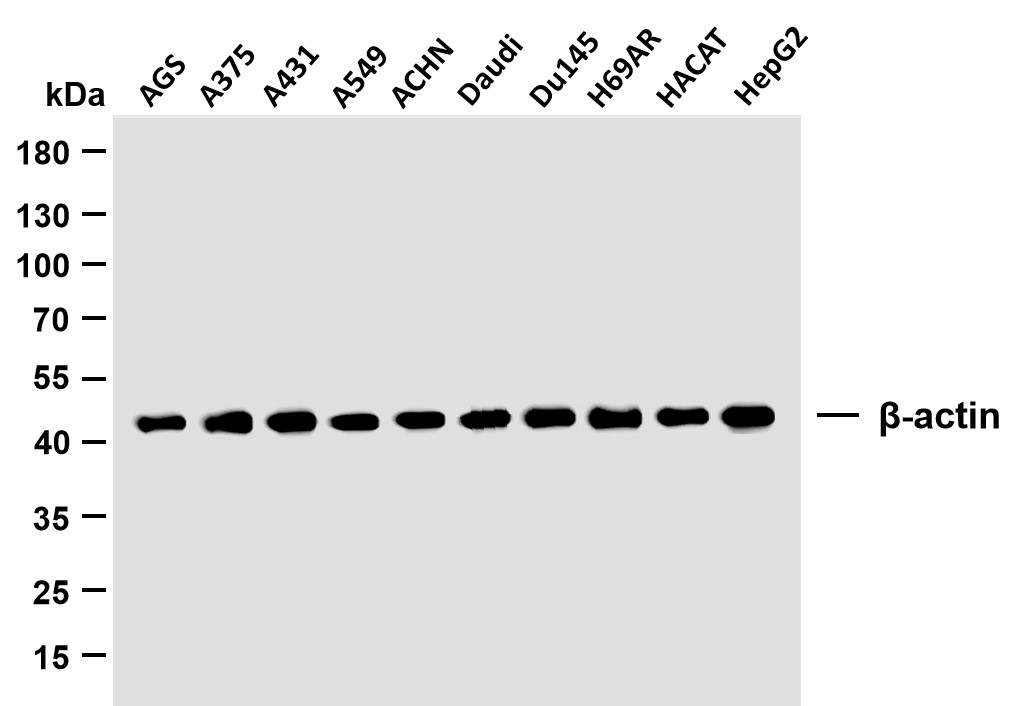
β-actin (PTR2364) Mouse mAb
YM3028
预览→
Primary Antibodies
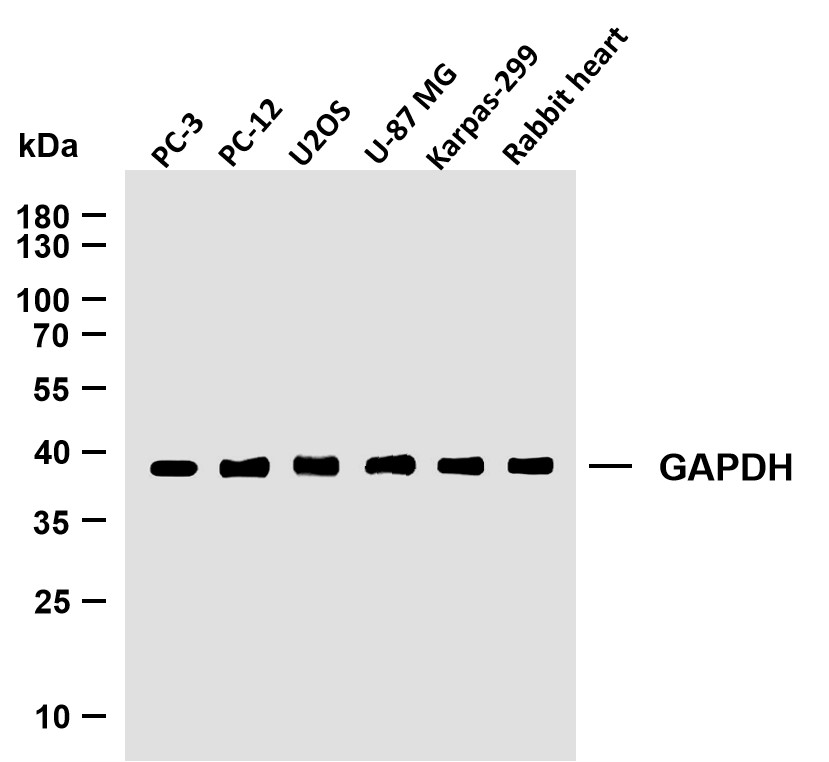
GAPDH (PTR2304) Mouse mAb
YM3029
预览→
抗原&靶点信息
免疫原:
The specific immunogen used to produce this antibody is proprietary information.
展开内容
种属预测:
以下所列种属仅供参考。建议仅在目标物种与免疫原序列同源性高于80%时尝试用于WB等实验。由于蛋白表达存在种属、组织或细胞差异,即使同源性较高,实际效果仍需实验验证。本预测基于序列比对,结果仅供参考,不作为质保依据。
Homolo ≥ 90%
80% ≤ Homolo < 90%
0% < Homolo < 80%
特异性:
IRF3 (Phospho Ser386) Monoclonal Antibody detects endogenous levels of IRF3 protein only when phosphorylated at S386.The name of modified sites may be influenced by many factors, such as species (the modified site was not originally found in human samples) and the change of protein sequence (the previous protein sequence is incomplete, and the protein sequence may be prolonged with the development of protein sequencing technology). When naming, we will use the "numbers" in historical reference to keep the sites consistent with the reports. The antibody binds to the following modification sequence (lowercase letters are modification sites):ASsLE
展开内容
基因名称:
IRF3
展开内容
蛋白名称:
Interferon regulatory factor 3
展开内容
别名:
IRF3 ;
Interferon regulatory factor 3 ;
IRF-3
Interferon regulatory factor 3 ;
IRF-3
展开内容
背景:
This gene encodes a member of the interferon regulatory transcription factor (IRF) family. The encoded protein is found in an inactive cytoplasmic form that upon serine/threonine phosphorylation forms a complex with CREBBP. This complex translocates to the nucleus and activates the transcription of interferons alpha and beta , as well as other interferon-induced genes. Alternatively spliced transcript variants encoding multiple isoforms have been observed for this gene. [provided by RefSeq , Nov 2011] ,
展开内容
功能:
Function:Mediates interferon-stimulated response element (ISRE) promoter activation. Functions as a molecular switch for antiviral activity. DsRNA generated during the course of an viral infection leads to IRF3 phosphorylation on the C-terminal serine/threonine cluster. This induces a conformational change , leading to its dimerization , nuclear localization and association with CREB binding protein (CREBBP) to form dsRNA-activated factor 1 (DRAF1) , a complex which activates the transcription of genes under the control of ISRE. The complex binds to the IE and PRDIII regions on the IFN-alpha and IFN-beta promoters respectively. IRF-3 does not have any transcription activation domains. ,PTM:Constitutively phosphorylated on many serines residues. C-terminal serine/threonine cluster is phosphorylated in response of induction by IKBKE and TBK1. Ser-385 and Ser-386 may be specifically phosphorylated in response to induction. An alternate model propose that the five serine/threonine residues between 396 and 405 are phosphorylated in response to a viral infection. Phosphorylation , and subsequent activation of IRF3 is inhibited by vaccinia virus protein E3. ,similarity:Belongs to the IRF family. ,similarity:Contains 1 tryptophan pentad repeat DNA-binding domain. ,subcellular location:Shuttles between cytoplasmic and nuclear compartments , with export being the prevailing effect. When activated , IRF3 interaction with CREBBP prevents its export to the cytoplasm. ,subunit:Homodimer; phosphorylation-induced. Interacts with CREBBP. May interact with MAVS. Interacts with IKBKE and TBK1. Interacts with TICAM1 and TICAM2. Interacts with rotavirus A NSP1 (via C-terminus) ; this interaction leads to the proteasome-dependent degradation of IRF3. ,tissue specificity:Expressed constitutively in a variety of tissues. ,
展开内容
细胞定位:
Cytoplasm . Nucleus . Mitochondrion . Shuttles between cytoplasmic and nuclear compartments , with export being the prevailing effect (PubMed:10805757) . When activated , IRF3 interaction with CREBBP prevents its export to the cytoplasm (PubMed:10805757) . Recruited to mitochondria via TOMM70:HSP90AA1 upon Sendai virus infection (PubMed:25609812) . .
展开内容
研究领域:
>>Toll-like receptor signaling pathway ;
>>NOD-like receptor signaling pathway ;
>>RIG-I-like receptor signaling pathway ;
>>Cytosolic DNA-sensing pathway ;
>>Alcoholic liver disease ;
>>Shigellosis ;
>>Pertussis ;
>>Yersinia infection ;
>>Hepatitis C ;
>>Hepatitis B ;
>>Measles ;
>>Human cytomegalovirus infection ;
>>Influenza A ;
>>Human papillomavirus infection ;
>>Kaposi sarcoma-associated herpesvirus infection ;
>>Herpes simplex virus 1 infection ;
>>Epstein-Barr virus infection ;
>>Human immunodeficiency virus 1 infection ;
>>Coronavirus disease - COVID-19 ;
>>Viral carcinogenesis ;
>>Lipid and atherosclerosis
>>NOD-like receptor signaling pathway ;
>>RIG-I-like receptor signaling pathway ;
>>Cytosolic DNA-sensing pathway ;
>>Alcoholic liver disease ;
>>Shigellosis ;
>>Pertussis ;
>>Yersinia infection ;
>>Hepatitis C ;
>>Hepatitis B ;
>>Measles ;
>>Human cytomegalovirus infection ;
>>Influenza A ;
>>Human papillomavirus infection ;
>>Kaposi sarcoma-associated herpesvirus infection ;
>>Herpes simplex virus 1 infection ;
>>Epstein-Barr virus infection ;
>>Human immunodeficiency virus 1 infection ;
>>Coronavirus disease - COVID-19 ;
>>Viral carcinogenesis ;
>>Lipid and atherosclerosis
展开内容
信号通路
文献引用({{totalcount}})
货号: YM8566
规格
价格
货期
数量
200μL
¥3,580.00
现货
0
100μL
¥1,960.00
现货
0
40μL
¥960.00
现货
0
加入购物车
已收藏
收藏
Recently Viewed Products
Clear all


×

Toggle night Mode
{{pinfoXq.title || ''}}
Catalog: {{pinfoXq.catalog || ''}}
Filter:
All
{{item.name}}
{{pinfo.title}}
-{{pinfo.catalog}}
主要信息
Target
{{pinfo.target}}
Reactivity
{{pinfo.react}}
Applications
{{pinfo.applicat}}
Conjugate/Modification
{{pinfo.coupling}}/{{pinfo.modific}}
MW (kDa)
{{pinfo.mwcalc}}
Host Species
{{pinfo.hostspec}}
Isotype
{{pinfo.isotype}}
产品 {{index}}/{{pcount}}
上一个产品
下一个产品
{{pvTitle}}
滚轮缩放图片
{{pvDescr}}