


TBP/TATA Box Binding Protein Rabbit pAb
-YN5458



主要信息
Target
TBP/TATA Binding Protein
Host Species
Rabbit
Reactivity
Human, Mouse
Applications
WB, IHC, IF
MW
38kD (Observed)
Conjugate/Modification
Unmodified

货号: YN5458
规格
价格
货期
数量
200μL
¥3,780.00
一个月
0
100μL
¥2,300.00
一个月
0
40μL
¥960.00
一个月
0
加入购物车


已收藏
收藏
详细信息
推荐稀释比
WB 1:500-1:2000; IHC 1:50-1:200; IF 1:50-200
组成
Liquid in PBS containing 50% glycerol, 0.5% BSA and 0.02% sodium azide.
特异性
The antibody detects endogenous TBP protein
纯化工艺
The antibody was affinity-purified from rabbit antiserum by affinity-chromatography using epitope-specific immunogen.
储存
-15°C to -25°C/1 year (Do not lower than -25°C)
浓度
1 mg/ml
实测条带
38kD
修饰
Unmodified
克隆性
Polyclonal
同种型
IgG
相关产品
Primary Antibodies
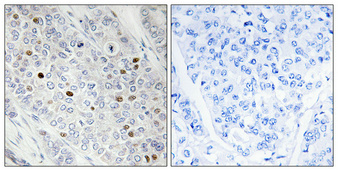
TBP/TATA Box Binding Protein Rabbit pAb
YT4615
预览→
Primary Antibodies
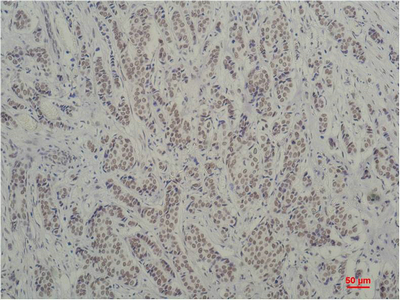
TBP/TATA Box Binding Protein (1F6) Mouse mAb
YM3515
预览→
Primary Antibodies
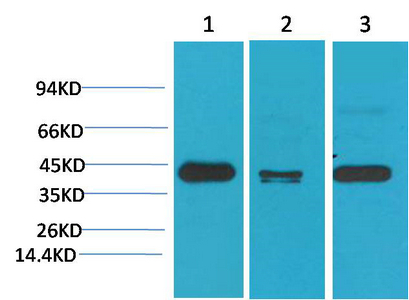
TBP/TATA Box Binding Protein (4H2) Mouse mAb
YM3511
预览→
Primary Antibodies

TBP/TATA Box Binding Protein (4H2) Mouse mAb,HRP)
YM2149
预览→
抗原&靶点信息
免疫原:
Recombinant Protein of TBP. AA range:94-194
展开内容
特异性:
The antibody detects endogenous TBP protein
展开内容
基因名称:
TBP
展开内容
蛋白名称:
TATA-box-binding protein (TATA sequence-binding protein) (TATA-binding factor) (TATA-box factor) (Transcription initiation factor TFIID TBP subunit)
展开内容
别名:
TATA-box-binding protein ;
TATA sequence-binding protein ;
TATA-binding factor ;
TATA-box factor ;
Transcription initiation factor TFIID TBP subunit ;
TATA sequence-binding protein ;
TATA-binding factor ;
TATA-box factor ;
Transcription initiation factor TFIID TBP subunit ;
展开内容
背景:
Initiation of transcription by RNA polymerase II requires the activities of more than 70 polypeptides. The protein that coordinates these activities is transcription factor IID (TFIID) , which binds to the core promoter to position the polymerase properly , serves as the scaffold for assembly of the remainder of the transcription complex , and acts as a channel for regulatory signals. TFIID is composed of the TATA-binding protein (TBP) and a group of evolutionarily conserved proteins known as TBP-associated factors or TAFs. TAFs may participate in basal transcription , serve as coactivators , function in promoter recognition or modify general transcription factors (GTFs) to facilitate complex assembly and transcription initiation. This gene encodes TBP , the TATA-binding protein. A distinctive feature of TBP is a long string of glutamines in the N-terminus. This region of the protein modulates the DNA bin
展开内容
功能:
Disease:Defects in TBP are the cause of spinocerebellar ataxia type 17 (SCA17) [MIM:607136]. Spinocerebellar ataxia is a clinically and genetically heterogeneous group of cerebellar disorders. Patients show progressive incoordination of gait and often poor coordination of hands , speech and eye movements , due to degeneration of the cerebellum with variable involvement of the brainstem and spinal cord. SCA17 is an autosomal dominant cerebellar ataxia (ADCA) characterized by widespread cerebral and cerebellar atrophy , dementia and extrapyramidal signs. The molecular defect in SCA17 is the expansion of a CAG repeat in the coding region of TBP. Longer expansions result in earlier onset and more severe clinical manifestations of the disease. ,Function:General transcription factor that functions at the core of the DNA-binding multiprotein factor TFIID. Binding of TFIID to the TATA box is the initial transcriptional step of the pre-initiation complex (PIC) , playing a role in the activation of eukaryotic genes transcribed by RNA polymerase II. ,polymorphism:The poly-Gln region of TBP is highly polymorphic (25 to 42 repeats) in normal individuals and is expanded to about 47-63 repeats in spinocerebellar ataxia 17 (SCA17) patients. ,similarity:Belongs to the TBP family. ,subunit:Belongs to the TFIID complex together with the TBP-associated factors (TAFs) . Component of the transcription factor SL1/TIFIB complex , composed of TBP and at least TAF1A , TAF1B TAF1C , and TAF3. Binds DNA as monomer. Interacts with TAFs , TFIIB , NCOA6 , DRAP1 , DR1 and ELF3. Interacts with SPIB , SNAPC1 , SNAPC2 and SNAPC4. Interacts with HIV-1 Tat. Interacts with UTF1 which acts as a coactivator of ATF2 transcriptional activity. Interacts with GPBP1 (By similarity) . Interacts with BRF2. ,tissue specificity:Widely expressed , with levels highest in the testis and ovary. ,
展开内容
细胞定位:
Nucleus .
展开内容
研究领域:
>>Basal transcription factors ;
>>Huntington disease ;
>>Spinocerebellar ataxia ;
>>Human papillomavirus infection ;
>>Human T-cell leukemia virus 1 infection ;
>>Viral carcinogenesis
>>Huntington disease ;
>>Spinocerebellar ataxia ;
>>Human papillomavirus infection ;
>>Human T-cell leukemia virus 1 infection ;
>>Viral carcinogenesis
展开内容
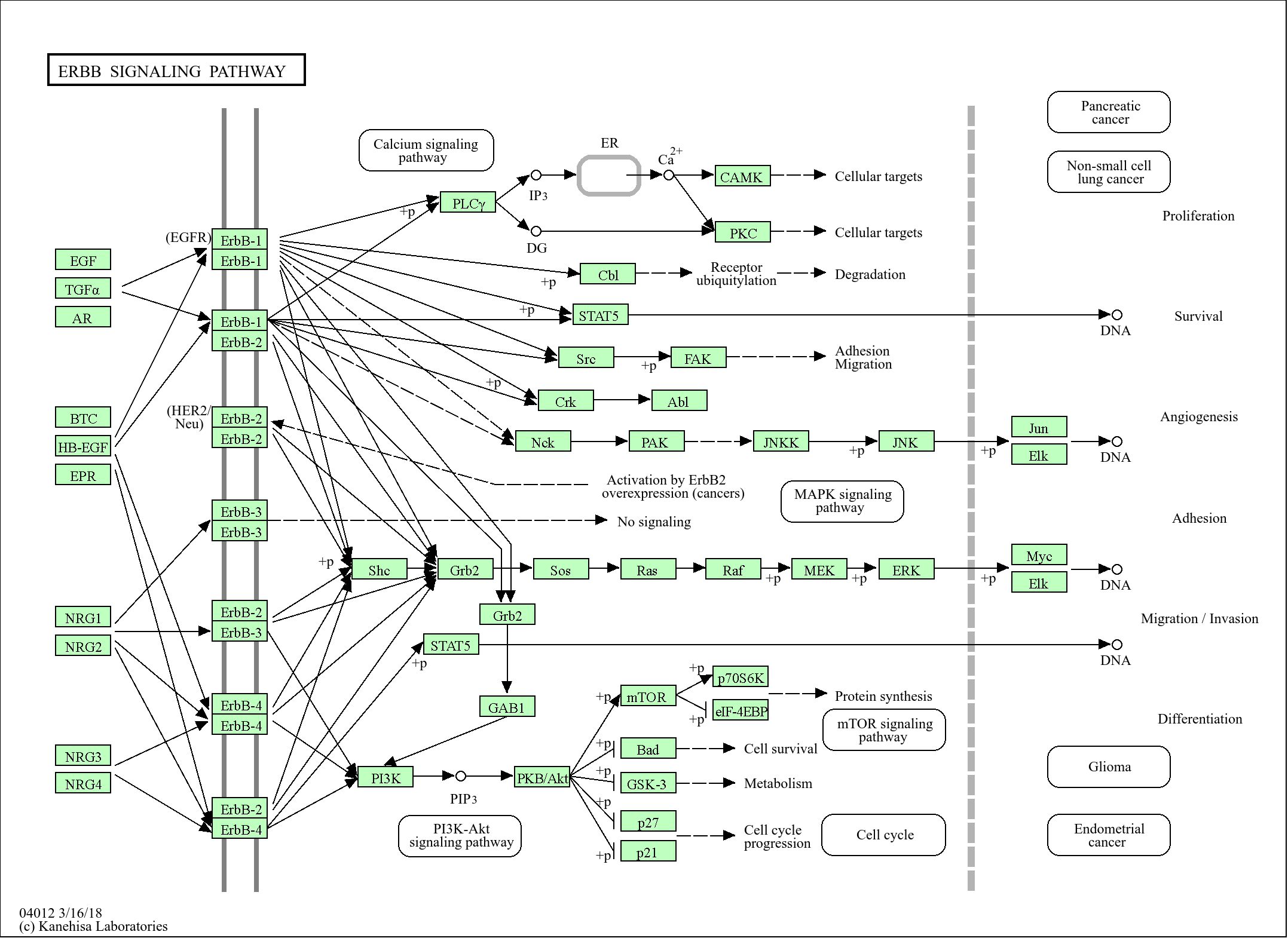
信号通路
文献引用({{totalcount}})
货号: YN5458
规格
价格
货期
数量
200μL
¥3,780.00
一个月
0
100μL
¥2,300.00
一个月
0
40μL
¥960.00
一个月
0
加入购物车
已收藏
收藏
Recently Viewed Products
Clear all


×

Toggle night Mode
{{pinfoXq.title || ''}}
Catalog: {{pinfoXq.catalog || ''}}
Filter:
All
{{item.name}}
{{pinfo.title}}
-{{pinfo.catalog}}
主要信息
Target
{{pinfo.target}}
Reactivity
{{pinfo.react}}
Applications
{{pinfo.applicat}}
Conjugate/Modification
{{pinfo.coupling}}/{{pinfo.modific}}
MW (kDa)
{{pinfo.mwcalc}}
Host Species
{{pinfo.hostspec}}
Isotype
{{pinfo.isotype}}
产品 {{index}}/{{pcount}}
上一个产品
下一个产品
{{pvTitle}}
滚轮缩放图片
{{pvDescr}}