


METTL3 Rabbit pAb
-YT8103



主要信息
Target
METTL3
Host Species
Rabbit
Reactivity
Human, Mouse
Applications
WB, IHC
MW
64kD (Calculated)
Conjugate/Modification
Unmodified

货号: YT8103
规格
价格
货期
数量
200μL
¥3,780.00
一个月
0
100μL
¥2,300.00
一个月
0
40μL
¥960.00
一个月
0
加入购物车


已收藏
收藏
详细信息
推荐稀释比
WB 1:500-2000; IHC 1:50-200
组成
Liquid in PBS containing 50% glycerol, 0.5% BSA and 0.02% sodium azide.
特异性
This antibody detects endogenous levels of MTA70 at Human, Mouse
纯化工艺
The antibody was affinity-purified from rabbit antiserum by affinity-chromatography using epitope-specific immunogen.
储存
-15°C to -25°C/1 year (Do not lower than -25°C)
浓度
1 mg/ml
理论分子量
64kD
修饰
Unmodified
克隆性
Polyclonal
同种型
IgG
相关产品
Secondary Antibodies
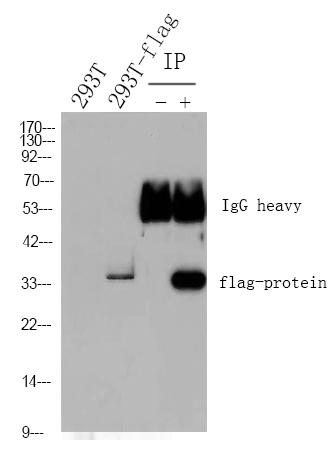
Goat Anti Mouse IgG(H+L) (HRP)
RS0001
预览→
Secondary Antibodies
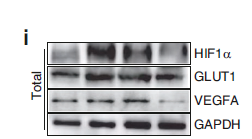
Goat Anti Rabbit IgG(H+L) (HRP)
RS0002
预览→
Primary Antibodies
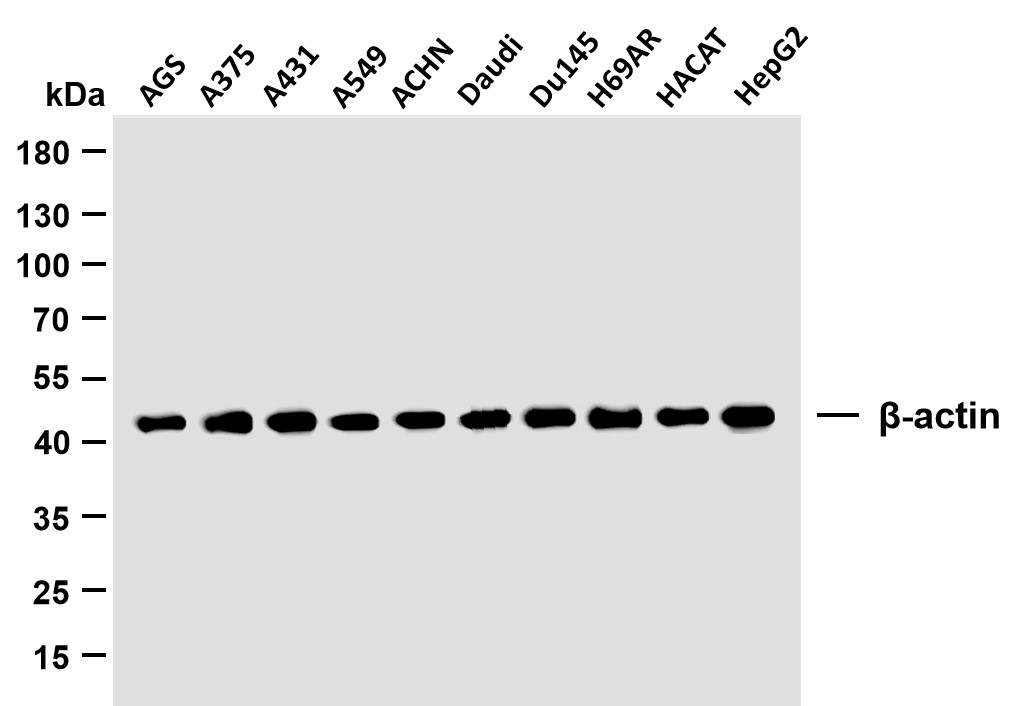
β-actin (PTR2364) Mouse mAb
YM3028
预览→
Primary Antibodies
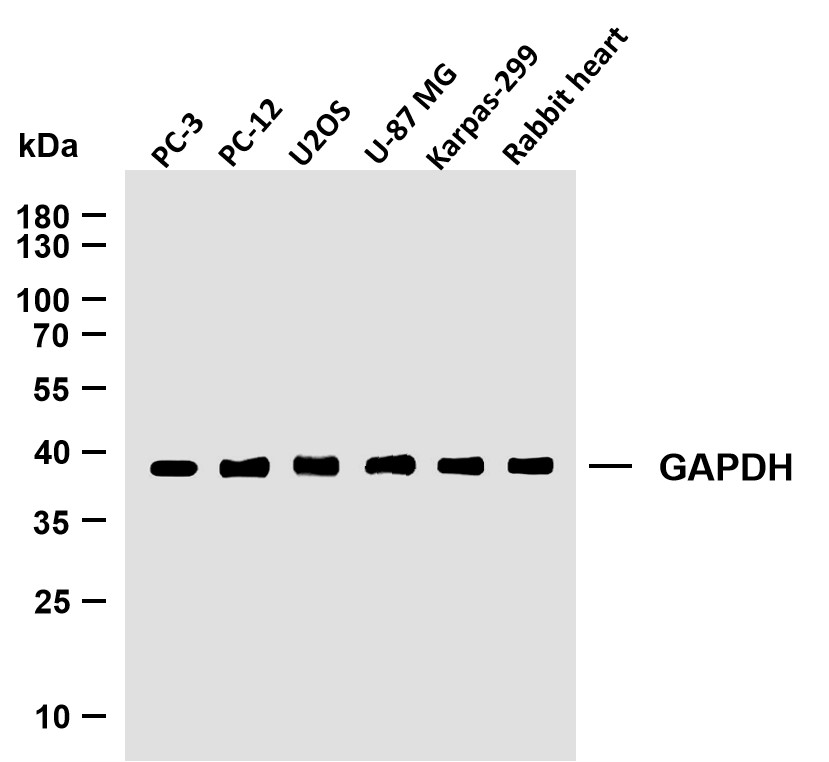
GAPDH (PTR2304) Mouse mAb
YM3029
预览→
抗原&靶点信息
免疫原:
Synthesized peptide derived from human N-ternal MTA70. AA range:25-105
展开内容
特异性:
This antibody detects endogenous levels of MTA70 at Human, Mouse
展开内容
基因名称:
METTL3 MTA70
展开内容
蛋白名称:
N6-adenosine-methyltransferase 70 kDa subunit (MT-A70) (Methyltransferase-like protein 3)
展开内容
别名:
N6-adenosine-methyltransferase 70 kDa subunit ;
MT-A70 ;
Methyltransferase-like protein 3 ;
MT-A70 ;
Methyltransferase-like protein 3 ;
展开内容
背景:
This gene encodes the 70 kDa subunit of MT-A which is part of N6-adenosine-methyltransferase. This enzyme is involved in the posttranscriptional methylation of internal adenosine residues in eukaryotic mRNAs , forming N6-methyladenosine. [provided by RefSeq , Jul 2008]
展开内容
功能:
The METTL3-METTL14 heterodimer forms a N6-methyltransferase complex that methylates adenosine residues at the N (6) position of some RNAs and regulates various processes such as the circadian clock , differentiation of embryonic and hematopoietic stem cells , cortical neurogenesis , response to DNA damage , differentiation of T-cells and primary miRNA processing . In the heterodimer formed with METTL14 , METTL3 constitutes the catalytic core . N6-methyladenosine (m6A) , which takes place at the 5'-[AG]GAC-3' consensus sites of some mRNAs , plays a role in mRNA stability , processing , translation efficiency and editing . M6A acts as a key regulator of mRNA stability: methylation is completed upon the release of mRNA into the nucleoplasm and promotes mRNA destabilization and degradation . In embryonic stem cells (ESCs) , m6A methylation of mRNAs encoding key naive pluripotency-promoting transcripts results in transcript destabilization , promoting differentiation of ESCs (By similarity) . M6A regulates the length of the circadian clock: acts as an early pace-setter in the circadian loop by putting mRNA production on a fast-track for facilitating nuclear processing , thereby providing an early point of control in setting the dynamics of the feedback loop (By similarity) . M6A also regulates circadian regulation of hepatic lipid metabolism . M6A regulates spermatogonial differentiation and meiosis and is essential for male fertility and spermatogenesis (By similarity) . Also required for oogenesis (By similarity) . Involved in the response to DNA damage: in response to ultraviolet irradiation , METTL3 rapidly catalyzes the formation of m6A on poly (A) transcripts at DNA damage sites , leading to the recruitment of POLK to DNA damage sites . M6A is also required for T-cell homeostasis and differentiation: m6A methylation of transcripts of SOCS family members (SOCS1 , SOCS3 and CISH) in naive T-cells promotes mRNA destabilization and degradation , promoting T-cell differentiation (By similarity) . Inhibits the type I interferon response by mediating m6A methylation of IFNB . M6A also takes place in other RNA molecules , such as primary miRNA (pri-miRNAs) . Mediates m6A methylation of Xist RNA , thereby participating in random X inactivation: m6A methylation of Xist leads to target YTHDC1 reader on Xist and promote transcription repression activity of Xist . M6A also regulates cortical neurogenesis: m6A methylation of transcripts related to transcription factors , neural stem cells , the cell cycle and neuronal differentiation during brain development promotes their destabilization and decay , promoting differentiation of radial glial cells (By similarity) . METTL3 mediates methylation of pri-miRNAs , marking them for recognition and processing by DGCR8 . Acts as a positive regulator of mRNA translation independently of the methyltransferase activity: promotes translation by interacting with the translation initiation machinery in the cytoplasm . Its overexpression in a number of cancer cells suggests that it may participate in cancer cell proliferation by promoting mRNA translation . During human coronorivus SARS-CoV-2 infection , adds m6A modifications in SARS-CoV-2 RNA leading to decreased DDX58/RIG-I binding and subsequently dampening the sensing and activation of innate immune responses .
展开内容
细胞定位:
Nucleus . Nucleus speckle . Cytoplasm . Colocalizes with speckles in interphase nuclei , suggesting that it may be associated with nuclear pre-mRNA splicing components (PubMed:9409616) . In response to ultraviolet irradiation , colocalizes to DNA damage sites however , it probably does not bind DNA but localizes in the vicinity of DNA damage sites (PubMed:28297716) . .
展开内容
文献引用({{totalcount}})
货号: YT8103
规格
价格
货期
数量
200μL
¥3,780.00
一个月
0
100μL
¥2,300.00
一个月
0
40μL
¥960.00
一个月
0
加入购物车
已收藏
收藏
Recently Viewed Products
Clear all


×

Toggle night Mode
{{pinfoXq.title || ''}}
Catalog: {{pinfoXq.catalog || ''}}
Filter:
All
{{item.name}}
{{pinfo.title}}
-{{pinfo.catalog}}
主要信息
Target
{{pinfo.target}}
Reactivity
{{pinfo.react}}
Applications
{{pinfo.applicat}}
Conjugate/Modification
{{pinfo.coupling}}/{{pinfo.modific}}
MW (kDa)
{{pinfo.mwcalc}}
Host Species
{{pinfo.hostspec}}
Isotype
{{pinfo.isotype}}
产品 {{index}}/{{pcount}}
上一个产品
下一个产品
{{pvTitle}}
滚轮缩放图片
{{pvDescr}}