


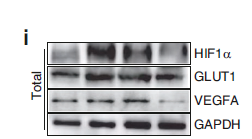
HIF-1α Rabbit pAb
-YT2133




主要信息
Target
HIF-1α
Host Species
Rabbit
Reactivity
Human, Mouse, Rat
Applications
IF, WB, IHC, IP, ELISA
MW
92-130kD (Observed)
Conjugate/Modification
Unmodified

货号: YT2133
规格
价格
货期
数量
200μL
¥3,780.00
现货
0
100μL
¥2,300.00
现货
0
40μL
¥960.00
现货
0
加入购物车


已收藏
收藏
详细信息
推荐稀释比
IF 1:50-200; WB 1:500-1:2000; IP 1:200; IHC 1:100-1:300; ELISA 1:40000; Not yet tested in other applications
组成
Liquid in PBS containing 50% glycerol, 0.5% BSA and 0.02% sodium azide.
特异性
HIF-1α Polyclonal Antibody detects endogenous levels of HIF-1α protein.
纯化工艺
The antibody was affinity-purified from rabbit antiserum by affinity-chromatography using epitope-specific immunogen.
储存
-15°C to -25°C/1 year (Do not lower than -25°C)
浓度
1 mg/ml
实测条带
92-130kD
修饰
Unmodified
克隆性
Polyclonal
同种型
IgG
RRID号
AB_3718533
相关产品
Secondary Antibodies
Goat Anti Mouse IgG(H+L) (HRP)
RS0001
预览→
Secondary Antibodies
Goat Anti Rabbit IgG(H+L) (HRP)
RS0002
预览→
Primary Antibodies
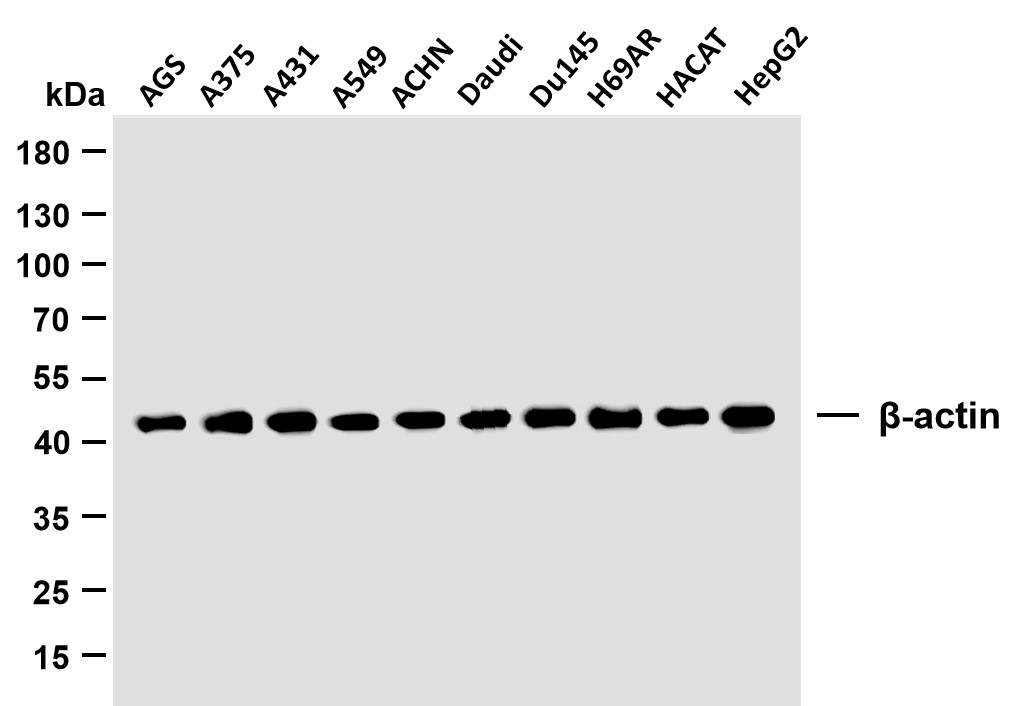
β-actin (PTR2364) Mouse mAb
YM3028
预览→
Primary Antibodies
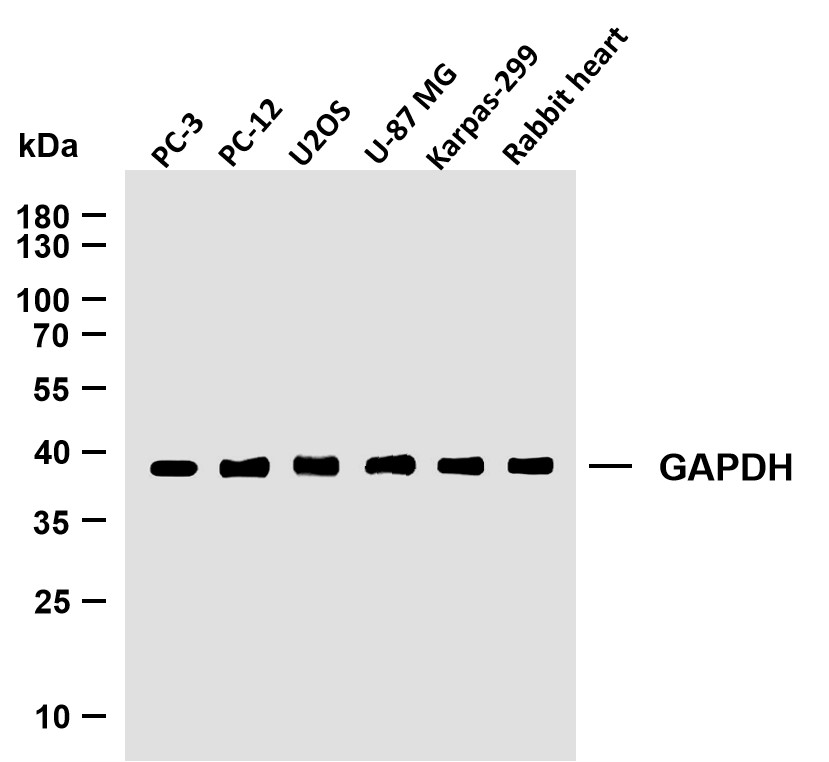
GAPDH (PTR2304) Mouse mAb
YM3029
预览→
抗原&靶点信息
免疫原:
The antiserum was produced against synthesized peptide derived from human HIF-1alpha. AA range:328-377
展开内容
特异性:
HIF-1α Polyclonal Antibody detects endogenous levels of HIF-1α protein.
展开内容
基因名称:
HIF1A
展开内容
蛋白名称:
Hypoxia-inducible factor 1-alpha
展开内容
别名:
HIF1A ;
BHLHE78 ;
MOP1 ;
PASD8 ;
Hypoxia-inducible factor 1-alpha ;
HIF-1-alpha ;
HIF1-alpha ;
ARNT-interacting protein ;
Basic-helix-loop-helix-PAS protein MOP1 ;
Class E basic helix-loop-helix protein 78 ;
bHLHe78 ;
Member of PAS protein 1 ;
PAS doma
BHLHE78 ;
MOP1 ;
PASD8 ;
Hypoxia-inducible factor 1-alpha ;
HIF-1-alpha ;
HIF1-alpha ;
ARNT-interacting protein ;
Basic-helix-loop-helix-PAS protein MOP1 ;
Class E basic helix-loop-helix protein 78 ;
bHLHe78 ;
Member of PAS protein 1 ;
PAS doma
展开内容
背景:
hypoxia inducible factor 1 alpha subunit (HIF1A) Homo sapiens This gene encodes the alpha subunit of transcription factor hypoxia-inducible factor-1 (HIF-1) , which is a heterodimer composed of an alpha and a beta subunit. HIF-1 functions as a master regulator of cellular and systemic homeostatic response to hypoxia by activating transcription of many genes , including those involved in energy metabolism , angiogenesis , apoptosis , and other genes whose protein products increase oxygen delivery or facilitate metabolic adaptation to hypoxia. HIF-1 thus plays an essential role in embryonic vascularization , tumor angiogenesis and pathophysiology of ischemic disease. Alternatively spliced transcript variants encoding different isoforms have been identified for this gene. [provided by RefSeq , Jul 2011] ,
展开内容
功能:
Domain:Contains two independent C-terminal transactivation domains , NTAD and CTAD , which function synergistically. Their transcriptional activity is repressed by an intervening inhibitory domain (ID) . ,Function:Functions as a master transcriptional regulator of the adaptive response to hypoxia. Under hypoxic conditions activates the transcription of over 40 genes , including , erythropoietin , glucose transporters , glycolytic enzymes , vascular endothelial growth factor , and other genes whose protein products increase oxygen delivery or facilitate metabolic adaptation to hypoxia. Plays an essential role in embryonic vascularization , tumor angiogenesis and pathophysiology of ischemic disease. Binds to core DNA sequence 5'-[AG]CGTG-3' within the hypoxia response element (HRE) of target gene promoters. Activation requires recruitment of transcriptional coactivators such as CREBPB and EP300. Activity is enhanced by interaction with both , NCOA1 or NCOA2. Interaction with redox regulatory protein APEX seems to activate CTAD and potentiates activation by NCOA1 and CREBBP. ,induction:Under reduced oxygen tension. Induced also by various receptor-mediated factors such as growth factors , cytokines , and circulatory factors such as PDGF , EGF FGF-2 FGF-2 IGF-2 , TGF-1 beta , HGF , TNF alpha , IL-1 beta , angiotensin-2 and thrombin. However , this induction is less intense than that stimulated by hypoxia. ,online information:Hypoxia inducible factor entry ,PTM:In normoxia , is hydroxylated on Asn-803 by HIF1AN , thus abrogating interaction with CREBBP and EP300 and preventing transcriptional activation. This hydroxylation is inhibited by the Cu/Zn-chelator , Clioquinol. ,PTM:In normoxia , is hydroxylated on Pro-402 and Pro-564 in the oxygen-dependent degradation domain (ODD) by EGLN1/PHD1 and EGLN2/PHD2. EGLN3/PHD3 has also been shown to hydroxylate Pro-564. The hydroxylated prolines promote interaction with VHL , initiating rapid ubiquitination and subsequent proteasomal degradation. Under hypoxia , proline hydroxylation is impaired and ubiquitination is attenuated , resulting in stabilization. ,PTM:Requires phosphorylation for DNA-binding. ,PTM:S-nitrosylation of Cys-800 may be responsible for increased recruitment of p300 coactivator necessary for transcriptional activity of HIF-1 complex. ,PTM:Sumoylated; by SUMO1 under hypoxia. Sumoylation is enhanced through interaction with RWDD3. Desumoylation by SENP1 leads to increased HIF1A stability and transriptional activity. ,PTM:The iron and 2-oxoglutarate dependent 3-hydroxylation of asparagine is (S) stereospecific within HIF CTAD domains. ,PTM:Ubiquitinated; in normoxia , following hydroxylation and interaction with VHL. Lys-532 appears to be the principal site of ubiquitination. Clioquinol , the Cu/Zn-chelator , inhibits ubiquitination through preventing hydroxylation at Asn-803. ,similarity:Contains 1 basic helix-loop-helix (bHLH) domain. ,similarity:Contains 1 PAC (PAS-associated C-terminal) domain. ,similarity:Contains 2 PAS (PER-ARNT-SIM) domains. ,subcellular location:Cytoplasmic in normoxia , nuclear translocation in response to hypoxia. Colocalizes with SUMO1 in the nucleus , under hypoxia. ,subunit:Interacts with the HIF1A beta/ARNT subunit; heterodimerization is required for DNA binding. Interacts with COPS5; the interaction increases the transcriptional activity of HIF1A through increased stability (By similarity) . Interacts with CREBBP and EP300 (via TAZ-type 1 domains) . Interacts with NCOA1 , NCOA2 , APEX and HSP90. Interacts (hydroxylated within the ODD domain) with VHLL (via beta domain) ; the interaction , leads to polyubiquitination and subsequent HIF1A proteasomal degradation. During hypoxia , sumoylated HIF1A also binds VHL; the interaction promotes the ubiquitination of HIF1A. Interacts with SENP1; the interaction desumoylates HIF1A resulting in stabilization and activation of transcription. Interacts (Via the ODD domain) with ARD1A; the interaction appears not to acetylate HIF1A nor have any affect on protein stability , during hypoxia. Interacts with RWDD3; the interaction enhances HIF1A sumoylation. Interacts with TSGA10. ,tissue specificity:Expressed in most tissues with highest levels in kidney and heart. Overexpressed in the majority of common human cancers and their metastases , due to the presence of intratumoral hypoxia and as a result of mutations in genes encoding oncoproteins and tumor suppressors. ,
展开内容
细胞定位:
Cytoplasm . Nucleus . Nucleus speckle . Colocalizes with HIF3A in the nucleus and speckles (By similarity) . Cytoplasmic in normoxia , nuclear translocation in response to hypoxia (PubMed:9822602) . .
展开内容
研究领域:
>>HIF-1 signaling pathway ;
>>Mitophagy - animal ;
>>Autophagy - animal ;
>>Th17 cell differentiation ;
>>Thyroid hormone signaling pathway ;
>>Kaposi sarcoma-associated herpesvirus infection ;
>>Pathways in cancer ;
>>Proteoglycans in cancer ;
>>Chemical carcinogenesis - reactive oxygen species ;
>>Renal cell carcinoma ;
>>Central carbon metabolism in cancer ;
>>Choline metabolism in cancer ;
>>PD-L1 expression and PD-1 checkpoint pathway in cancer
>>Mitophagy - animal ;
>>Autophagy - animal ;
>>Th17 cell differentiation ;
>>Thyroid hormone signaling pathway ;
>>Kaposi sarcoma-associated herpesvirus infection ;
>>Pathways in cancer ;
>>Proteoglycans in cancer ;
>>Chemical carcinogenesis - reactive oxygen species ;
>>Renal cell carcinoma ;
>>Central carbon metabolism in cancer ;
>>Choline metabolism in cancer ;
>>PD-L1 expression and PD-1 checkpoint pathway in cancer
展开内容
信号通路
Cellular Processes >> Transport and catabolism >> Autophagy - animal
Cellular Processes >> Transport and catabolism >> Mitophagy - animal
Organismal Systems >> Immune system >> Th17 cell differentiation
Organismal Systems >> Endocrine system >> Thyroid hormone signaling pathway
Human Diseases >> Cancer: overview >> Pathways in cancer
Human Diseases >> Cancer: overview >> Central carbon metabolism in cancer
Human Diseases >> Cancer: overview >> PD-L1 expression and PD-1 checkpoint pathway in cancer
Human Diseases >> Cancer: specific types >> Renal cell carcinoma
Environmental Information Processing >> Signal transduction >> HIF-1 signaling pathway
文献引用({{totalcount}})
货号: YT2133
规格
价格
货期
数量
200μL
¥3,780.00
现货
0
100μL
¥2,300.00
现货
0
40μL
¥960.00
现货
0
加入购物车
已收藏
收藏
Recently Viewed Products
Clear all


×

Toggle night Mode
{{pinfoXq.title || ''}}
Catalog: {{pinfoXq.catalog || ''}}
Filter:
All
{{item.name}}
{{pinfo.title}}
-{{pinfo.catalog}}
主要信息
Target
{{pinfo.target}}
Reactivity
{{pinfo.react}}
Applications
{{pinfo.applicat}}
Conjugate/Modification
{{pinfo.coupling}}/{{pinfo.modific}}
MW (kDa)
{{pinfo.mwcalc}}
Host Species
{{pinfo.hostspec}}
Isotype
{{pinfo.isotype}}
产品 {{index}}/{{pcount}}
上一个产品
下一个产品
{{pvTitle}}
滚轮缩放图片
{{pvDescr}}