



Cleaved Caspase-3 p17 (Asp175) Rabbit pAb
-YC0006





主要信息
Target
Caspase-3
Host Species
Rabbit
Reactivity
Human, Mouse, Rat
Applications
WB, IF, IHC, ELISA
MW
17kD,34kD (Observed)
Conjugate/Modification
Unmodified
货号: YC0006
规格
价格
货期
数量
200μL
¥3,780.00
现货
0
100μL
¥2,300.00
现货
0
40μL
¥960.00
现货
0
加入购物车


已收藏
收藏
详细信息
推荐稀释比
WB 1:500-2000; IHC 1:50-300; IF 1:50-300; ELISA 1:5000-20000
组成
Liquid in PBS containing 50% glycerol, 0.5% BSA and 0.02% sodium azide.
特异性
Cleaved-Caspase-3 p17 (D175) Polyclonal Antibody detects endogenous levels of fragment of activated Caspase-3 p17 protein resulting from cleavage adjacent to D175.
纯化工艺
The antibody was affinity-purified from rabbit antiserum by affinity-chromatography using epitope-specific immunogen.
储存
-15°C to -25°C/1 year (Do not lower than -25°C)
浓度
1 mg/ml
实测条带
17kD,34kD
修饰
Unmodified
克隆性
Polyclonal
同种型
IgG
RRID号
AB_3663003
相关产品
Secondary Antibodies
Goat Anti Mouse IgG(H+L) (HRP)
RS0001
预览→
Secondary Antibodies
Goat Anti Rabbit IgG(H+L) (HRP)
RS0002
预览→
Primary Antibodies
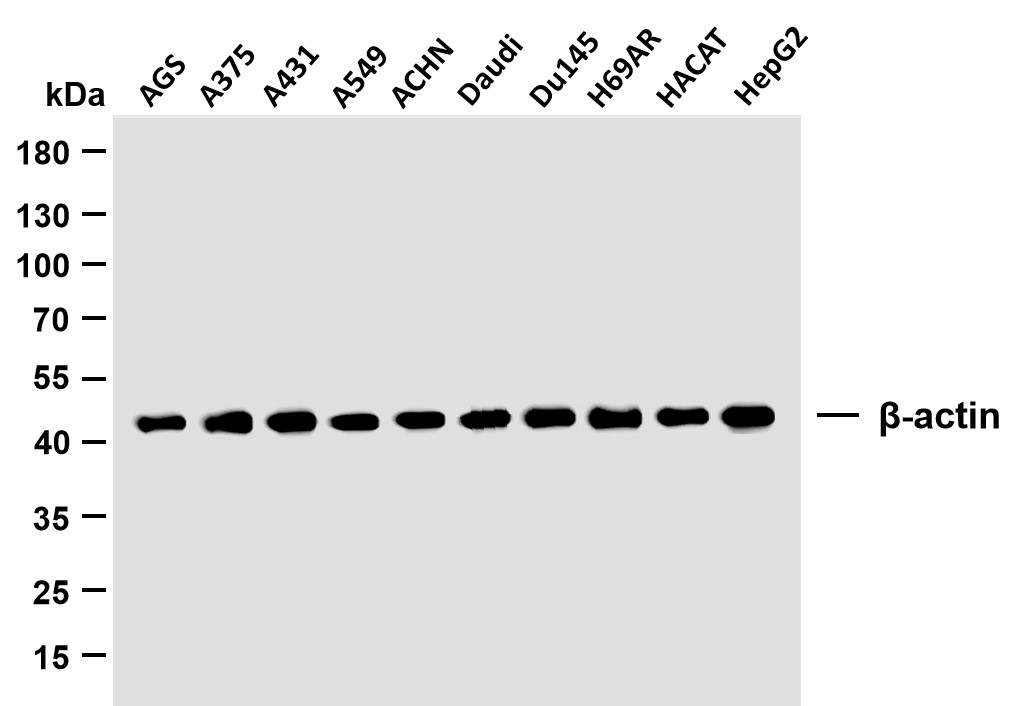
β-actin (PTR2364) Mouse mAb
YM3028
预览→
Primary Antibodies
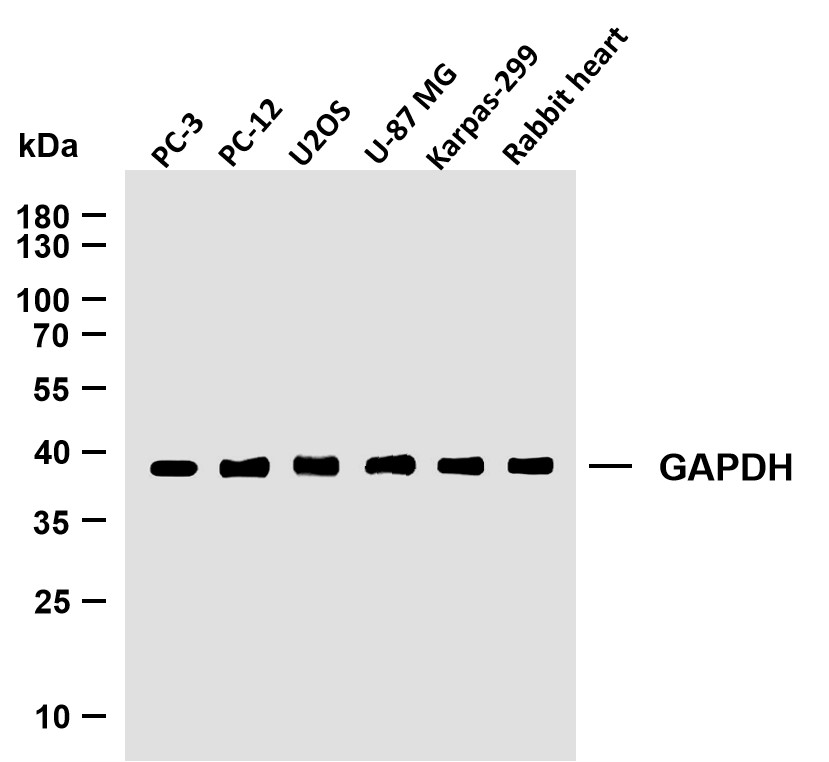
GAPDH (PTR2304) Mouse mAb
YM3029
预览→
抗原&靶点信息
免疫原:
The antiserum was produced against synthesized peptide derived from human Caspase 3. AA range:126-175
展开内容
特异性:
Cleaved-Caspase-3 p17 (D175) Polyclonal Antibody detects endogenous levels of fragment of activated Caspase-3 p17 protein resulting from cleavage adjacent to D175.
展开内容
基因名称:
CASP3
展开内容
蛋白名称:
Caspase3
展开内容
别名:
CASP3 ;
CPP32 ;
Caspase-3 ;
CASP-3 ;
Apopain ;
Cysteine protease CPP32 ;
CPP-32 ;
Protein Yama ;
SREBP cleavage activity 1 ;
SCA-1
CPP32 ;
Caspase-3 ;
CASP-3 ;
Apopain ;
Cysteine protease CPP32 ;
CPP-32 ;
Protein Yama ;
SREBP cleavage activity 1 ;
SCA-1
展开内容
背景:
This gene encodes a protein which is a member of the cysteine-aspartic acid protease (caspase) family. Sequential activation of caspases plays a central role in the execution-phase of cell apoptosis. Caspases exist as inactive proenzymes which undergo proteolytic processing at conserved aspartic residues to produce two subunits , large and small , that dimerize to form the active enzyme. This protein cleaves and activates caspases 6 , 7 and 9 , and the protein itself is processed by caspases 8 , 9 and 10. It is the predominant caspase involved in the cleavage of amyloid-beta 4A precursor protein , which is associated with neuronal death in Alzheimer's disease. Alternative splicing of this gene results in two transcript variants that encode the same protein. [provided by RefSeq , Jul 2008] ,
展开内容
功能:
Catalytic activity:Strict requirement for an Asp residue at positions P1 and P4. It has a preferred cleavage sequence of Asp-Xaa-Xaa-Asp-|- with a hydrophobic amino-acid residue at P2 and a hydrophilic amino-acid residue at P3 , although Val or Ala are also accepted at this position. ,enzyme regulation:Inhibited by isatin sulfonamides. ,Function:Involved in the activation cascade of caspases responsible for apoptosis execution. At the onset of apoptosis it proteolytically cleaves poly (ADP-ribose) polymerase (PARP) at a '216-Asp-|-Gly-217' bond. Cleaves and activates sterol regulatory element binding proteins (SREBPs) between the basic helix-loop-helix leucine zipper domain and the membrane attachment domain. Cleaves and activates caspase-6 , -7 and -9. Involved in the cleavage of huntingtin. ,PTM:Cleavage by granzyme B , caspase-6 , caspase-8 and caspase-10 generates the two active subunits. Additional processing of the propeptides is likely due to the autocatalytic activity of the activated protease. Active heterodimers between the small subunit of caspase-7 protease and the large subunit of caspase-3 also occur and vice versa. ,PTM:S-nitrosylated on its catalytic site cysteine in unstimulated human cell lines and denitrosylated upon activation of the Fas apoptotic pathway , associated with an increase in intracellular caspase activity. Fas therefore activates caspase-3 not only by inducing the cleavage of the caspase zymogen to its active subunits , but also by stimulating the denitrosylation of its active site thiol. ,similarity:Belongs to the peptidase C14A family. ,subunit:Heterotetramer that consists of two anti-parallel arranged heterodimers , each one formed by a 17 kDa (p17) and a 12 kDa (p12) subunit. ,tissue specificity:Highly expressed in lung , spleen , heart , liver and kidney. Moderate levels in brain and skeletal muscle , and low in testis. Also found in many cell lines , highest expression in cells of the immune system. ,
展开内容
细胞定位:
Cytoplasm.
展开内容
研究领域:
>>Platinum drug resistance ;
>>MAPK signaling pathway ;
>>p53 signaling pathway ;
>>Apoptosis ;
>>Apoptosis - multiple species ;
>>Natural killer cell mediated cytotoxicity ;
>>IL-17 signaling pathway ;
>>TNF signaling pathway ;
>>Serotonergic synapse ;
>>Non-alcoholic fatty liver disease ;
>>AGE-RAGE signaling pathway in diabetic complications ;
>>Alcoholic liver disease ;
>>Alzheimer disease ;
>>Parkinson disease ;
>>Amyotrophic lateral sclerosis ;
>>Huntington disease ;
>>Prion disease ;
>>Pathways of neurodegeneration - multiple diseases ;
>>Epithelial cell signaling in Helicobacter pylori infection ;
>>Pathogenic Escherichia coli infection ;
>>Salmonella infection ;
>>Pertussis ;
>>Legionellosis ;
>>Toxoplasmosis ;
>>Amoebiasis ;
>>Tuberculosis ;
>>Hepatitis C ;
>>Hepatitis B ;
>>Measles ;
>>Human cytomegalovirus infection ;
>>Influenza A ;
>>Human papillomavirus infection ;
>>Kaposi sarcoma-associated herpesvirus infection ;
>>Herpes simplex virus 1 infection ;
>>Epstein-Barr virus infection ;
>>Human immunodeficiency virus 1 infection ;
>>Pathways in cancer ;
>>Viral carcinogenesis ;
>>Proteoglycans in cancer ;
>>MicroRNAs in cancer ;
>>Colorectal cancer ;
>>Small cell lung cancer ;
>>Viral myocarditis ;
>>Lipid and atherosclerosis
>>MAPK signaling pathway ;
>>p53 signaling pathway ;
>>Apoptosis ;
>>Apoptosis - multiple species ;
>>Natural killer cell mediated cytotoxicity ;
>>IL-17 signaling pathway ;
>>TNF signaling pathway ;
>>Serotonergic synapse ;
>>Non-alcoholic fatty liver disease ;
>>AGE-RAGE signaling pathway in diabetic complications ;
>>Alcoholic liver disease ;
>>Alzheimer disease ;
>>Parkinson disease ;
>>Amyotrophic lateral sclerosis ;
>>Huntington disease ;
>>Prion disease ;
>>Pathways of neurodegeneration - multiple diseases ;
>>Epithelial cell signaling in Helicobacter pylori infection ;
>>Pathogenic Escherichia coli infection ;
>>Salmonella infection ;
>>Pertussis ;
>>Legionellosis ;
>>Toxoplasmosis ;
>>Amoebiasis ;
>>Tuberculosis ;
>>Hepatitis C ;
>>Hepatitis B ;
>>Measles ;
>>Human cytomegalovirus infection ;
>>Influenza A ;
>>Human papillomavirus infection ;
>>Kaposi sarcoma-associated herpesvirus infection ;
>>Herpes simplex virus 1 infection ;
>>Epstein-Barr virus infection ;
>>Human immunodeficiency virus 1 infection ;
>>Pathways in cancer ;
>>Viral carcinogenesis ;
>>Proteoglycans in cancer ;
>>MicroRNAs in cancer ;
>>Colorectal cancer ;
>>Small cell lung cancer ;
>>Viral myocarditis ;
>>Lipid and atherosclerosis
展开内容
信号通路
Cellular Processes >> Cell growth and death >> Apoptosis
Cellular Processes >> Cell growth and death >> Apoptosis - multiple species
Cellular Processes >> Cell growth and death >> p53 signaling pathway
Organismal Systems >> Immune system >> Cytosolic DNA-sensing pathway
Organismal Systems >> Immune system >> Natural killer cell mediated cytotoxicity
Organismal Systems >> Immune system >> IL-17 signaling pathway
Human Diseases >> Cancer: overview >> Pathways in cancer
Human Diseases >> Cancer: overview >> MicroRNAs in cancer
Human Diseases >> Cancer: specific types >> Colorectal cancer
Human Diseases >> Cancer: specific types >> Small cell lung cancer
Human Diseases >> Neurodegenerative disease >> Alzheimer disease
Human Diseases >> Neurodegenerative disease >> Parkinson disease
Human Diseases >> Neurodegenerative disease >> Amyotrophic lateral sclerosis
Human Diseases >> Neurodegenerative disease >> Huntington disease
Human Diseases >> Neurodegenerative disease >> Prion disease
Human Diseases >> Neurodegenerative disease >> Pathways of neurodegeneration - multiple diseases
Environmental Information Processing >> Signal transduction >> MAPK signaling pathway
Environmental Information Processing >> Signal transduction >> TNF signaling pathway
文献引用({{totalcount}})
货号: YC0006
规格
价格
货期
数量
200μL
¥3,780.00
现货
0
100μL
¥2,300.00
现货
0
40μL
¥960.00
现货
0
加入购物车
已收藏
收藏
Recently Viewed Products
Clear all


×

Toggle night Mode
{{pinfoXq.title || ''}}
Catalog: {{pinfoXq.catalog || ''}}
Filter:
All
{{item.name}}
{{pinfo.title}}
-{{pinfo.catalog}}
主要信息
Target
{{pinfo.target}}
Reactivity
{{pinfo.react}}
Applications
{{pinfo.applicat}}
Conjugate/Modification
{{pinfo.coupling}}/{{pinfo.modific}}
MW (kDa)
{{pinfo.mwcalc}}
Host Species
{{pinfo.hostspec}}
Isotype
{{pinfo.isotype}}
产品 {{index}}/{{pcount}}
上一个产品
下一个产品
{{pvTitle}}
滚轮缩放图片
{{pvDescr}}